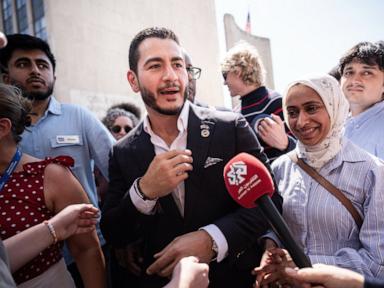
Every political reporter in the country is currently eating out of the party apparatus's hand, swallowing the sanitized narrative that Michigan Democrats are locking arms for a grand kumbaya session after a knockdown primary fight. Abdul El-Sayed edges out establishment favorite Haley Stevens by a razor-thin margin for the open U.S. Senate seat, and the mainstream press rushes to headline the forced smiles, the staged handshakes, and the empty platitudes about big tents.
It is all theater.
The lazy consensus is that primary bruises heal quickly when a general election against a heavyweight like Republican Mike Rogers is looming. That theory treats voters like commodities who can be herded by elite endorsements and forced unity photo-ops. The reality on the ground in the Midwest is far more cynical, fractured, and resistant to party management.
The Myth Of The Consolidated Base
Political pundits love to talk about closing ranks as if ideology is a switch you can flip off. When a progressive populist like El-Sayed beats an establishment anchor like Stevens by less than a single percentage point, it does not reveal a party coming together. It exposes a structural fault line.
The moderate wing that backed Stevens did not spend months building local infrastructure just to happily pivot to a progressive platform because Curtis Hertel or Pete Buttigieg showed up to clap on cue. Similarly, the progressive base that carried El-Sayed views the party establishment not as allies, but as a reluctant vehicle they had to hijack.
Pretending this tension dissolves over a weekend convention is political malpractice. Voters see through the performative unity. When factions are forced into an arranged marriage without addressing core grievances about economic direction and institutional power, turnout tanks. People do not walk to the polls for a candidate they merely tolerate because a press release told them to.
Why The Battleground Blueprint Is Broken
Michigan is the ultimate political indicator, having swung across partisan lines in successive national cycles. Yet, campaign strategists treat the state like a monolithic block that responds to standardized playbook tactics. They think a unified front means standing behind podiums and talking about protecting democracy while ignoring the granular economic anxiety defining Wayne, Macomb, and Kent counties.
Imagine a scenario where a campaign stops trying to appease every factional power broker in Detroit and Lansing, and instead explicitly addresses the alienation of working-class voters who switched from blue to red out of sheer economic exhaustion. That is not what is happening this week. Instead, the strategy relies on high-altitude institutional endorsements—the kind that look great on cable news but bounce right off voters working double shifts.
The math of a general election is brutal. El-Sayed faces a formidable opponent in Mike Rogers, an establishment Republican with deep national security ties who knows how to weaponize economic nationalism. A fractured primary leaves scars in precinct-level volunteer networks. When campaign workers who bled for Stevens feel sidelined, doors do not get knocked. Phone banks stay empty.
The Danger Of The Endorsement Parade
Watch who is standing on that stage in Detroit. You get the usual suspects: national figures trying to audition for future presidential cycles and local officeholders protecting their own turf. It is an insular ecosystem talking to itself.
The institutional press reports these rollouts as tactical masterclasses. They quote lines like "the things that unite us are so much bigger than the things that divide us" as if repeating a slogan makes it operational.
Here is the unvarnished truth from someone who has watched millions of dollars burn on these exact coordination charades: elite unity does not transfer votes. Real alignment requires concessions on policy and power sharing. When those do not happen, the unity is a facade that collapses the second independent voters start asking hard questions about inflation, cost of living, and industrial policy.
If Democrats want to hold that Senate seat and keep statewide momentum against candidates like John James, they need to stop celebrating staged reconciliations. Unity is not a press conference. It is a shared bloodbath of compromise, and right now, nobody is willing to make the cut. Stop buying the script. The primary never really ended; it just moved behind closed doors.