The air in the cabin of a Gulfstream crossing the Pacific doesn’t feel like the air on the ground. It is scrubbed, pressurized, and carries a faint metallic tang that reminds you you’re suspended forty thousand feet above a cold, indifferent ocean. For a seasoned diplomat or a high-stakes emissary, this silence isn’t peace. It’s the breath before a scream.
Somewhere in that pressurized quiet sits an ally of Donald Trump, a man whose luggage likely contains more than just a change of suits. He carries the weight of a fractured world. As the jet engines hum toward Beijing, the distance between the world’s two greatest powers is shrinking in miles but expanding in tension. This isn’t just a routine diplomatic junket. It’s a high-wire act performed over a pit of economic spikes.
Washington is turning the screws. The pressure isn't just a political talking point; it’s a tangible, suffocating force that ripples through the semiconductor labs of Silicon Valley and the smog-brushed factories of Shenzhen. Before the May summit can even begin, the message must be delivered: the old rules are dead, and the new ones haven't been written yet.
The Ghost at the Table
Imagine a small-scale electronics manufacturer in Ohio—let's call him Elias. Elias doesn't care about the intricacies of the South China Sea or the specific wording of a trade memorandum. He cares about the price of a specific capacitor that used to cost eight cents and now costs forty. He cares about the fact that his lead times have stretched from three weeks to six months.
When a Trump ally heads to China, he is, in a sense, carrying Elias into the room with him. He is carrying the frustration of every American worker who feels like the ground is shifting beneath their feet. But he is also carrying the ghost of a different era—the era of the "America First" bulldozer.
The strategy is simple but brutal. You apply maximum pressure until the other side starts to crack, then you send in a familiar face to see if there’s a deal to be made in the fissures. It is the diplomacy of the squeeze. By the time the heads of state meet in May, the goal is to have the Chinese leadership so weary of the constant tightening that they see a compromise not as a defeat, but as a relief.
A Language of Leverage
Diplomacy is often described as the art of letting someone else have your way. In the current climate, that art has become a contact sport. The U.S. isn't just asking for better trade terms; it is systematically dismantling the bridges that allowed China to grow at such a blistering pace for three decades.
Consider the "Entity List." It sounds like something out of a bureaucratic fever dream, but it’s actually a digital guillotine. One day your company is a global leader in telecommunications; the next, you are legally radioactive. American companies can't sell to you. Banks won't touch you. You are an island.
As the emissary prepares to land in Beijing, he knows that the Chinese officials across the table aren't just looking at him. They are looking at the vast, complex machinery of American sanctions. They are looking at the way the U.S. is weaponizing the dollar, the patent, and the shipping lane.
The Chinese response? It’s a slow-motion counter-move. They aren't panicking. They are diversifying. They are building their own stacks, their own supply chains, their own "fortress economy." It is a decoupling that feels less like a divorce and more like two tectonic plates grinding against one another. Eventually, something has to give.
The May Summit Shadow
Everything happening right now is a rehearsal for May. The summit is the stage, but the real work is being done in these back-channel conversations, in the quiet hotels where the tea is served at exactly 180°F and the smiles never quite reach the eyes.
Why send an ally of the former president? Because in the world of high-stakes power, personal relationships are often more durable than official policy. There is a specific kind of rapport that exists between those who prefer the direct approach—the "deal-makers" who view the world as a series of zero-sum transactions.
The current administration is playing a sophisticated game of "good cop, bad cop" on a global scale. While the official channels remain stern and unyielding, the unofficial channels offer a glimpse of what might be possible if certain concessions are made. It’s a calculated risk. If the emissary promises too much, he undermines the government. If he promises too little, the trip is a waste of fuel.
The Invisible Toll
We often talk about trade wars in terms of billions of dollars. Those numbers are too big to mean anything. To understand the true stakes, you have to look at the micro-level.
There is a scientist in a lab in Shanghai who can no longer access the specialized software she needs to complete a medical breakthrough. There is a farmer in Iowa watching his silos overflow with grain that no longer has a buyer in the East. There is a consumer in a suburban mall wondering why the "affordable" laptop now costs as much as a used car.
These are the people sitting in the empty chairs during these negotiations. The tension isn't just between two governments; it's a tension that vibrates through the lives of billions. When we "turn up the pressure," we aren't just squeezing a government. We are squeezing the global nervous system.
The Architecture of the Squeeze
The pressure isn't coming from one direction. It’s a 360-degree tightening.
- The Technology Blockade: By cutting off the "brains" of modern industry—advanced chips—the U.S. is effectively trying to freeze China’s technological development in time.
- The Security Narrative: Everything is now viewed through the lens of national security. A social media app isn't just an app; it's a data-collection tool for a foreign adversary. A crane in a port isn't just a crane; it's a potential spying device.
- The Alliance Strategy: The U.S. is no longer acting alone. It is rallying "like-minded" nations to create a unified front, making it harder for China to play one country against another.
This is the reality the Trump ally faces when he steps off that plane. He is representing a country that has decided that the status quo is no longer acceptable. He is entering a den where the hosts feel they have been unfairly maligned and are ready to prove their resilience.
A Walk on the Razor's Edge
The danger of turning up the pressure is that you might actually get what you want, only to realize you can't handle the consequences. If China’s economy slows down too much, the entire world feels the drag. We are so interconnected that an "American victory" in a trade war could look suspiciously like a global recession.
It is a delicate balance. You want to be strong enough to demand change, but not so aggressive that you trigger a collapse. It’s like trying to perform surgery with a sledgehammer.
The emissary’s job is to find the sweet spot. He needs to convince the Chinese that the U.S. is serious, but also that there is an "off-ramp." There has to be a way for both sides to claim a win when the cameras start flashing in May. Without that off-ramp, the pressure just builds until the pipes burst.
The Human Element
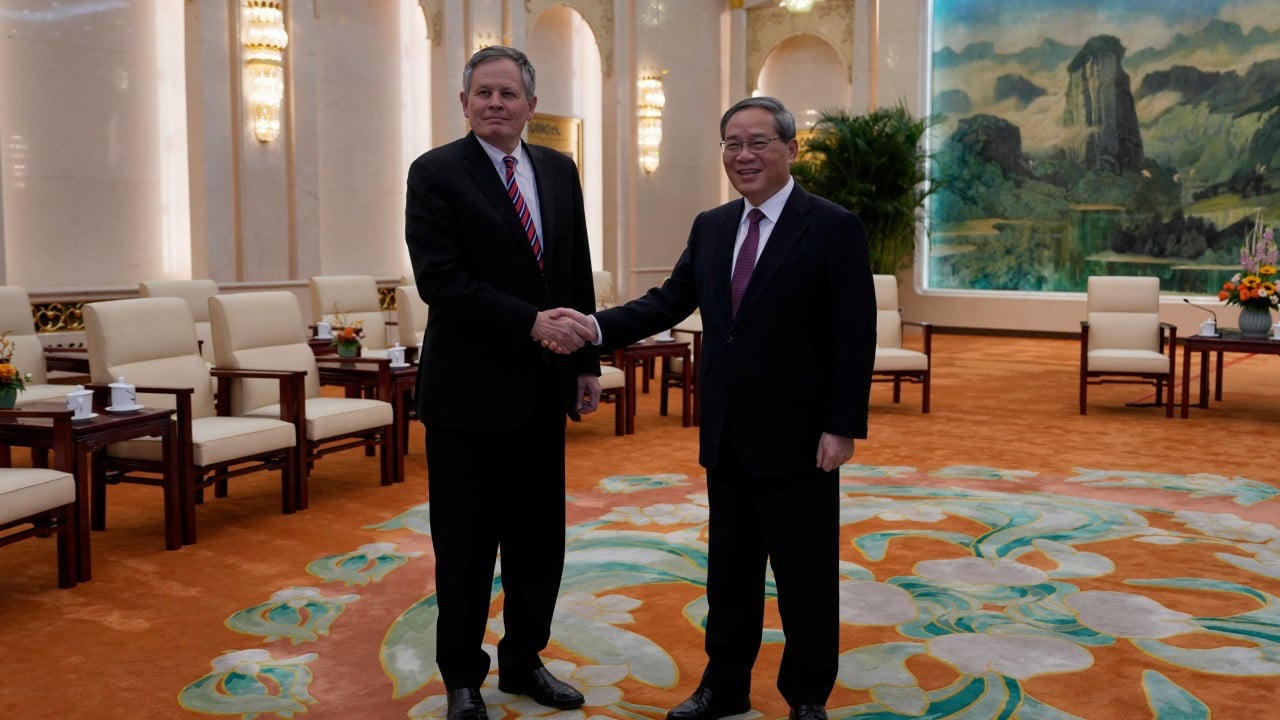
At the end of the day, these massive geopolitical shifts come down to people in rooms. It’s about the tone of a voice, the firmness of a handshake, and the ability to read the room when the translators stop speaking.
The Trump ally isn't just a messenger; he’s a weather vane. His reception in Beijing will tell us a lot about the atmosphere we can expect in May. If he is greeted with cold formality, the summit will likely be a stalemate. If there is a glimmer of warmth, a willingness to talk about specifics, then maybe—just maybe—the pressure is working in a way that leads to stability rather than chaos.
We watch these movements with a mix of fascination and dread. We know that our world is being reshaped, and we have no say in the matter. We are the passengers on a different kind of flight, one where the pilots are arguing over the controls while the mountains loom ahead.
The jet will land. The meetings will happen behind closed doors. The press releases will be drafted in careful, sterile language that reveals nothing and hides everything.
But out in the real world, the pressure will continue to mount. It will be felt in the price of a grocery bill, in the hiring freezes at tech firms, and in the anxious conversations of families trying to plan for a future that feels increasingly precarious. The messenger has arrived. Now we wait to see if the message was heard, or if it was lost in the roar of the engines.
The silence that follows a great confrontation is never truly empty. It is heavy. It is expectant. It is the sound of a world holding its breath.