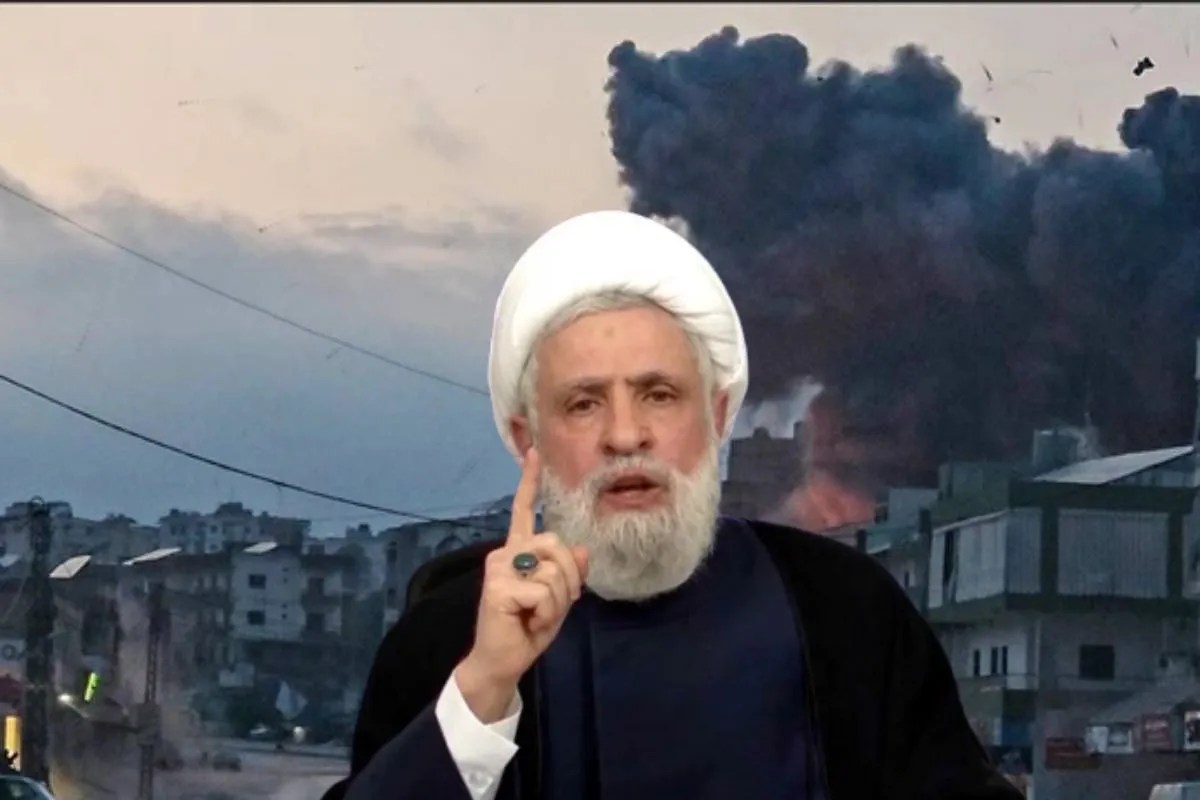
The headlines are always the same. A militant leader delivers a fiery speech, bombs drop on Beirut or southern Lebanon, casualties mount, and analysts rush to declare a major shift in the geopolitical balance of power.
When Naim Qassem issues an ultimatum, mainstream commentators treat it as a sudden escalation. When Israeli airstrikes hit Lebanese soil, the immediate reaction is to measure the impact solely in body counts and structural damage. This is a shallow, lazy way to read a conflict that operates on structural logic rather than emotional outbursts. Meanwhile, you can read similar events here: The Tanker Illusion Why the US and Iran Are Incapable of Going to War.
The media focuses on the theater. They miss the ledger.
The Myth of the Ultimatum
Public pronouncements from leadership figures in asymmetrical conflicts are rarely actual ultimatums. They are internal marketing. To understand the bigger picture, we recommend the excellent analysis by Reuters.
When a commander takes to the airwaves to threaten total retaliation, the primary audience isn’t the opposing military command. The target audience is the domestic base and the regional financial backers. In asymmetric warfare, maintaining the illusion of strategic initiative is just as vital as holding physical territory.
Western analysts routinely mistake rhetorical posturing for imminent tactical shifts. They analyze speeches as if they are listening to a corporate board meeting where words have strict, legally binding definitions. In reality, these statements function as psychological stabilization mechanisms. To treat a televised warning as a new, game-altering development is to misunderstand how non-state actors survive prolonged attrition. They do not survive by executing predictable ultimatums; they survive by managing perception while their networks operate entirely in the shadows.
Airstrikes are Signals Not Solutions
Every time an airstrike hits a high-density area in Lebanon, the immediate media narrative shifts to a discussion of tactical dominance. This is a fundamental misreading of modern military history.
Air supremacy does not automatically translate into strategic victory. If decades of conflict in the Middle East have proven anything, it is that kinetic force from above cannot easily dismantle deeply embedded political and military infrastructure on the ground.
- The Tactical Illusion: A strike destroys a command post or eliminates localized personnel.
- The Strategic Reality: The underlying network structure is decentralized. It is designed precisely to survive localized decapitation strikes.
When analysts count the number of strikes as a metric of success, they are using an outdated framework. They are looking at a 20th-century model of conventional warfare where destroying an enemy's physical infrastructure led to capitulation. In modern irregular warfare, using heavy kinetic force often accelerates the polarization of the local population, solving the adversary's recruitment problems for the next decade.
The Misguided Premise of Regional Stability
People often ask: "When will both sides realize that escalation benefits no one?"
The premise of that question is fundamentally flawed. Escalation often serves the short-term political survival of leadership on both sides of the border. Perpetual tension justifies emergency budgets, suppresses domestic political dissent, and keeps fragmented coalitions unified against an external threat.
The true cost of this dynamic is borne by civilians, but from a purely analytical standpoint, expecting a sudden outbreak of diplomatic rationality ignores the entrenched institutional incentives for maintaining a state of low-intensity conflict. Stability is a product that looks good in international policy papers, but on the ground, friction is the currency of power.
The Flaw in the Containment Strategy
For years, international bodies have relied on a strategy of managed containment—the idea that you can allow a certain level of violence to occur within a designated geographic zone without it spilling over into a wider conflagration.
This approach assumes both actors are rational economic entities that calculate risks using Western models of cost-benefit analysis. They don't. When an actor operates on ideological imperatives mixed with existential survival tactics, standard deterrence models break down.
If you want to understand where the situation is heading, stop watching the press conferences. Stop tracking the individual airstrikes on a map as if you are watching a video game. Look instead at the supply lines, the regional financial flows, and the domestic political pressures building within both capitals.
The current coverage gives you theater. The real conflict is an unglamorous, brutal game of endurance where the side that wins is simply the one that manages its internal vulnerabilities slightly better than the opponent. Turn off the news anchors and look at the structural mechanics of the region.