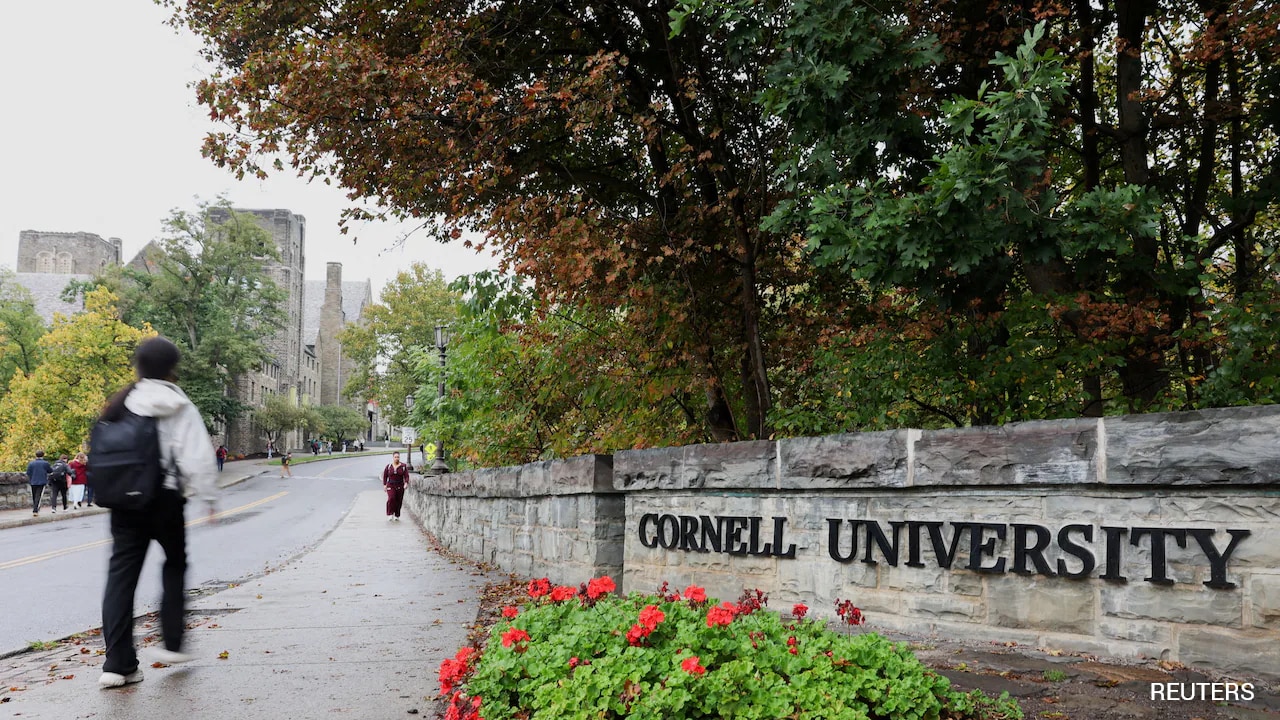
Headlines love a villain. They love a sensational narrative of predators lurking in the shadows, waiting to pounce on the unsuspecting. When tragic events pierce the illusion of safety at elite institutions, the media industrial complex immediately pivots to the most digestible, cinematic version of reality possible. We get breathless accounts of survivors describing encounters with dangerous predators, painting a picture of a campus turned into a safari.
It is lazy journalism. Worse, it is a deliberate misdirection that protects the institutional machinery responsible for the catastrophe in the first place.
When a survivor steps forward and uses language that invokes helpless prey and apex predators, the cultural imagination does not challenge the framing. We swallow it whole because it fits a comfortable script. Monsters exist. Victims suffer. Security fails.
That script is a lie.
I have spent years auditing crisis response protocols and institutional safety architectures for organizations that manage vast physical footprints. I have watched boards of directors panic, throw money at PR firms, and construct elaborate theater designed to look like protection while changing absolutely nothing about their operational blind spots.
The Cornell incident—and the public discourse surrounding it—suffers from a fundamental misdiagnosis. The outrage is directed entirely at the symptom while the disease metastasizes unchecked. By reducing a complex systemic failure to a narrative about dangerous individuals roaming free, we absolve the administrators, the planners, and the policymakers who created the vulnerability matrix in the first place.
Let us look at the data. Real security is not a matter of vibes, panic buttons, or hand-wringing op-eds about lighting. It is a matter of environmental design, bottleneck management, and institutional accountability. When an area becomes a flashpoint for danger, it is almost never because evil suddenly appeared out of nowhere. It is because the physical and administrative architecture invited failure.
Institutions love to hide behind the unpredictable nature of human behavior. It is an easy out. If a bad actor does something horrific, the university shrugs and points to the infinite complexity of the human mind. "Who could have predicted this?" they ask with palms upturned in mock innocence.
Anyone paying attention to the infrastructure, that is who.
When paths are poorly illuminated, when transit hubs are isolated, when emergency response loops rely on redundant layers of bureaucracy rather than direct physical intervention, danger is not a random anomaly. It is a statistical certainty waiting for a timestamp.
The lazy consensus says we need more awareness campaigns. We need more pamphlets. We need students to be more vigilant.
That is victim-blaming dressed up in progressive jargon. It shifts the burden of physical security from the multi-million-dollar endowment holding the liability onto the eighteen-year-old trying to pass organic chemistry. Asking students to act like tactical operatives while walking across a quad is an admission of institutional bankruptcy.
If your safety model relies on potential victims being hyper-vigilant twenty-four hours a day, you do not have a safety model. You have a prayer strategy.
Let us dismantle another comforting myth: the idea that more campus security guards scrolling through their phones in parked sedans changes the mathematical reality of risk. It does not. Static guards are expensive panic buttons that provide psychological comfort to alumni donors while doing zero to deter calculated threats.
Real security is boring. It involves cutting back sightlines, redesigning pedestrian flows, hardening access points, and creating immediate, fail-safe communication loops that do not route through three different dispatch desks before someone picks up a radio.
Yet, administrators consistently choose the aesthetic of safety over the engineering of it. An aesthetic is cheap. It looks good in the annual report. It satisfies the risk-management checklist without offending anyone's sensibilities or requiring millions of dollars in capital improvements.
When tragedies happen, the playbook is entirely predictable. Step one: express profound sorrow. Step two: launch an independent review panel packed with internal loyalists who will ensure the findings point nowhere near the executive suite. Step three: announce a new committee on wellness and safety. Step four: wait for the news cycle to shift to a celebrity scandal.
We are caught in a loop of performative grief because we refuse to hold power to account for the physical environments they construct.
If you want to protect people, stop treating safety like a public relations exercise. Stop indulging in the comforting fiction that the world is simply divided into helpless bait and roaming lions.
The lions do not matter if you stop leaving the gate wide open. Fix the architecture. Demand accountability from the people holding the purse strings. Everything else is just noise designed to keep you looking the wrong way while the same mistakes repeat themselves in the dark.


