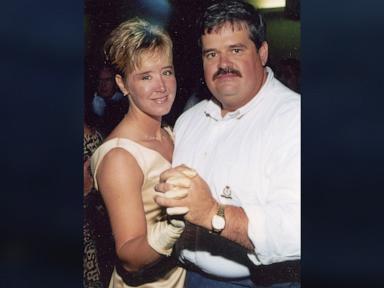
On August 17, 2006, Brandy Hall, a thirty-two-year-old volunteer firefighter and mother of two, left her post at the Malabar Fire Department in Brevard County, Florida. Twenty years later, the investigation into her disappearance remains an instructional case study in forensic ambiguity, systemic evidence dispersion, and investigative friction. Public discourse often frames such disappearances through the lens of emotional tragedy or psychological mystery. However, an analytical examination reveals that the case's persistence as an unsolved file is the direct result of structural data fragmentation, contradictory physical artifacts, and the absence of a linear chain of custody for evidence gathered across multiple jurisdictions.
Deconstructing the disappearance requires stripping away narrative speculation and evaluating the known variables through a rigorous investigative framework. The puzzle does not stem from a total lack of clues. Rather, it arises from an overabundance of disjointed physical indicators that point in mutually exclusive directions. If you found value in this article, you should read: this related article.
The Timeline and the Spatial Vector
The initial hours of any missing person investigation establish the foundational boundary conditions for law enforcement recovery operations. For Brandy Hall, the timeline compresses sharply on the evening of August 17, 2006.
At approximately 10:45 PM, Hall departed the Malabar fire station during her shift, communicating to acquaintances or logging out under the pretext of needing to return home. This departure occurred within a critical operational window. Less than twelve hours later, her husband, Jeffrey Hall, was scheduled to appear in court for a sentencing hearing stemming from his involvement in an illegal marijuana growhouse operation. Furthermore, documentation and subsequent witness statements indicated that Hall was anticipated by legal counsel or authorities to provide testimony or information regarding the case. For another perspective on this event, refer to the latest coverage from NPR.
The spatial vector from the Malabar fire station to her known residences or local transit routes intersects with several bodies of water and sparsely populated wooded sectors in Brevard and Indian River counties. Investigators faced an immediate operational challenge: defining the search radius when the subject's vehicle, personal effects, and potential remains were subsequently discovered in geographically disparate locations separated by miles of terrain.
The Three Divergent Physical Artifacts
An analysis of the physical evidence recovered in the months following August 2006 highlights the core anomaly of the investigation. Standard missing person cases typically yield a centralized cluster of evidence—either a localized vehicle recovery containing the victim, or a verified point of last contact with stationary personal items. The Hall investigation inverted this model through three distinct discovery zones.
The first major recovery occurred when Hall's green Chevrolet pickup truck was pulled from a retention pond in Palm Bay. Forensic inspection of the vehicle revealed the presence of blood inside the cabin. However, the vehicle was unoccupied. The presence of blood establishes a violent or traumatic event within the physical envelope of the truck, while the submersion of the vehicle suggests a deliberate attempt to conceal transport or destroy trace forensic evidence. Yet, the absence of a body inside the submerged truck invalidates simple scenarios of vehicular accidents ending in drowning.
The second recovery materialized weeks later when fishermen located Hall's backpack in a canal in Vero Beach, situated in neighboring Indian River County. The geographical displacement between the Palm Bay retention pond and the Vero Beach canal introduces a vector of movement that defies single-actor pedestrian theories. A backpack containing personal documentation and items does not migrate across county lines via natural hydrological forces without specific human intervention or specialized current pathways.
The third recovery involved an older fire helmet belonging to Hall, found near Mather's Bridge in Indian Harbour Beach. Each piece of evidence—the truck, the backpack, and the helmet—was recovered from a separate body of water or aquatic interface. This spatial scattering pattern indicates either a deliberate multi-site artifact distribution designed to confound search parameters or the involvement of multiple operational phases post-disappearance.
The Legal and Informational Pressure Matrix
To evaluate the behavioral incentives operating on the night of August 17, 2006, analysts must map the external pressures bearing on Hall's immediate ecosystem. Jeffrey Hall's impending sentencing hearing represented a high-magnitude stress event. Legal exposure for drug cultivation operations carried substantial prison sentences, which were subsequently levied when Jeffrey Hall and an accomplice received eighteen-month federal or state sentences.
The intersection of law enforcement scrutiny, impending legal testimonies, and personal financial strain creates a complex cost function for every individual linked to the household. Financial audits following her disappearance confirmed zero activity on Hall's personal bank accounts. In missing person analytics, a total cessation of financial liquidity combined with the abandonment of primary assets strongly correlates with either immediate fatalities or a successfully executed, highly clandestine voluntary departure.
However, the voluntary departure hypothesis fractures under the weight of the physical evidence. An individual executing a self-removal strategy typically retains financial resources or utilizes pre-planned caches. The total absence of bank activity over two decades, coupled with the discovery of personal identification inside a discarded backpack in a canal, shifts the probability distribution heavily away from voluntary relocation and toward foul play.
Behavioral Anomalies and Witness Contradictions
Investigative friction in the Hall case was exacerbated by conflicting statements from persons of interest during the primary interview windows. Randall Richmond, an acquaintance and associate who engaged in an extramarital relationship with Hall, provided initial timelines to law enforcement that were subsequently contradicted by telecommunication records.
Initial police interviews recorded Richmond claiming he had not spoken to Hall for weeks prior to her disappearance. Subsequent digital forensics and phone log analysis exposed direct contact close to the temporal window of her vanishing. When confronted with these digital discrepancies, Richmond altered his narrative, asserting that Hall had expressed an intention to go "on the run" and was allegedly awaiting financial exchange from an unidentified third party.
This behavioral pivot introduces a classic analytical dilemma: distinguishing between opportunistic prevarication and genuine insider knowledge. When an individual provides demonstrably false timelines to investigators during the critical initial containment window, standard investigative protocols treat that individual as a primary friction point. Richmond's erratic movements, including reported truck sightings near retention zones and conflicting witness accounts regarding altercations, formed the basis of prolonged law enforcement focus. Despite intensive questioning and polygraph administration across various subjects, no criminal charges have been filed, leaving the case in a state of evidentiary purgatory.
The Failure Modes of Traditional Cold Case Heuristics
Two decades of investigative stagnation expose the limitations of traditional municipal police frameworks when applied to complex missing persons cases involving potential homicides without a recovered corpus delicti.
The primary barrier is the degradation of trace evidence. In 2006, DNA collection methodologies, touch DNA sensitivity, and digital data recovery standards differed vastly from contemporary forensic capabilities. While biological samples recovered from the green Chevrolet truck were subjected to analysis, the technology available at the time often failed to isolate mixed profiles or degraded cellular material submerged in aquatic environments.
Furthermore, the legal threshold for transitioning an endangered missing persons classification to an active homicide prosecution requires either the recovery of human remains with definitive cause-of-death trauma or an unbroken chain of circumstantial evidence establishing a murder beyond a reasonable doubt. In 2015, a Brevard County circuit judge issued a presumptive death certificate, legally closing the probate and estate dimensions of Hall's disappearance, but this administrative resolution provided zero new physical data for investigators.
The multi-jurisdictional footprint—spanning Palm Bay, Malabar, Vero Beach, and Indian Harbour Beach—historically created bureaucratic friction among distinct municipal police departments and county sheriff offices. Information silos frequently delay the synthesis of cross-county clues, allowing critical tracking windows to close before coordinated multi-agency sweeps can be executed.
Strategic Forecast and Analytical Resolution
Resolving the Brandy Hall cold case requires a complete technical pivot away from legacy witness interrogation and toward modern forensic re-evaluation. The strategic pathway forward depends on three distinct technical vectors:
First, historical physical evidence—specifically the items recovered from the Vero Beach canal and the interior components of the Chevrolet truck—must be resubmitted to advanced forensic laboratories utilizing ultra-low-template DNA profiling and genealogical database cross-matching. Modern forensic genetic genealogy has demonstrated the capacity to extract usable profiles from degraded items exposed to moisture and environmental contaminants.
Second, geospatial modeling of the evidence discard points (the Palm Bay pond, the Vero Beach canal, and Mather's Bridge) should be synthesized using modern geographic profiling software. By mapping these locations against the known cellular tower pings, vehicle movement patterns, and historical property ownership of persons of interest in August 2006, investigators can isolate high-probability secondary deposition sites that escaped initial ground searches.
Third, institutional persistence requires transitioning the case files into permanent cold-case review units equipped with federal investigative resources, neutralizing local jurisdictional barriers that historically limited expansive cross-county excavations. Until these high-resolution analytical protocols are systematically applied to the physical artifacts of August 2006, the disappearance will remain a structural study in how evidentiary fragmentation outpaces investigative methodology.