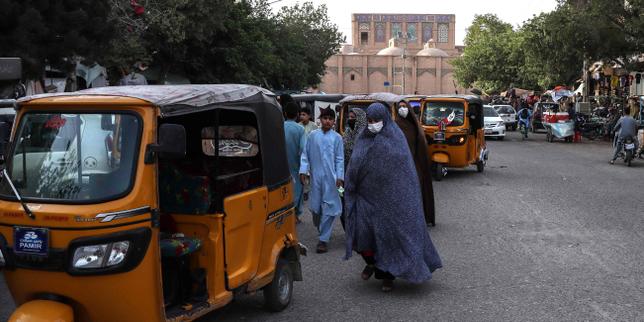
The dispersal of a women's assembly via live ammunition in Afghanistan is not an isolated incident of chaotic governance; it is a calculated execution of a totalitarian control function. Standard journalistic accounts treat these events as sporadic outbursts of ideological fervor. This view misjudges the structural logic of authoritarian consolidation. In reality, the deployment of kinetic force against unarmed civilian populations represents a highly systematized mechanism designed to suppress political competitors, establish a monopoly on the public square, and minimize the operational costs of long-term regime enforcement.
To understand the trajectory of governance in Afghanistan, analysts must look past the immediate humanitarian tragedy and examine the underlying strategic framework. Regime survival depends on the absolute suppression of civil society before alternative power structures can achieve scale.
The Coercion Equivalence Framework
Authoritarian regimes operate under a continuous cost-benefit calculus regarding the deployment of state violence. The decision to transition from passive surveillance to active kinetic disruption—such as firing into crowds—can be modeled through three distinct operational pillars.
                  ┌────────────────────────────────────────┐
                  │       THE THREE COERCION PILLARS       │
                  └────────────────────────────────────────┘
                                       │
         ┌─────────────────────────────┼─────────────────────────────┐
         ▼                             ▼                             ▼
┌─────────────────┐           ┌─────────────────┐           ┌─────────────────┐
│ Escalation Cost │           │ Deterrence ROI  │           │ Informational   │
│   Efficiency    │           │  Optimization   │           │   Asymmetry     │
└─────────────────┘           └─────────────────┘           └─────────────────┘
1. Escalation Cost Efficiency
Regimes possess finite enforcement capital. Deploying mass security personnel for physical containment, processing arrests, and managing long-term detentions requires significant administrative infrastructure and recurring financial expenditure. Firing live ammunition over or into a crowd alters the cost equation immediately. It achieves the primary operational objective—spatial dispersal—with minimal personnel and near-zero time investment, maximizing the immediate return on force deployment.
2. Deterrence ROI Optimization
The utility of public violence extends far beyond the immediate geographic theater. Totalitarian governance relies on the concept of preemptive deterrence. By demonstrating a zero-threshold policy for public dissent, the regime raises the anticipated cost of participation for future protestors. The objective is to shift the psychological calculus of the citizenry from collective action to individualized self-preservation, effectively strangling potential resistance movements in the infancy of their formation.
3. Informational Asymmetry
Public demonstrations present a systemic threat because they serve as coordination mechanisms. When individuals gather, they update their internal assessments regarding the size, viability, and shared sentiment of the opposition. Dispersing a crowd via kinetic force abruptly cuts off this horizontal flow of information. The regime reinstates a vertical communication structure, ensuring that the citizen remains isolated, uncertain of their peers' willingness to resist, and dependent entirely on state-sanctioned narratives.
The Civil Dissolution Bottleneck
The specific targeting of female-led gatherings highlights a critical vulnerability in the Taliban's consolidation strategy. In post-conflict societies, traditional male-led political networks are often the first to be compromised, co-opted, or dismantled due to their explicit links to the deposed regime or tribal power structures. Women’s assemblies, conversely, frequently operate outside these formal channels, leveraging informal social networks, educational collectives, and localized mutual-aid societies.
This structural independence creates a unique bottleneck for regime intelligence services. Because these organic networks lack a centralized, easily targetable leadership hierarchy, the state cannot rely purely on standard co-optation or targeted arrests. The regime faces an institutional blind spot. Unable to efficiently infiltrate or negotiate with decentralized civic actors, the state reverts to blunt, undifferentiated violence as its primary tool for systemic disruption.
This dynamic creates a self-reinforcing feedback loop:
- Institutional Incapacity: The regime lacks the bureaucratic apparatus to manage non-violent civil dissent or adjudicate social grievances through a legitimate legal framework.
- Over-Reliance on Hard Power: Lacking administrative alternatives, the state defaults to the Ministry for the Propagation of Virtue and the Prevention of Vice or armed paramilitary units to enforce order.
- Systemic Radicalization of the Core: The continuous use of kinetic force alienates the local populace, accelerating the destruction of whatever latent governance legitimacy the regime sought to establish.
Structural Fractures in the Monopoly of Violence
While the deployment of live ammunition demonstrates immediate tactical efficacy in clearing geographic spaces, it exposes significant long-term strategic vulnerabilities. A state’s monopoly on violence remains stable only when it is perceived as predictable and structurally absolute. The reliance on erratic, high-velocity escalation indicates an inability to maintain public order through institutional authority alone.
First, this operational model creates an unstable equilibrium within the security apparatus itself. Field commanders tasked with policing civilian populations must constantly gauge the level of force required. Without clear, institutionalized rules of engagement, individual commanders operate on variance. This variance introduces the risk of unintended escalation, where an over-corrective use of force can transform a localized demonstration into a broader, unmanageable civil uprising.
Second, the visible reliance on terror mechanisms degrades the regime's capacity to build external economic partnerships. For an administration seeking sovereign recognition and the unfreezing of central bank assets, the public dissemination of state-sponsored violence acts as an insurmountable friction point. It forces international interlocutors to price in severe reputational risks, stalling foreign direct investment and limiting diplomatic engagement to baseline humanitarian coordination. The regime is trapped in a structural paradox: the very mechanisms it uses to secure internal survival actively sabotage the external economic integration required for its long-term financial viability.
Operational Risk Analysis for External Stakeholders
For international NGOs, multilateral institutions, and diplomatic missions operating within or adjacent to Afghanistan, these dynamics require a fundamental recalibration of risk management protocols. Accepting the reality of a highly volatile, force-first governance model means abandoning assumptions regarding civilian protection or predictable state behavior.
┌───────────────────────────────────────────────────────────────────────────┐
│                    STRATEGIC RISK ASSESSMENT MATRIX                      │
├───────────────────┬───────────────────────────────────────────────────────┤
│ Risk Vector       │ Operational Impact                                    │
├───────────────────┼───────────────────────────────────────────────────────┤
│ Collateral Kinetic│ High probability of aid distribution centers or field  │
│ Exposure          │ offices becoming co-located with sudden civil actions│
│                   │ and subsequent indiscriminate force response.         │
├───────────────────┼───────────────────────────────────────────────────────┤
│ Network Continuity│ Sudden, state-enforced severing of local partner      │
│ Degradation       │ networks, particularly those managed by or serving     │
│                   │ female cohorts, via targeted spatial bans.            │
├───────────────────┼───────────────────────────────────────────────────────┤
│ Information       │ Complete reliance on compromised state media channels │
│ Deficit           │ due to the suppression of independent on-the-ground   │
│                   │ reporting and structural communication blackouts.     │
└───────────────────┴───────────────────────────────────────────────────────┘
The primary analytical limitation facing external observers is the temptation to view these enforcement actions as evidence of a regime acting from a position of absolute, unassailable strength. This is a misreading of authoritarian lifecycle dynamics. Totalitarian regimes that possess deep structural legitimacy or sophisticated bureaucratic penetration do not need to fire into crowds of their own citizens to disperse them. The reliance on kinetic force is an explicit admission of institutional weakness—a diagnostic indicator that the regime possesses no viable mechanisms of social persuasion, economic incentivization, or political co-optation.
Forward-Deployable Strategic Directives
External actors must transition from reactive condemnation to a decoupled, resilient operating model designed to survive a high-coercion environment.
- Decentralize Operational Footprints: Shift from centralized, highly visible urban offices to distributed, low-profile nodes. This mitigation strategy minimizes the risk of international assets or personnel being caught in sudden localized crowd-control actions.
- Asynchronous Program Delivery: Re-engineer aid distribution, educational support, and basic services to function asynchronously. Removing the requirement for large, simultaneous physical gatherings eliminates the exact catalyst that triggers the regime's kinetic control function.
- Establish Non-Linear Information Channels: Build alternative, redundant verification mechanisms for field data. Because the state actively suppresses independent coverage of civil unrest, operational planning must rely on decentralized, peer-to-peer data verification networks to gauge real-time security postures.



:max_bytes(150000):strip_icc():focal(665x0:667x2)/gettyimages-50733149-2000-8b129a2475974982a915418ce92a73d8.jpg)