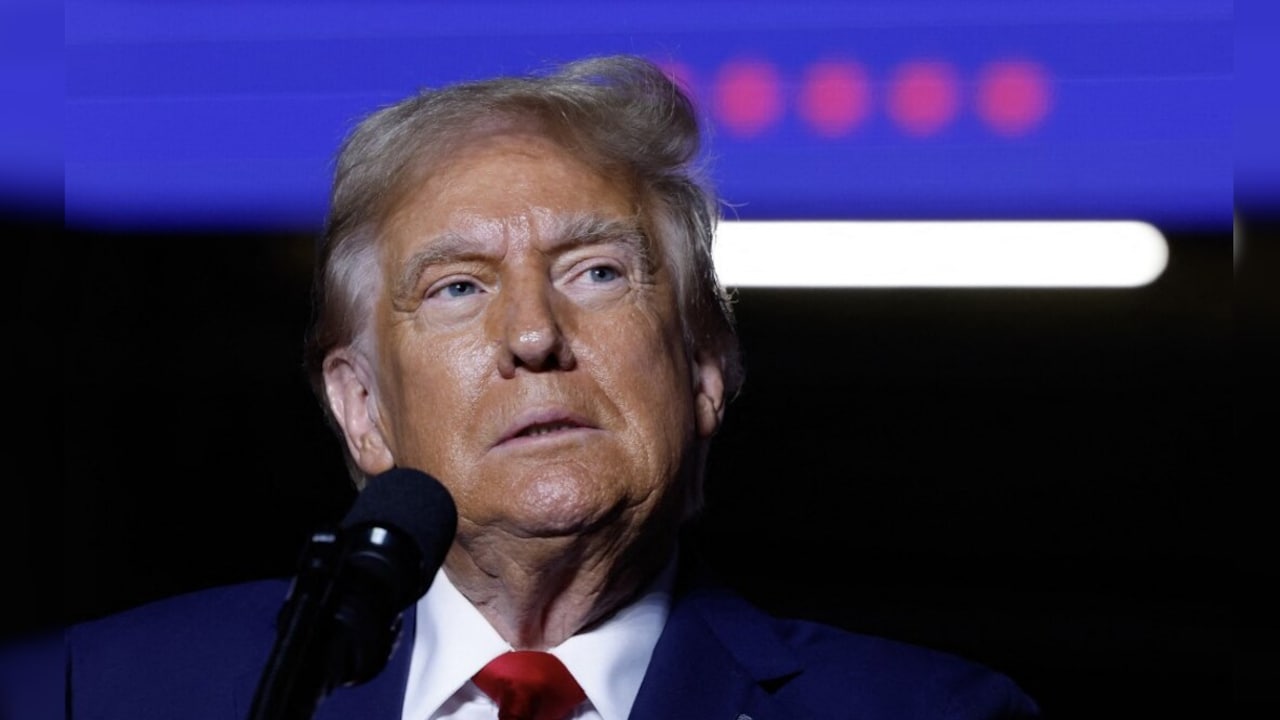
When an incumbent president characterizes a midterm electoral loss as a "giant step back in history," the statement operates not as an objective historical assessment, but as a deliberate exercise in political framing, expectation management, and intra-party discipline. Standard political journalism treats such declarations as reactive soundbites, missing the underlying structural incentives driving executive rhetoric immediately following a shift in congressional control. Analyzing the transition from unified to divided government requires separating emotional rhetoric from institutional mechanics, evaluating how legislative gridlock alters executive authority, and mapping the strategic calculus behind delegitimizing electoral outcomes.
The Strategic Function of Historical Catastrophism
Executive communication following a midterm defeat serves three operational objectives:
- Base Consolidation Through Existential Framing: Midterm elections historically suffer from sharp turnout drop-offs among peripheral voters, leaving the electorate dominated by high-propensity partisans. By framing a routine cyclical correction—where the president's party loses seats in the House of Representatives or Senate—as an existential historical regression, the executive converts policy disagreements into a moral crisis. This keeps core supporters mobilized for the subsequent presidential cycle and insulates the executive from immediate primary challenges.
- Preemptive Blame Allocation: A shift in chamber control transfers agenda-setting power, committee chairmanships, and subpoena authority to the opposition party. Declaring the election outcome a historical setback establishes a baseline narrative before the new Congress is even seated: any subsequent macroeconomic slowdown, legislative stagnation, or governance failure is pre-attributed to the incoming majority rather than incumbent executive policy.
- Narrative Anchoring Against Intra-Party Defection: Midterm losses routinely trigger factional infighting within the president's party, as moderate lawmakers distance themselves from an unpopular executive and ideological purists demand sharper confrontation. Absolute rhetoric forces party members into a binary alignment—either endorse the president's framing of the loss as an illegitimate or catastrophic aberration, or risk being labeled complicit in the regression.
Separating Cyclical Norms from Historical Anomalies
Evaluating the validity of a "giant step back" claim requires establishing a baseline of historical electoral mechanics. In American political history, the president's party loses seats in the House of Representatives in over 90 percent of midterm elections since the Civil War. This phenomenon, driven by thermostatic public opinion and differential turnout, represents the equilibrium state of the American constitutional system rather than a deviation from it.
Thermostatic public opinion operates as a self-correcting feedback loop: when an administration enacts or proposes significant policy shifts, the electorate perceives a movement away from the median voter's preference and responds by empowering the opposition party to apply institutional brakes. Characterizing this predictable thermostatic correction as a historic regression conflates normal constitutional friction with systemic collapse. The empirical reality is that divided government is the statistical norm in modern American governance, occurring in the majority of legislative sessions over the past half-century.
The Institutional Cost Function of Divided Government
Moving from rhetorical framing to operational reality reveals how a midterm loss alters the governing equation for an incumbent administration. The transition from unified control to divided control changes the executive's cost function across four distinct institutional domains.
1. Legislative Throughput and Agenda Control
Under unified government, the Speaker of the House and the Senate Majority Leader coordinate directly with the White House Office of Legislative Affairs to sequence bills, manage floor time, and protect vulnerable incumbents from difficult votes. Following a midterm loss of one or both chambers, the executive loses control over the legislative calendar.
The opposition majority acquires the power to:
- Terminate Administration Priorities: Bills central to the executive's second-half agenda die in committee without receiving a floor vote, eliminating the need for the president to use the veto pen—a visible tool that carries higher political costs than quiet committee burial.
- Force Asymmetric Messaging Votes: The new majority can pass partisan legislation designed specifically to force the president into politically damaging vetoes, shifting the burden of obstruction onto the White House.
- Weaponize Must-Pass Legislation: Routine authorizations—such as debt ceiling increases, continuing resolutions for government funding, and the National Defense Authorization Act—transform into leverage points where the opposition extracts policy concessions in exchange for preventing systemic disruption.
2. Oversight Asymmetry and Investigative Friction
The most immediate operational shock of a midterm loss occurs within congressional committees. Committee chairs possess unilateral subpoena power, control over hearing schedules, and the authority to depose executive branch officials.
When the opposition captures a chamber, the administration's senior personnel must divert substantial bandwidth from policy execution to legal defense and document production. This creates an internal operational bottleneck:
- Resource Reallocation: White House Counsel and agency general counsels expand rapidly, shifting institutional focus from affirmative rulemaking to defensive privilege assertions.
- Policy Chill: Career civil servants and political appointees slow down controversial regulatory initiatives to avoid becoming the focal point of televised congressional hearings.
- Narrative Fragmentation: Instead of the White House driving the daily news cycle through executive announcements, congressional investigations generate continuous, competing headlines that keep the administration in a reactive posture.
3. Judicial and Executive Appointments
If the midterm loss includes the Senate, the cost function changes permanently for the remainder of the presidential term regarding personnel. Under Article II of the Constitution, the Senate holds the power of advice and consent over federal judges, cabinet secretaries, and independent agency commissioners.
A hostile Senate majority exercises gatekeeping control through the Senate Judiciary Committee and the floor schedule. This forces the executive into a binary choice: nominate ideological moderates capable of securing bipartisan confirmation, or leave key judicial and regulatory seats vacant, thereby capping the long-term institutional legacy of the administration. Conversely, if the president's party retains the Senate while losing the House, judicial confirmations often accelerate as the administration pivots away from unattainable legislative goals toward lifetime court appointments.
4. The Regulatory Pivot and Unilateral Executive Action
When legislative pathways close, administrations invariably shift toward unilateral executive governance via executive orders, presidential memoranda, and agency rulemaking under the Administrative Procedure Act. While this bypasses congressional gridlock in the short term, it introduces severe structural vulnerabilities:
- Durability Deficit: Unlike statutes passed by Congress and signed into law—which require a subsequent act of Congress to repeal—executive actions can be revoked unilaterally by a successor administration on its first day in office.
- Judicial Vulnerability: Aggressive regulatory interpretations designed to substitute for missing legislation face heightened scrutiny in federal courts, particularly under modern administrative law doctrines that require clear congressional authorization for rules of vast economic and political significance.
- Appropriations Constraints: Even when an agency successfully promulgates a new rule, an opposition-controlled House can use appropriations riders to prohibit the expenditure of federal funds to implement or enforce that specific regulation.
The Epistemology of Electoral Delegitimization
Beyond institutional mechanics, characterizing a midterm loss as a step backward in history reflects a specific epistemological approach to democratic outcomes. In stable representative systems, elections function as dispute-resolution mechanisms that confer temporary legitimacy on a governing coalition. When an executive frames an unfavorable election result not merely as a policy disagreement, but as a historical aberration, it alters how followers process empirical political reality.
This framing relies on an essentialist definition of the electorate: the assumption that only a specific ideological coalition represents the authentic national will, while victories by the opposing coalition represent an illegitimate interruption of historical progress.
The operational consequences of this rhetorical stance extend beyond immediate partisan posturing:
- Erosion of Institutional Trust: Repeatedly framing electoral losses as systemic failures lowers baseline trust in electoral administration among the losing coalition's voters, complicating future voter mobilization efforts if supporters conclude the system is structurally rigged against them.
- Polarization Ratchet: When one side characterizes routine electoral losses as historical catastrophes, the opposing side adopts reciprocal framing, escalating the perceived stakes of every subsequent election and reducing the political space available for bipartisan compromise on routine governance tasks.
- Feedback Loop Distortion: Political parties rely on election losses to diagnose strategic errors—such as candidate quality deficits, flawed messaging, or alienating policy positions. By attributing a loss entirely to external historical regression rather than internal strategic miscalculations, an executive insulates the party apparatus from necessary course corrections ahead of the next presidential election.
Limitations of Executive Framing Strategies
While catastrophic framing offers short-term benefits for base retention and blame deflection, it suffers from diminishing marginal returns over a two-year legislative cycle.
First, swing voters and political independents—the exact demographic cohorts that decide presidential elections—tend to exhibit fatigue toward perpetual crisis rhetoric. Independents frequently vote for divided government intentionally to moderate both parties; telling those voters that their collective decision represents a "giant step back in history" directly alienates the median electorate required to win the next general election.
Second, rhetoric cannot override statutory constraints. Regardless of how forcefully an executive characterizes the midterm outcome, the constitutional allocation of the power of the purse remains unchanged. If an administration refuses to engage in transactional bargaining with the new congressional majority because doing so would contradict its framing of the opposition as a historical threat, the result is legislative paralysis that disproportionately harms the incumbent president, whom voters hold primarily responsible for the overall state of the nation.
Tactical Execution for Post-Midterm Governance
To navigate the structural realities of a midterm defeat without succumbing to legislative irrelevance or base erosion, executive strategists must decouple public messaging from private legislative operations:
- Bifurcate the Communication Strategy: Maintain high-contrast ideological framing in public rallies and digital fundraising channels to keep the core base engaged, while authorizing senior legislative liaisons to conduct quiet, transactional negotiations with opposition committee chairs on non-ideological bills (e.g., infrastructure maintenance, veterans' affairs, agricultural subsidies).
- Audit Regulatory Vulnerability: Immediately conduct a legal stress-test of all pending agency rules. Prioritize finalizing regulations that possess clear statutory authority and can withstand judicial review, while shelving legally fragile initiatives that will invite immediate court injunctions and congressional oversight spectacles.
- Exploit Opposition Factionalism: A newly empowered congressional majority inevitably contains internal ideological fractures between its moderate swing-district members and its safe-seat hardliners. Rather than treating the opposition as a monolith, target legislative proposals directly at the opposition's vulnerable swing-district members, forcing their leadership to either allow bipartisan votes or expose their own members to electoral risk.
- Pivot to Executive Execution: Shift operational focus from passing new laws to demonstrating competence in administering existing programs. Efficient disaster response, streamlined federal service delivery, and disciplined macroeconomic management build tangible incumbent credibility that rhetorical framing alone cannot replicate.