The recapture of Mekelle by the Ethiopian National Defense Force (ENDF) in late November 2020 did not terminate the Tigray conflict; it merely transitioned the theater of operations from conventional maneuver warfare to a protracted, asymmetric stabilization crisis. Standard journalistic narratives frame the aftermath in Mekelle through human-interest vignettes—focusing on shuttered banks, curfew compliance, and resident anxiety. While emotionally resonant, this framing obscures the structural variables governing post-occupation urban stability. To understand why the "echo of war" persists in Tigray’s capital, analysts must evaluate the breakdown of institutional legitimacy, the paralysis of urban supply chains, and the security dilemma inherent in kinetic pacification.
The Institutional Vacuum and Legitimacy Deficit
When an external military force displaces a deeply entrenched regional administration—in this case, the Tigray People’s Liberation Front (TPLF)—the immediate challenge is administrative continuity. The federal government in Addis Ababa installed a Transitional Administration to govern Mekelle and the broader region. However, governance capacity relies on two inputs: bureaucratic compliance and popular legitimacy. In Mekelle, both collapsed simultaneously.
Civil servants, municipal workers, and local police forces largely abandoned their posts either out of ideological alignment with the ousted TPLF or fear of retribution from both federal forces and underground resistance networks. This created an immediate administrative vacuum. Without mid-level bureaucrats to process payrolls, manage municipal water grids, or adjudicate local disputes, the Transitional Administration functioned as an isolated executive layer disconnected from the city's operational infrastructure.
This dynamic illustrates a fundamental principle of counterinsurgency and occupation theory: military dominance over physical terrain does not automatically confer political control over the population. When the occupying authority relies on nonlocal security forces—such as federal troops from outside the region and allied Eritrean units—linguistic and cultural friction compounds the legitimacy deficit. Every checkpoint interaction becomes a reminder of external imposition rather than civic protection, accelerating the radicalization of an otherwise neutral urban populace.
The Anatomy of Economic Paralysis
A modern city cannot function without liquidity and telecommunications. During the November 2020 offensive, the federal government severed Tigray’s banking networks, internet access, and telephone lines to blind TPLF command-and-control structures. While tactically effective during the kinetic phase, maintaining these blackouts during the stabilization phase inflicted severe structural damage on Mekelle’s economy.
The economic contraction in Mekelle operates through three interlocking mechanisms:
- Liquidity Freeze: With commercial banks closed or restricted to minimal withdrawal limits, the velocity of money dropped to near zero. Businesses could not pay suppliers, and salaried workers could not access existing savings. Informal credit networks quickly exhausted their capital reserves, forcing the local economy to regress toward rudimentary barter systems.
- Supply Chain Severance: Mekelle is a landlocked regional hub dependent on road corridors connecting it to the Afar and Amhara regions, as well as routes leading toward the Red Sea. Ongoing insecurity along these transit arteries, combined with military checkpoints and fuel rationing, restricted the inflow of basic commodities. Scarcity drove hyper-localized price inflation for staples like teff, cooking oil, and medicine at the exact moment household liquidity vanished.
- Industrial Suspension: Prior to the conflict, Mekelle was positioned as an emerging industrial zone, hosting textile factories, cement plants, and pharmaceutical manufacturing. The combination of power grid disruptions, lack of raw material imports, and the flight of technical managers halted industrial output. Fixed capital began to depreciate rapidly without maintenance, turning productive assets into stranded liabilities.
Standard reporting often treats closed shops as a symptom of mere fear. In reality, shuttered storefronts represent a rational economic response to a broken clearinghouse system. Merchants cannot restock inventory when currency cannot move electronically and freight corridors remain contested.
The Security Dilemma and Asymmetric Blowback
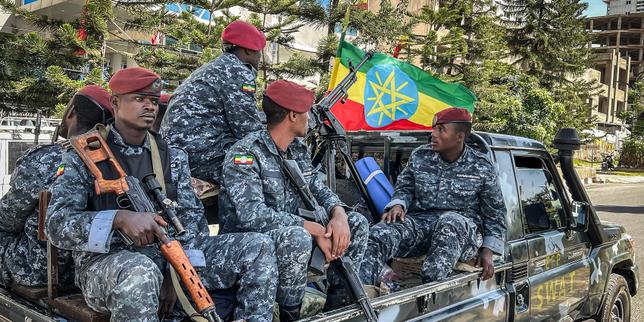
The presence of heavy military hardware in Mekelle's streets creates a classic urban security dilemma. From the perspective of federal commanders, saturating the city with patrols, enforcing strict night curfews, and conducting house-to-house sweeps for weapons are necessary measures to prevent urban insurgency. Yet these exact measures degrade the security environment they are intended to stabilize.
High-visibility patrols and aggressive search operations generate friction incidents—arbitrary detentions, property damage, and civilian casualties. In a tightly knit urban social fabric like Mekelle, information regarding abuses travels rapidly through word-of-mouth networks, bypassing the telecommunications blackout. Each incident acts as a recruitment catalyst for the TPLF’s decentralized resistance, shifting public sentiment from war-weariness to active hostility.
Furthermore, the asymmetric nature of the conflict means that the TPLF did not need to retake Mekelle through conventional assault to render it ungovernable. By retreating into the surrounding rugged terrain of the Tigray highlands, TPLF forces retained the ability to interdict supply lines, target isolated patrols, and assassinate officials collaborating with the Transitional Administration. This forced the ENDF into a costly defensive posture, tying down significant troop numbers in static urban garrison duties while ceding rural mobility to insurgent elements.
Information Asymmetry and Psychological Attrition
The prolonged communications blackout produced a severe information asymmetry that destabilized the psychological baseline of Mekelle’s residents. In the absence of verified news, access to independent media, or the ability to contact relatives in rural districts, rumor became the primary currency of information.
Psychological attrition in post-conflict cities follows a predictable trajectory when information is restricted:
- Fragmentation of Situational Awareness: Residents cannot accurately assess risk levels beyond their immediate neighborhood. A localized firefight on the outskirts of the city is easily misinterpreted as a full-scale counter-offensive, triggering panic hoarding and population displacement.
- Erosion of Institutional Trust: When state-controlled media broadcasts narratives of total normalcy that directly contradict the lived reality of curfews, food shortages, and distant artillery fire, the population completely rejects official communications. Once credibility is lost, the governing authority cannot effectively issue public health directives, humanitarian aid schedules, or security warnings.
- Diaspora Disconnect: Tigray has a large, politically active global diaspora that historically provided vital financial remittances to Mekelle. Severing telecommunications cut off both the financial lifeline of remittances and the flow of ground-truth reporting, amplifying external diplomatic pressure on Addis Ababa while deepening internal desperation.
The Limits of Kinetic Pacification
Evaluating the situation in Mekelle requires separating tactical military success from strategic political victory. Capturing a regional capital is a discrete military objective with clear metrics: territory held, enemy formations dispersed, and key infrastructure secured. Stabilizing that same capital requires an entirely different operational toolkit—one focused on institutional restoration, economic reintegration, and political accommodation.
The primary limitation of the federal strategy in Mekelle was the assumption that military victory would force political capitulation. Historical precedent in asymmetric conflicts demonstrates the opposite: when a regional movement retains deep ideological roots and rural sanctuary, urban occupation merely shifts the conflict into a war of attrition. External military forces face rising fiscal and manpower costs to maintain occupation, while local administrators face an insurmountable legitimacy gap.
Without a negotiated political settlement that addresses regional autonomy and security guarantees, restoring banking services and lifting curfews only provides temporary relief. Economic normalization cannot take root under the threat of renewed hostilities, and infrastructure remains vulnerable to sabotage as long as the underlying political grievance remains unresolved.
Operational Imperatives for Urban Stabilization
To reverse the degradation of urban stability in Mekelle and prevent a permanent cycle of insurgency, stabilization efforts must prioritize structural sequencing over purely kinetic enforcement:
- Decouple Humanitarian and Financial Infrastructure from Security Operations: Immediately restore commercial banking liquidity and telecommunications networks independent of political negotiations. Economic suffocation radicalizes the urban middle class and destroys the tax base required for eventual self-governance.
- Transfer Urban Policing to Local Recruits: Replace non-local military patrols within city limits with vetted, locally recruited municipal police forces. Reducing the visibility of external troops lowers daily friction and removes the primary visual trigger for nationalist resistance.
- Establish Protected Humanitarian Corridors: Designate neutral, internationally monitored transit routes for food, fuel, and medical supplies into Mekelle, insulating the civilian supply chain from military interdiction by either belligerent.
- Initiate Track-Two Political Dialogue: Acknowledge that military occupation cannot produce a durable administrative settlement. Establish back-channel negotiations with displaced regional leaders to create a power-sharing framework capable of commanding genuine bureaucratic compliance.