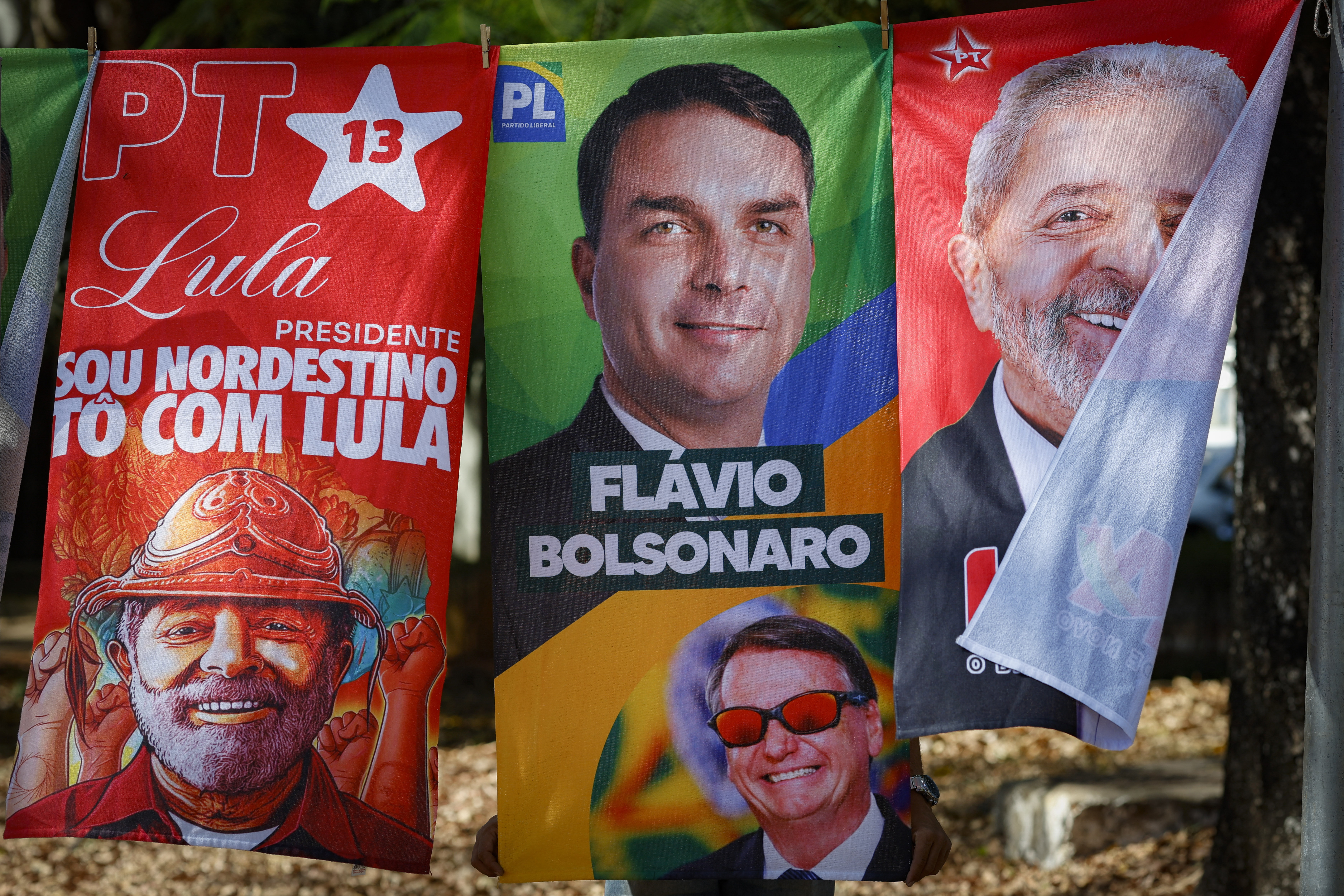
The architecture of contemporary Brazilian politics operates less on programmatic consensus and more on entrenched structural polarization. When incumbent president Luiz Inácio Lula da Silva secured an unprecedented fourth term by defeating challenger Flávio Bolsonaro in the runoff of the 2026 general election, the outcome revealed a nation governed by a permanent electoral equilibrium. Deconstructing this political rematch requires moving past surface-level campaign rhetoric to analyze the underlying voter mechanics, fiscal constraints, and legislative bottlenecks that dictate power in Latin America's largest economy.
The Dual Referendum Phenomenon
Electoral behavior in the 2026 cycle split into two distinct referendums operating sequentially. The first round functioned as a traditional assessment of executive performance, where economic anxiety, voter fatigue, and widespread dissatisfaction with public security eroded the incumbent's standing. During this phase, the challenger capitalized on anti-incumbency sentiment, outperforming expectations and forcing Lula into a historic second-round deficit—the first time a sitting president in Brazil trailed in the initial phase of a general election.
The runoff inverted this dynamic. As the choice narrowed to a binary contest featuring the Bolsonaro political lineage, the electoral calculus shifted from retrospective economic evaluation to prospective systemic risk. This forced a massive mobilization campaign. The incumbent strategy abandoned reliance on traditional elite endorsements, pivoting instead to hyper-targeted grassroots mobilization that pulled abstaining demographics back to the polls. Consequently, the margin was secured not through ideological conversion, but through asymmetrical turnout mechanics in key urban centers.
The Fiscal Compression Function
Governance for the incoming administration faces a severe structural limitation: the absence of budgetary elasticity. Brazil's public finances are heavily bound by mandatory spending floors, pension commitments, and debt service obligations, leaving virtually zero fiscal space for discretionary economic stimulation.
This creates an acute operational paradox for the left-wing administration:
- The core political base demands an expansion of social protection programs, educational infrastructure, and public security initiatives.
- Macroeconomic stability indicators and institutional bondholders demand stringent fiscal consolidation to contain debt-to-GDP ratios.
- The legislative branch, increasingly dominated by a conservative congressional bloc, holds veto power over tax modifications and spending adjustments.
Navigating this trilemma requires constant transactional negotiation with the centrists of the legislature, commonly known as the Centrão. These parties operate outside rigid ideological spectrums, trading parliamentary votes for budgetary decentralization and administrative patronage. Executive survival is thus entirely dependent on the continuous disbursement of political capital rather than legislative alignment.
Legislative Fragmentation and the Rightward Shift
While the presidency remained anchored by the Workers' Party, the legislative branch underwent a significant consolidation of right-wing power. The Liberal Party (PL) and allied conservative factions expanded their footprint in both chambers, ensuring that the parliamentary opposition possesses the structural weight to block constitutional amendments and shape regulatory frameworks.
This legislative layout institutionalizes gridlock. Any major policy initiative—ranging from tax code modernization to public security centralization—must survive protracted horse-trading. The opposition's strategy centers on exploiting this friction, using legislative committees to stall executive agendas while maintaining a high-visibility platform for future sub-national and national contests. Bolsonarismo has transformed from a transient populist wave into a permanent, institutionalized political infrastructure embedded within municipal governments, state legislatures, and the federal congress.
External Pressures and Geopolitical Positioning
DomESTIC policy constraints are further compounded by external macroeconomic and diplomatic friction. The administration faces an international environment marked by protectionist trade postures and great power competition. Economic statecraft requires balancing trade dependencies across major global partners while insulating domestic industrial sectors from external price shocks, particularly in energy markets. Furthermore, managing cross-border relations with Washington necessitates careful diplomatic maneuvering to avoid punitive trade adjustments or diplomatic isolation, particularly as domestic actors actively leverage international alignments for local political leverage.
Execute executive mandates by prioritizing administrative pragmatism over ideological expansion, utilizing decentralized executive decrees where legislative consensus proves mathematically impossible, and anchoring fiscal policy to predictable compliance targets to retain investor confidence amid a permanently split electorate.