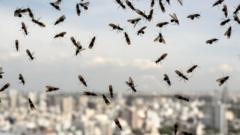
The concept of a singular, nationally synchronized calendar event known as Flying Ant Day is a statistical illusion. Popular media routinely mischaracterizes the mass emergence of winged ants as a coordinated, single-day anomaly. Longitudinal data gathered through large-scale citizen science initiatives reveals that this biological event is not a unified calendar date but a highly decentralized, multi-week ecological optimization strategy. The phenomenon represents the simultaneous execution of localized reproductive cycles governed by precise environmental variables, microclimate thresholds, and evolutionary math.
Understanding this event requires dismantling the cultural myth and analyzing the operational frameworks that dictate why, when, and how these insects exit underground nests. The primary organism involved in these mass urban and suburban events across Western Europe is Lasius niger, the common black garden ant. For the colony, the production and release of winged reproductives, known as alates, is the most resource-intensive capital expenditure of its lifecycle. The orchestration of their exit is a high-stakes calculation designed to maximize gene dispersal while mitigating the extreme risks of predation and environmental mortality.
The Structural Anatomy of Reproductive Castes
A mature colony of Lasius niger operates on a rigid division of labor dominated by wingless, sterile female workers. Throughout most of the year, the energetic output of the colony is directed toward foraging, nest maintenance, and tending to the continuous broods laid by a single queen. When the colony reaches a critical density and maturity threshold—typically requiring three to five years of continuous growth—the resource allocation model shifts.
During the late spring, the colony begins investing heavily in the production of two distinct reproductive phenotypes:
- Macro-alates (Future Queens): Visually distinct by their significantly larger mass and robust abdominal architecture, these females are equipped with fully developed wings and massive energy reserves. Their primary metabolic imperative is surviving the nuptial flight, mating with multiple partners to acquire a lifetime supply of sperm, discarding their wings, and excavating a new subterranean chamber without foraging.
- Micro-alates (Males): Significantly smaller than the future queens, these individuals possess a minimal anatomical footprint optimized entirely for flight and copulation. Their internal organs are stripped down to the bare essentials required to locate a female on the wing. They possess zero capacity for self-preservation post-flight; their entire lifecycle terminates within hours of leaving the nest.
The metabolic cost of producing thousands of these alates represents a massive drain on the colony’s food reserves. Worker ants must forage aggressively to supply the high-protein diet required to develop the larval alates. Because this investment yields zero operational value to the host colony, the exit of these individuals must be executed with absolute precision to avoid total asset forfeiture via predation.
The Three-Phase Microclimate Trigger Function
Alates cannot simply fly at will; they are prisoners to atmospheric physics. Left to individual variation, a slow, trickling release of reproductives would result in complete decimation by local avian and insectivorous predators. To prevent this, colonies rely on an environmental gating mechanism that aligns hundreds of independent colonies across a localized geographic zone. Data compiled by the Royal Society of Biology establishes that this synchronization is driven by three distinct meteorological constraints:
1. Thermal Activation Accumulation
Ants are ectothermic organisms, meaning their metabolic rate and muscular performance are strictly dependent on external ambient temperatures. The absolute lower threshold for Lasius niger flight is 13°C. Flight efficiency scales logarithmically with temperature, reaching peak velocity and stability at or above 25°C. Nests located within urban heat islands—characterized by dark asphalt, concrete, and high thermal mass—frequently hit these thermal baselines weeks before rural colonies, explaining the structural asymmetry of flight dates across regions.
2. Aerodynamic Stability Margins
The flight mechanics of Lasius niger alates, particularly the heavier macro-alates, are primitive compared to Diptera (flies) or Hymenoptera like bees. Their surface-area-to-mass ratio makes them highly vulnerable to convective air currents. Sustained wind speeds exceeding 6.3 meters per second act as an absolute hard stop for emergence. High winds break up swarms, preventing the localized density required for mating, and physically drive the insects into structures, water bodies, or low-altitude predator zones.
3. Barometric and Moisture Variances
The final operational gate is atmospheric moisture and pressure. Flight rarely occurs during prolonged droughts or mid-storm. Instead, emergence peaks sharply on warm, humid afternoons immediately following a period of summer rainfall. This timing is non-negotiable for two reasons. High humidity reduces the rate of desiccation for alates spending extended hours exposed to direct sunlight. The rain softens the topsoil, decreasing the mechanical energy required by newly fertilized queens to dig their founding chambers after descending.
The Predator Satiation Equation
The evolutionary logic underlying the mass emergence is rooted in the law of predator satiation. This ecological defense mechanism relies on overwhelming the local predator population with an unmanageable volume of prey, ensuring that the consumption capacity of the ecosystem is completely flooded.
Consider a localized habitat containing a stable population of urban gulls, starlings, and swifts. If a single ant colony releases 500 alates per day over a 20-day period, local avian predators can easily adjust their foraging patterns to intercept and consume 100% of the emerging cohort. The survival rate of reproductive queens drops to zero.
Predator Intake Capacity = Total Local Predators × Maximum Hourly Consumption Rate
When 500 colonies within a three-kilometer radius respond to identical atmospheric shifts and simultaneously release 500,000 alates within a three-hour window, the mathematical reality changes. The local predator intake capacity hits a hard physical ceiling. No matter how aggressively gulls and swifts feed, they can only process a minute fraction of the total biomass. The remaining percentage of the alate population achieves safe passage through the predator zone via sheer statistical saturation.
This swarm density is also what causes the phenomenon to register on meteorological Doppler radar systems. The sheer concentration of biological targets in the lower atmosphere mimics the reflectivity of a localized rain shower, serving as a technological confirmation of the extreme density required to beat the predator satiation curve.
Kinematics and Mechanics of the Nuptial Flight
The actual mating process occurs entirely on the wing, requiring specific spatial dynamics to avoid inbreeding. Alates do not mate with individuals from their own nest; doing so would compromise genetic diversity and increase the expression of deleterious recessive traits.
Upon clearing the subterranean exit tunnels, alates use visual cues to locate local swarming hubs, which are frequently centered around prominent landscape features such as tall trees, chimneys, or rooftop lines. Once inside these high-density aerial columns, females release volatile pheromones to signal their presence.
Alate Aerial Phase Sequence:
[Exit Nest] ➔ [Locate Topographic Hub] ➔ [Pheromone Release] ➔ [Assortative Chase] ➔ [Copulation]
The flight acts as a natural filtering mechanism for physical fitness. Multiple smaller male micro-alates pursue a single female macro-alate in an upward, erratic chase. The female intentionally accelerates to outrun weaker suitors, ensuring that only males possessing superior wing musculature, metabolic efficiency, and flight stability can successfully achieve copulation.
Once a male matches the female's velocity and trajectory, he secures his position using specialized genital claspers. Copulation occurs mid-air and is biologically destructive for the male. The transfer of the spermatheca—the specialized internal organ where the female stores sperm—demands an irreversible structural expenditure. The structural termination of the male is instantaneous or occurs shortly after separation, with the carcass dropping to the ground. The female may repeat this process with several males within the swarm to maximize the genetic diversity of her future worker pool before descending.
Post-Flight Asset Management and Strategic Bottlenecks
The conclusion of the aerial phase marks the beginning of the steepest mortality curve for the newly fertilized queens. The transition from an airborne organism back to a subterranean founder involves a series of high-risk behavioral transformations:
- De-winging (Autotomy): Upon landing, the queen experiences an immediate behavioral shift. She walks erratically while using her legs to physically snap off her own wings at the basal suture. The complex flight muscles occupying her thoracic cavity are no longer needed; her body will catabolize this muscle tissue over the coming months as an internal food source to sustain herself and her first brood.
- Subterranean Excavation: The wingless queen must locate a vulnerable patch of earth, away from established rival ant colonies, and excavate a cloistered chamber known as a claustral cell. If she lands on asphalt, concrete, or inside human dwellings, her ability to burrow is neutralized, leaving her exposed to desiccation or predation by spiders, beetles, and urban birds.
- The Sovereign Isolation Phase: Once inside the claustral cell, the queen seals the entrance completely. She will not emerge to feed. She relies entirely on her metabolized flight muscles and fat bodies to produce her initial clutch of eggs. She rears these eggs into tiny, sterile worker ants called minims. Only when these minims break through the sealed chamber to forage for external food does the queen transition into a pure egg-laying machine.
The failure rate during this post-flight sequence is staggering. Ecologists estimate that less than 0.1% of the queens that take flight during any given summer season successfully establish a colony that survives past the first year. The primary failure modes are pre-burrowing predation, fungal contamination within the claustral cell, or accidental excavation into the active territory of an established, hostile Lasius niger colony.
Practical Mitigation for Domestic and Urban Spaces
From an operational and property management standpoint, the sudden influx of swarming alates is frequently misdiagnosed as an external invasion requiring aggressive chemical eradication. This approach ignores the underlying biology of the event.
Domestic Alate Influx Assessment:
├── Internal Emergence (Baseboards/Flooring) ➔ Structural Colony Present ➔ Baiting Required
└── External Influx (Windows/Vents) ➔ Transitory Event ➔ Physical Exclusion Required
When flying ants suddenly appear inside a building, it is critical to identify the point of origin. If they are emerging directly from gaps under baseboards, electrical outlets, or structural expansion joints, the property has an established, mature subterranean nest beneath its foundation or within its wall voids. In this scenario, aerosolized contact insecticides are ineffective because they only eliminate the emerging alates while leaving the primary egg-producing queen deep within the structure completely unharmed. The correct remediation strategy requires the deployment of slow-acting non-repellent gel baits containing active ingredients like fipronil or imidacloprid. Worker ants consume the bait, mistake it for food, and transport it back to the core of the nest, systematically neutralizing the colony via trophallaxis (food sharing).
Conversely, if the alates are entering through open windows, doors, or soffit vents, it is a transitory external phenomenon driven by the local microclimate. The ants have no interest in the building itself; they are simply responding to light signatures or seeking high ground to launch into the wind. The strategic play here is strictly mechanical: deploy physical mesh screens, seal structural gaps with silicone sealant, and close windows for the brief three-to-four-hour duration of the local flight window. Once the atmospheric conditions shift or evening temperatures drop below the 13°C flight threshold, the local swarm will naturally collapse, rendering chemical interventions completely redundant.
The Broader Ecological Value Function
While the human experience of this phenomenon is often defined by minor inconvenience, the event serves as a massive, highly consequential nutrient injection into local terrestrial and aquatic food webs. The sudden availability of millions of highly concentrated fat- and protein-rich insects represents a significant seasonal windfall for a wide array of wildlife.
Urban and rural bird species experience a massive spike in caloric intake, which directly correlates with increased survival rates for late-season fledglings. Aquatic ecosystems benefit similarly; alates that miscalculate wind currents and land on the surface of lakes, rivers, and ponds are rapidly consumed by fish populations, driving a temporary surge in aquatic biomass productivity.
Furthermore, the millions of queens that fail to establish nests do not go to waste. Their bodies decompose rapidly, returning vital nitrogen, phosphorus, and trace minerals directly back into the topsoil. The surviving queens contribute to ongoing soil aeration, nutrient cycling, and seed dispersal via their excavation work, proving that the disruption caused by these few hours of chaotic aerial mating is a fundamental requirement for long-term regional biodiversity and soil health.
Strategic Play for Property and Environmental Management
For those managing large-scale commercial real estate, municipal parks, or residential portfolios, handling the multi-week window of potential ant flights requires a shift from reactive pest control to predictive, data-driven planning. Rather than approving emergency expenditures for exterminators when the first swarm appears, operators should implement a protocol based on localized weather tracking and physical exclusion.
- Step 1: Predictive Monitoring. Monitor local meteorological forecasts starting in mid-July. Identify days where a period of morning rain is immediately followed by afternoon clearing, rising humidity, and projected temperatures above 23°C with wind speeds dropping below 6 meters per second. These are your high-probability execution windows.
- Step 2: Pre-Emptive Exclusion. On identified high-probability mornings, instruct facility maintenance teams to audit and close all non-essential structural openings, check the integrity of window and HVAC intake screens, and temporarily reduce exterior lighting that might attract dispersing queens during late-afternoon descents.
- Step 3: Source Discrimination. If an indoor emergence occurs despite these measures, immediately map the exit vector. Do not spray contact chemicals. Tag the area for targeted, slow-acting bait applications to ensure the underlying colony infrastructure is completely eliminated rather than driven into adjacent wall cavities.