Rhino conservation in South Africa's Greater Kruger ecosystem has historically relied on a militarized containment model. This approach treats anti-poaching as an asymmetric tactical conflict characterized by armed patrols, thermal imaging, and kinetic confrontation. However, the economic reality of the illegal wildlife trade reveals a fundamental flaw in this strategy: it addresses the supply side of the market through escalating enforcement costs without altering the local socioeconomic cost-benefit equation that drives poacher recruitment.
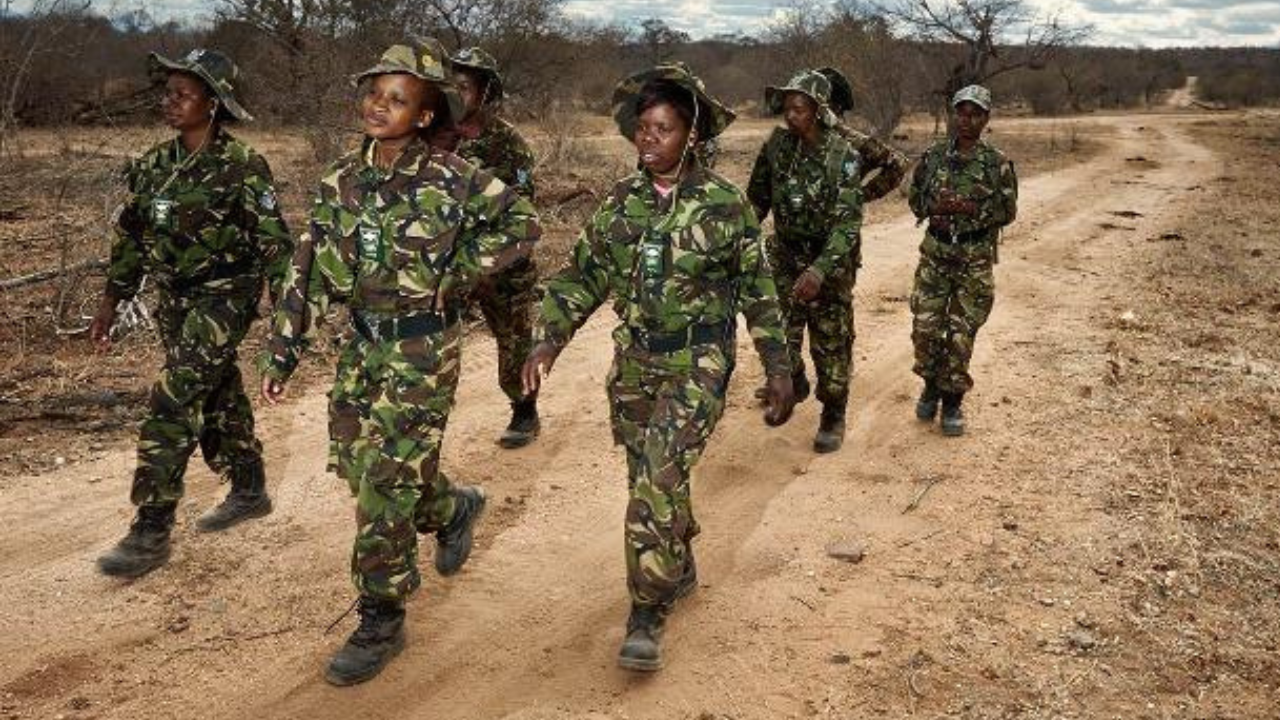
When the Black Mamba Anti-Poaching Unit was established in 2013 by Transfrontier Africa, it introduced an operational paradigm shift. Operating across 20,000 hectares within the Olifants West Nature Reserve and the Blyde-Olifants Confluent Conservancy Area, this unit utilizes an unarmed, majority-female ranger force.
The structural success of this model—demonstrated by a 62% to 76% reduction in snaring and poaching incidents during initial deployment periods—is not a product of sentimentality. It is the result of optimizing a non-lethal deterrence framework that targets early detection, asset disruption, and community asymmetric information dynamics.
The Asymmetric Cost Function of Rhino Poaching
To understand why an unarmed unit can successfully secure a high-value ecological asset, one must examine the cost function of a poacher. Illegal wildlife extraction requires three variables to succeed: undetected entry, efficient asset location, and an uncompromised exit route.
Militarized conservation units typically focus on the secondary phase: locating and neutralizing the poacher inside the reserve. This creates a high-stakes, high-cost operational environment where the state or private reserve bears immense capital expenditure for firearms, tactical gear, and legal liabilities related to lethal force.
The Black Mamba model shifts the operational focus to phase one and phase three by maximizing the probability of detection ($P_d$) at the perimeter. The unit functions via a continuous, high-visibility patrol methodology, with rangers spending 21 days per month on the frontline, walking up to 20 kilometers daily along perimeter fences. By treating rangers as a "visible police presence," the framework changes the poacher's risk assessment.
- Permeability Reduction: Daily physical checks of perimeter fences identify breaches, footprints, and early incursions before a poaching cell can penetrate the core asset zones.
- Asset Disruption: The systematic removal of wire snares—amounting to over 2,500 detections—directly sabotages the bushmeat trade, which frequently serves as a low-risk baseline revenue stream and operational testing ground for organized poaching syndicates.
- Early Detection Architecture: Using specialized data collection applications, field data regarding gunshots, animal carcasses, and human tracks are instantly digitized and transmitted to centralized operations. This converts raw observations into actionable telemetry for armed rapid-response units.
This division of labor optimizes resources. The unarmed unit handles the high-volume, continuous surveillance required to compress the operational space available to poachers, while armed intervention teams are preserved strictly for targeted, high-probability kinetic engagements.
The Community Information Lever
The primary constraint on traditional anti-poaching intelligence is the wall of silence maintained by communities adjacent to protected areas. In the Greater Kruger region, historical conservation models often alienated local populations by dividing resource-rich reserves from historically marginalized, impoverished villages. This economic division turned local communities into ideal recruitment pools for international poaching syndicates, where insider information regarding rhino locations or patrol schedules became a highly tradeable commodity.
The Black Mamba framework addresses this vulnerability by internalizing the community asset. Because the rangers are recruited directly from these adjacent villages, they function as organic information nodes.
This positioning solves a classic principal-agent problem in conservation biology. A foreign, armed security guard has no social capital within a local village; an indigenous female ranger carries deep familial and cultural authority.
This positioning alters the social cost of poaching via two distinct mechanisms:
Demoralization of the Local Recruitment Pool
When the economic actors driving poaching are the brothers, sons, or neighbors of the patrolling rangers, the social friction of entering a reserve increases. A poacher entering a zone secured by armed, state-affiliated guards can rationalize their actions as economic survival or anti-colonial reclamation. Entering a zone where their own family members are patrolling unarmed—and exposed to the apex predators of the Greater Kruger—introduces a reputational risk and social stigma within the village matrix.
Institutional Trust and the Velocity of Information
The Bush Babies Environmental Education Program, operating across local schools, creates a multi-generational pipeline of environmental stewardship. By educating the demographic friction point—the youth—the program alters the long-term cultural value assigned to megafauna.
Over time, this behavioral shift reduces the baseline willingness of the community to harbor or assist outside poaching syndicates. The reserve ceases to be an exclusive playground for wealthy eco-tourists and transitions into a vital source of local employment and community pride.
Operational Limitations and Structural Vulnerabilities
An objective analysis of the Black Mamba model requires outlining its inherent structural limitations. This framework is not a standalone solution for ecological preservation; it is a specialized component within a broader security matrix.
The Subsidy and Funding Bottleneck
The financial stability of non-lethal units is highly volatile. The Black Mamba unit was originally integrated into South Africa’s nationwide Environmental Monitor program, receiving a 30% operational subsidy from the Department of Fisheries, Forestry and Environmental Affairs. The termination of this subsidy in March 2022 exposed a significant systemic vulnerability: reliance on state budgets introduces policy risk.
While the unit successfully pivoted to corporate sponsorships through the Black Mamba Alliance and international grants to cover 100% of operational costs, this funding structure remains vulnerable to global economic downturns and donor fatigue.
Reliance on Armed Contingencies
The unarmed approach functions purely as a deterrent against entry and an engine for early detection. It cannot neutralize a heavily armed, highly motivated poaching cell once an incursion has occurred.
The strategy relies entirely on the rapid-response capability of external, armed backup units. If the communication loop between the data-gathering application used by the Mambas and the armed response unit breaks down, or if response times lag due to terrain constraints, the unarmed frontline faces extreme physical risk from both poachers and megafauna.
Spatial and Density Constraints
The International Union for Conservation of Nature (IUCN) establishes a baseline requirement of one ranger per 1,000 hectares for effective protected area management. By concentrating their forces on 20,000 hectares within specific conservation areas, the Black Mambas meet this density metric.
However, scaling this model to the entirety of Kruger National Park—which encompasses nearly 2 million hectares—presents a massive logistical and financial challenge. The high-density patrol model requires a volume of personnel that is difficult to fund, train, and manage across vast, unsegmented wildernesses.
Strategic Recommendation for Scale
The data generated by the Black Mamba Anti-Poaching Unit over more than a decade proves that non-lethal, community-integrated deterrence significantly lowers poaching metrics while building localized environmental resilience. To export this model to other African conservation zones facing critical biodiversity loss, conservation operators must implement a specific three-part strategic play.
First, decouple the funding model from pure philanthropy by establishing formal conservation-linked employment structures funded by biodiversity credits or eco-tourism levies. This mitigates the subsidy bottlenecks that occurred in 2022.
Second, systematically pair every non-lethal unit with an automated, tech-enabled operations center using predictive terrain analysis. This ensures that the early detection telemetry gathered by unarmed rangers triggers optimized, rapid deployment of armed interdiction teams before poachers reach core asset zones.
Third, formalize the community-ranger interface as a primary source of counter-intelligence, treating local employment not as a public relations metric, but as an operational necessity designed to shut down the information flow to global wildlife trafficking syndicates.



:max_bytes(150000):strip_icc()/parliament-hill-in-fall--ottawa--ontario--canada-1064713266-b595c67f48ca4778a985b13bb598ba04.jpg)