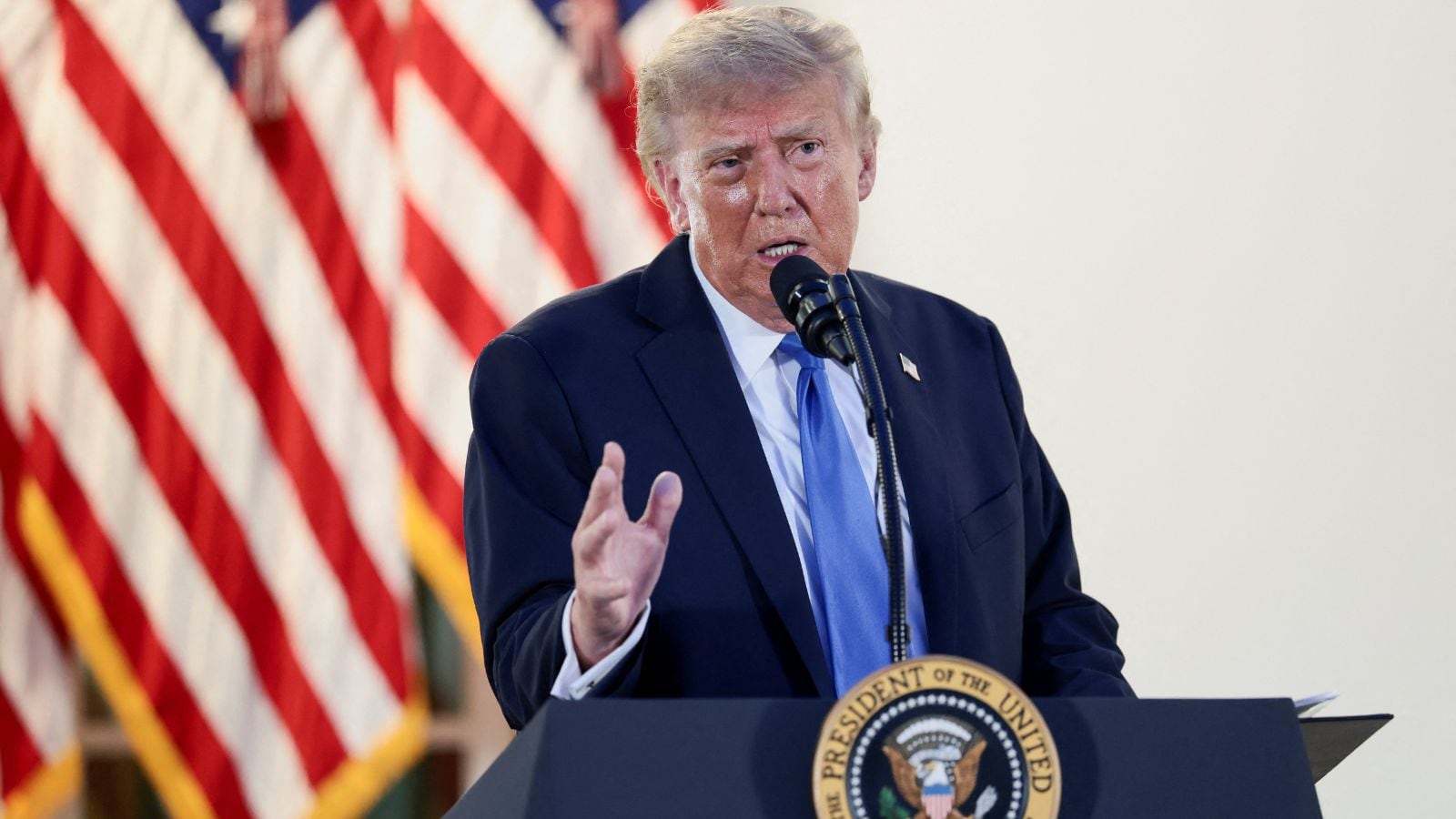
International institutions operate under a fragile equilibrium defined by voluntary participation and variable compliance. When an investigative body within the United Nations system issues findings that carry legal or political liability for a major state actor, the structural response frequently involves institutional disengagement rather than substantive remediation. This dynamic was demonstrated when the United States pointed to policy precedents establishing its formal distance from the United Nations Human Rights Council, framing the separation around institutional bias and structural overreach. This sequence highlights a recurring tension within multilateral architecture: the friction between sovereign immunity and independent international investigative mandates. Deconstructing this event requires an analysis of the institutional design of global human rights bodies, the evidentiary mechanics of UN fact-finding missions, and the strategic calculus governing state withdrawal.
The Structural Anatomy of Multilateral Exit
State withdrawal from intergovernmental organizations is rarely an isolated tactical maneuver; it represents a calculated realignment of foreign policy priorities designed to reduce exposure to international scrutiny. To understand this phenomenon, observers must examine the structural framework governing state interactions with UN organs. The United Nations Human Rights Council functions as an intergovernmental body composed of forty-seven member states elected by the General Assembly. Its mandate involves addressing violations of human rights and making recommendations thereon, a function that inherently relies on moral authority rather than coercive enforcement. Meanwhile, you can find related events here: What Most People Get Wrong About Trump Banning CNN, MS NOW, and Politico From the White House.
When a state actor chooses to terminate its participation, membership, or funding—as occurred under executive directives that ended United States engagement with the Council—the immediate consequence is the forfeiture of a voting platform. From a classical realist perspective, remaining inside a hostile institutional forum carries political costs if the forum is utilized by adversaries to amplify damaging reports. Conversely, exiting the forum eliminates the administrative burden of defending state actions within that specific arena, even if it simultaneously relinquishes the capacity to shape the body's agenda or block consensus resolutions from within.
This creates a distinct institutional trade-off: To explore the complete picture, we recommend the detailed report by TIME.
- The Inside Strategy: Retaining membership allows a state to lobby, amend resolutions, and contest findings directly on the floor, trading reputational friction for diplomatic influence.
- The Outside Strategy: Withdrawing from the body insulates the state from domestic and international procedural engagement, trading diplomatic influence for operational autonomy and narrative control.
The decision by Washington to distance itself from the Council reflects the latter calculation. By delegitimizing the body as biased or compromised by anti-American rhetoric, the state establishes a rhetorical defensive perimeter that neutralizes the political utility of adverse findings issued by UN rapporteurs or investigative missions.
Evidentiary Thresholds and the Mechanics of Fact-Finding
The immediate catalyst for renewed friction between Washington and the multilateral human rights apparatus involved a report by a UN international fact-finding mission addressing military strikes in Iran. These missions operate under specific investigative protocols designed to collect, analyze, and preserve evidence of violations of international humanitarian law. Understanding the legal weight of such reports requires examining the evidentiary standards employed by UN investigators.
Unlike judicial courts operating under a standard of proof beyond a reasonable doubt, investigative commissions and fact-finding missions typically apply a standard of "reasonable grounds to believe." This threshold is designed for early-stage accountability and documentation, enabling investigators to determine whether violations likely occurred based on available open-source data, satellite imagery, forensic analysis, and witness testimony.
In the specific context of the disputed military actions—such as strikes targeting infrastructure in Iranian territories—investigators analyze three core legal principles under international humanitarian law:
- Distinction: The obligation of combatants to distinguish between civilian objects and military objectives.
- Proportionality: The prohibition of attacks expected to cause incidental civilian loss that would be excessive in relation to the concrete and direct military advantage anticipated.
- Feasible Precautions: The requirement to take all feasible precautions in choice of means and methods of attack to avoid or minimize civilian casualties.
When a fact-finding mission concludes that reasonable grounds exist to classify specific strikes as potential war crimes, it identifies a failure within one or more of these operational legal tests. However, target states frequently contest the underlying intelligence, the baseline classification of objects as civilian versus dual-use, or the military necessity dictating the timing and execution of the strike. Because international tribunals lack compulsory jurisdiction over non-party states, these evidentiary determinations function primarily as normative pressure points rather than enforceable judicial verdicts.
The Bifurcation of Global Accountability
The interaction between superpower statecraft and international human rights bodies reveals a deeper institutional fracture. Major powers routinely accept the jurisdiction of international frameworks only insofar as those frameworks align with their strategic interests or fail to constrain their operational freedom. When an institutional mechanism produces outputs that challenge core national security decisions, the state's apparatus deploys a set of counter-measures designed to invalidate the institution's credibility.
This counter-strategy operates on multiple levels:
- Institutional Delegitimization: Labeling the oversight body as structurally flawed, politically biased, or captured by hostile actors.
- Jurisdictional Resistance: Actively blocking complementary accountability mechanisms, such as the International Criminal Court, from asserting investigative authority over military personnel or allied states.
- Bilateral Leverage: Utilizing diplomatic and economic channels to discourage third-party states from cooperating with international investigative mandates or endorsing their conclusions.
The friction over the Iran fact-finding mission illustrates this dynamic. While Iranian officials and allied regional entities argue that withdrawal cannot absolve a state of responsibility for civilian casualties, the withdrawing state maintains that the findings lack procedural validity due to the perceived bias of the sponsoring council. This creates an analytical deadlock where objective legal analysis is subordinated to competing political narratives.
The Divergence of Legal and Political Realities
A rigorous examination of this institutional rupture requires distinguishing between legal accountability and political rhetoric. From a strictly positivist legal standpoint, a state's withdrawal from an international council does not extinguish obligations under customary international law or international humanitarian law. Treaties and customary norms governing the conduct of hostilities remain binding regardless of a state's membership status in monitoring bodies like the Human Rights Council.
However, the enforcement mechanism is entirely dependent on institutional structures. Without active participation by major global powers in oversight bodies, the international community relies on decentralized pressure—such as universal jurisdiction statutes, domestic litigation, or regional diplomatic isolation—none of which possess the systematic reach of a dedicated UN enforcement architecture.
The rationale behind Washington's posture involves minimizing domestic political vulnerability and preventing international bodies from establishing normative precedents that could restrict future military operations. By treating the UN Human Rights Council as an adversarial forum rather than an objective arbiter, the state prioritizes operational freedom over multilateral compliance.
Strategic Forecast
The precedent set by systemic institutional disengagement points toward an increasingly fragmented international legal order. As major powers encounter heightened scrutiny from independent UN mechanisms, the cost of participation within human rights bodies will continue to be weighed against the utility of unrestricted sovereign action. Future diplomatic engagements will likely witness a contraction of multilateral cooperation, with powerful states increasingly opting for ad-hoc coalitions and bilateral diplomacy while ignoring institutional oversight. Accountability will remain localized, sporadic, and heavily contested, dictated less by universal legal standards and more by the distribution of geopolitical power.