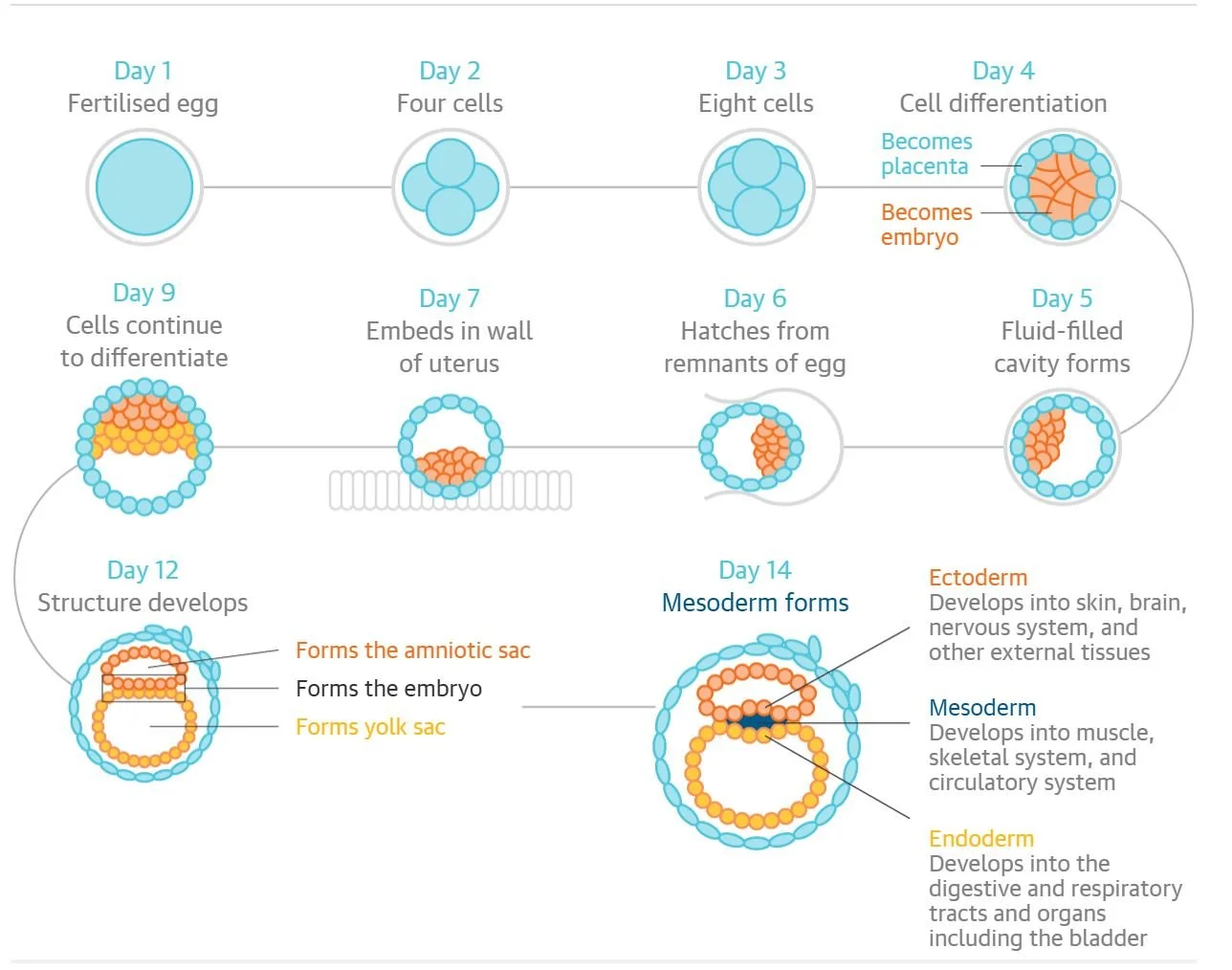
The successful birth of a child originating from an embryo cryopreserved for twenty-two years disrupts traditional biological timelines, shifting the horizon of human reproductive potential from speculative theory to empirical reality. When biological material survives sub-zero storage across multiple political and economic epochs, it forces an operational reevaluation of how medicine, law, and economics handle suspended animation. Long-term cryopreservation is not merely a biological curiosity; it represents a complex intersection of thermodynamics, material science, institutional asset management, and reproductive ethics. Deconstructing the mechanics behind this milestone reveals the underlying engineering, financial structures, and systemic constraints governing generational reproductive storage.
The Thermodynamic Baseline of Vitrification
Biological tissue subjected to standard freezing techniques suffers catastrophic cellular destruction driven by ice crystal formation. Water molecules expand during phase transition, shearing cell membranes and destabilizing intracellular proteins. To prevent this mechanical degradation, modern cryobiology relies on vitrification—an ultra-rapid cooling process that bypasses ice crystallization entirely, transforming aqueous solutions into an amorphous, glass-like solid. In similar developments, we also covered: The Flavorless Armor We Choose to Wear.
The transition from slow-rate freezing to vitrification required fundamental adjustments in both cryoprotectant agent formulations and cooling velocity vectors. Cryoprotectants such as dimethyl sulfoxide, ethylene glycol, and propanediol act as chemical shields, depressing the freezing point and elevating solution viscosity. However, these agents are inherently cytotoxic at ambient temperatures, meaning their administration and removal must occur within tight temporal windows governed by precise osmotic gradients.
At liquid nitrogen temperatures, typically minus one hundred ninety-six degrees Celsius, molecular motion ceases almost entirely. Chemical reactions halt, metabolic activity drops to zero, and degradation via enzymatic or oxidative pathways is arrested. The scientific significance of a twenty-two-year storage duration lies not in an active preservation mechanism over time, but in the absolute stability of the inert glass state once achieved. Provided that liquid nitrogen levels are maintained without fluctuation, a vitrified embryo experiences zero thermal degradation across decades. The biological clock inside the cellular matrix is effectively frozen, separating chronological time from biological age. World Health Organization has also covered this important subject in great detail.
The Cost Function of Multi-Decade Storage
The physical containment of biological assets over multi-decade horizons introduces unique economic variables. Cryo-banking operates under a capital expenditure and operational expenditure model that scales with time, liability, and regulatory compliance.
The primary cost driver is continuous energy and material supply—specifically, the uninterrupted replenishment of liquid nitrogen. While liquid nitrogen is a low-cost commodity, the infrastructure required to store it safely in large-scale vessels with minimal boil-off rates involves significant capital investment. Vacuum-insulated storage tanks, telemetry monitoring systems, and automated fill mechanisms constitute baseline fixed costs.
Beyond physical maintenance, long-term storage introduces asset management liabilities. Clinics face the administrative burden of maintaining accurate chain-of-custody documentation, updated contact registries, and legal consent frameworks across changes in institutional ownership and jurisdiction. When an embryo remains in storage for twenty-two years, the original depositors frequently age out of reproductive capability, relocate, or become untraceable. This creates an accumulation of orphaned biological assets that occupy physical storage capacity while generating zero revenue or conflicting with legal custody statutes.
The economic equation governing reproductive banks relies on prepayment structures or recurring annual maintenance fees. Over twenty-two years, inflation, administrative overhead, and regulatory compliance shifts can render legacy pricing models insolvent. Facilities must therefore price storage contracts to account for decades of potential operational inflation, legal audits, and disaster contingency planning, turning bio-banking into an exercise in long-term actuarial risk management.
Shifting Demographic Horizons and Reproductive Windows
The capability to pause embryogenesis for over two decades fundamentally alters the biological constraints of human reproduction. Historically, reproductive lifespan was strictly coupled with chronological age, constrained by the finite reserve and declining genetic integrity of oocytes. By decoupling fertilization from gestation through embryo banking, the timeline of parenthood expands significantly.
This expansion introduces distinct strategic pathways for family planning. Elective fertility preservation through oocyte or embryo vitrification allows individuals to hedge against age-related genomic decay. However, extended storage intervals highlight a secondary variable: the maternal physiological environment at the point of transfer. While the embryo remains biologically static, the gestational carrier ages. A recipient utilizing an embryo frozen twenty-two years prior navigates pregnancy under the physiological parameters of their current biological age, regardless of the genetic origin or storage duration of the transferred entity.
The demographic implications extend to intergenerational dynamics. A child born from a multi-decade-old embryo shares genetic material with parents who may now be in significantly different life stages, altering inheritance structures, parental mortality timelines, and social support networks. From a macro-demographic perspective, extended cryopreservation provides a mechanism to buffer population decline or smooth fertility rates across economic cycles, though its statistical impact remains negligible compared to broader socioeconomic drivers of birth rates.
Operational Bottlenecks in Legacy Bio Banking
Scaling cryopreservation infrastructure from short-term fertility clinic storage to multi-decade archiving exposes severe operational vulnerabilities. The primary failure point in biological asset preservation is not the freezing technology itself, but human error and infrastructural fragility during the maintenance phase.
Chain-of-custody tracking across long time horizons represents a major vulnerability. Early cryopreservation protocols relied on paper records, manual ledger entries, and rudimentary labeling systems. Over a span of two decades, clinics undergo staff turnover, software migrations, facility relocations, and corporate acquisitions. Transcription errors or physical label degradation inside liquid nitrogen tanks can result in misidentified assets or lost provenance. Modernizing legacy archives requires data migration protocols that match the rigor of financial institutions, yet many reproductive clinics operate with fragmented digital infrastructure.
Regulatory compliance presents an additional friction point. Tissue establishments operate under shifting statutory frameworks governing tissue donation, genetic testing requirements, and export-import controls. An embryo placed in storage under one regulatory regime may encounter legal barriers to transfer or implantation twenty years later due to changes in jurisdictional laws regarding personhood, parental consent, or genetic screening mandates. Facilities must navigate these compliance labyrinths while ensuring that physical storage security—including seismic retrofitting, redundant power supplies, and multi-sensor telemetry—remains uncompromised.
Strategic Forecast for Reproductive Storage Systems
The normalization of multi-decade embryo viability accelerates the transition of reproductive medicine from clinical practice to industrial-scale bio-logistics. Future developments will center on three structural shifts.
First, manual monitoring of cryogenic vessels will be entirely replaced by autonomous, AI-driven telemetry networks that predict liquid nitrogen boil-off rates, detect micro-fractures in vacuum seals, and execute automated asset reallocation before failure occurs. Second, legal frameworks will evolve to establish statutory abandonment timelines, allowing facilities to ethically clear unmaintained or orphaned biological assets and reclaim storage capacity. Third, the standardization of cryptographic provenance tracking, potentially leveraging distributed ledger technology or secure digital identifiers, will eliminate the risk of chain-of-custody failures across generational timelines.
Extended cryopreservation transforms the temporal architecture of human reproduction. As storage duration ceases to be a biological limiting factor, the primary constraints on family planning shift from cellular mortality to institutional reliability, regulatory clarity, and economic access. The operational challenge moving forward lies in engineering storage systems durable enough to outlast the institutions that build them.