The convergence of international sports tourism and hyper-localized athletic folklore creates distinct operational challenges for national team supporter groups during major tournaments. When a fan base crosses national borders, it inherits not just a physical venue but an existing ecosystem of architectural symbolism and psychological risk variables. The recent mandate issued by Brazilian fan organizations ahead of their national team's World Cup fixture against Haiti in Philadelphia serves as a primary case study in collective risk aversion. By explicitly forbidding supporters from modifying the physical state of the local Rocky Balboa monument, these groups demonstrated an understanding of behavioral engineering and the systemic costs associated with violating local sports customs.
This phenomenon is not merely an exercise in superstitious behavior; it operates as a rational mechanism for minimizing external variables that could disrupt collective performance or group safety. The behavioral decision-making process governing this restriction can be dissected into precise structural pillars: historical empirical markers, social coordination dynamics, and localized security threats.
The Tri-Pillar Architecture of Monument Customization Risks
The choice to restrict fan interaction with civic monuments rests upon three structural realities that cross psychological, social, and tactical boundaries. Supporter groups must balance the desire for high-visibility marketing stunts against the mathematical realities of negative historical correlations.
Historical Empirical Correlation and the Deficit Model
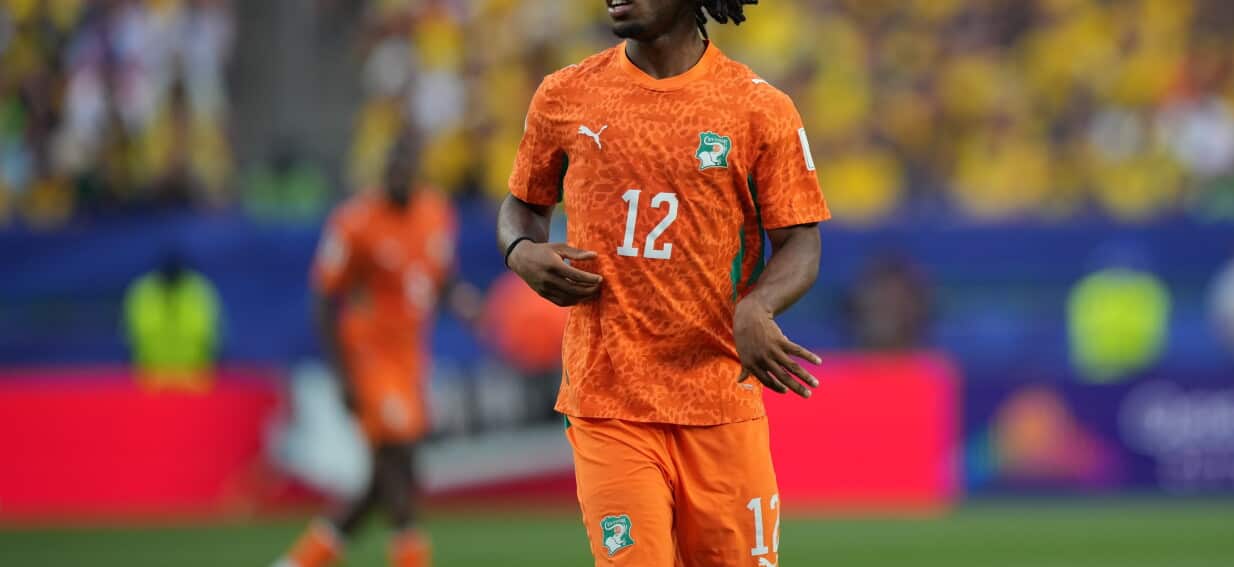
The decision by the Brazilian fan organization Movimento Verde e Amarelo (Green and Yellow Movement) to issue an urgent directive on digital platforms was directly precipitated by an empirical event occurring less than a week prior. During the opening sequence of the tournament's local matches, Ecuadorian supporters covered the bronze monument in their national team's kit before their match against Côte d'Ivoire. The subsequent 1-0 defeat of Ecuador, sealed by a 90th-minute goal from Amad Diallo, immediately reinforced a localized data pattern known colloquially as the Rocky Curse.
This outcome was not an isolated variable. Local sports history contains multiple precedents where visiting fan bases attempted to project cultural dominance by altering the monument, only to experience severe performance collapses:
- The 2018 NFC Championship Precedent: Minnesota Vikings supporters decorated the monument in purple team apparel prior to facing the local franchise. The resulting match ended in a 38-7 defeat.
- The 2018 Super Bowl Context: New England Patriots supporters replicated this action by placing a jersey on the figure. The subsequent game resulted in an unexpected loss for the favored team.
- The 2025 NFC Championship Baseline: Washington Commanders supporters decorated the monument prior to a postseason fixture, which preceded a definitive 55-23 loss.
While these events represent a correlation rather than a verifiable causal relationship, the psychological weight of these outcomes creates a deficit model for visiting teams. In elite sports environments where performance margins are minimal, managing the psychological equilibrium of both the squad and the travelling support becomes a priority. The preservation of the monument’s natural state acts as a preventative measure against introducing cognitive bias or perceived negative momentum into the team’s ecosystem.
Social Coordination and Digital Amplification Networks
The speed at which the restriction was adopted highlights a highly organized digital transmission structure. Unlike traditional uncoordinated tourist groups, modern international football supporters operate under highly centralized fan syndicates. The Green and Yellow Movement serves as a governance body for traveling Brazilians, utilizing a strict communication hierarchy to enforce behavioral standards.
When the group issued its warning, the message did not diffuse through casual word-of-mouth. It was disseminated via high-density social media channels where information is received as an operational directive. The linguistic framing used in the communication underscored the absolute nature of the prohibition, treating the avoidance of the monument as a tactical necessity. This structural discipline ensured that thousands of arriving fans, who might otherwise have viewed the monument as an open marketing canvas, uniformly self-policed.
Localized Security and Crowd Control Logistics
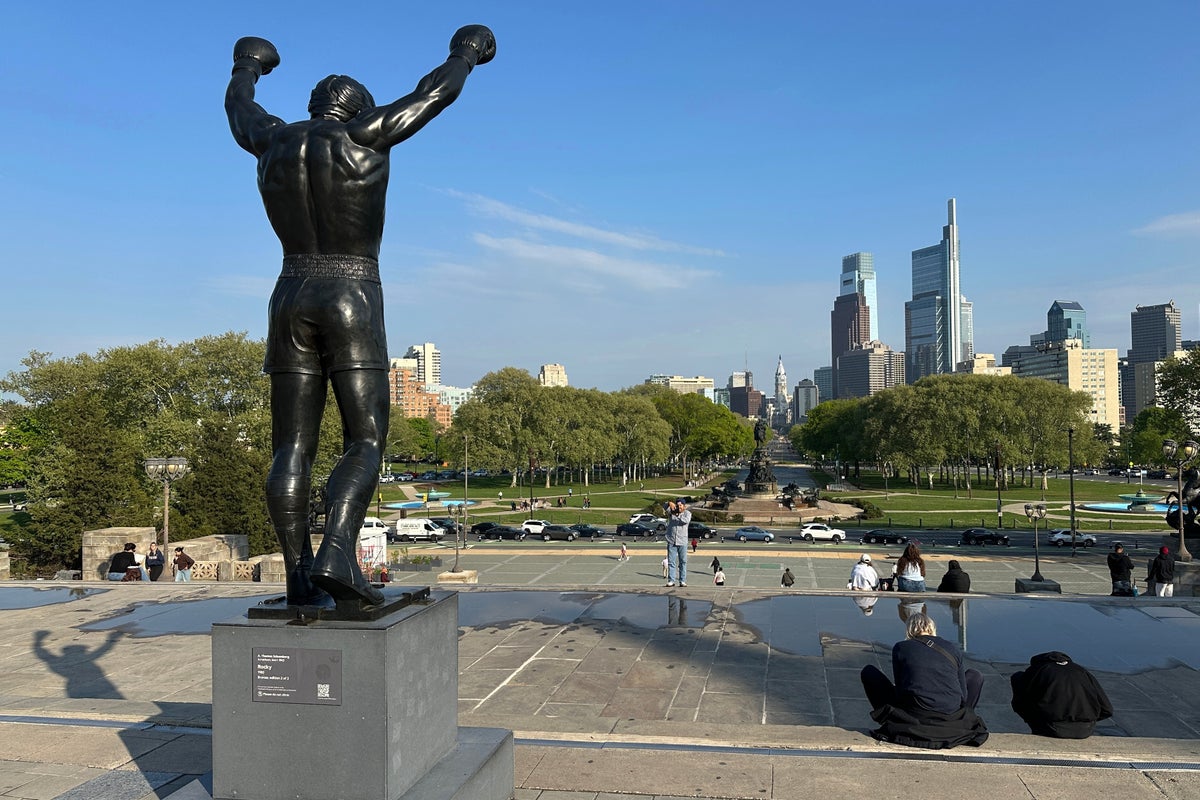
The interaction between traveling fans and civic monuments introduces physical security risks that city management agencies must actively mitigate. The monument in question, a 1,300-pound bronze figure originally commissioned for a motion picture production, occupies a prominent position at the base of the Philadelphia Museum of Art steps. This location functions as a high-throughput transit point for tourists and local citizens alike.
When a visiting fan base attempts to alter the physical state of a monument that symbolizes local resilience, it alters the crowd dynamic from celebratory to confrontational. The local population views the monument as an extension of civic identity. Consequently, unauthorized modifications by foreign nationals create an immediate friction point. Recognizing this vulnerability, regional tourism and municipal authorites deployed physical barriers and specialized personnel to protect the site. The introduction of these security measures changes the risk profile for visiting fans, transforming a simple photo opportunity into a potential flashpoint for crowd disturbance or legal intervention.
The Cost Function of Superstitious Contagion
To understand why a sophisticated, multi-titled athletic nation like Brazil would alter its behavioral patterns based on local folklore, one must analyze the cost function of superstitious contagion within high-stakes environments.
$$C_f = P(v) \cdot I(b) + S_c$$
In this conceptual framework, the total cost of violating a local custom ($C_f$) is determined by the probability of a negative variance ($P(v)$), multiplied by the psychological impact on collective belief ($I(b)$), added to the systemic social friction ($S_c$) generated with the host population.
When applied to the Brazilian fan base, the probability of an actual metaphysical curse affecting a soccer match is statistically irrelevant. However, the psychological impact on collective belief ($I(b)$) is highly volatile. If a fan base believes they have introduced a negative variable into the match environment, any subsequent negative event during the game—such as an early conceded goal or an injury—is immediately retrofitted into that narrative. This creates cognitive friction, reducing the efficiency of fan support and altering the emotional environment surrounding the athletes.
By removing the initial variable entirely, the fan leadership effectively reduces $P(v) \cdot I(b)$ to zero. The remaining variable, systemic social friction ($S_c$), is likewise minimized, allowing the fan base to redirect their collective energy toward optimized stadium support rather than defensive post-game justifications.
Operational Alternatives in Sports Tourism
The mitigation of this risk did not require Brazilian fans to abandon their pre-match rituals or historical traditions. Instead, it forced an operational pivot toward non-invasive celebration models. On the day preceding the fixture, hundreds of Brazilian supporters occupied the civic space surrounding the monument while strictly adhering to the "no-touch" policy.
- Symmetric Visual Posing: Fans substituted the act of dressing the monument with the act of replicating its posture. By standing in front of the unadorned bronze figure and raising their arms in unison, they captured the desired visual assets for digital media without altering the monument's physical state.
- Acoustic Dominance over Physical Intervention: The group redirected their expressive capital into synchronized chanting, musical performances, and flag-waving within the open plaza. This achieved the primary objective of establishing a visible cultural presence without triggering the local civic defenses or the superstitious anxieties of the broader community.
- Decentralized Photo Hierarchies: Rather than forming a single, chaotic queue around the base of the fixture, organized fan leaders structured the crowd into shifting blocks, ensuring continuous movement and preventing accumulation that could attract law enforcement or municipal scrutiny.
This strategic adaptation demonstrates that international supporter groups can preserve their distinct cultural identities while respecting the unwritten codes of host cities. The avoidance of the monument was not an admission of fear, but a calculated execution of tactical respect designed to maximize their team's probability of success.
Future Projections for Monument Management in Multi-City Tournaments
The events in Philadelphia provide a clear framework for how host cities and international embassies must handle cultural assets during multi-city global tournaments. As the competition progresses to other metropolitan centers, each featuring its own localized superstitions and historical sensitivities, organizing committees must implement a standardized playbook for asset protection and fan education.
The first step in this process requires municipal tourism boards to issue clear, multi-language behavioral guidelines at the point of entry. Relying on organic information diffusion is insufficient; clear signage and digital geo-fenced notifications should explicitly outline the boundaries of acceptable interaction with civic landmarks. Furthermore, national fan embassies must integrate these local parameters into their pre-travel briefings. When a supporter group understands the historical context and the potential for civic friction, they will naturally default to self-regulation to protect their collective reputation and their team's competitive focus.