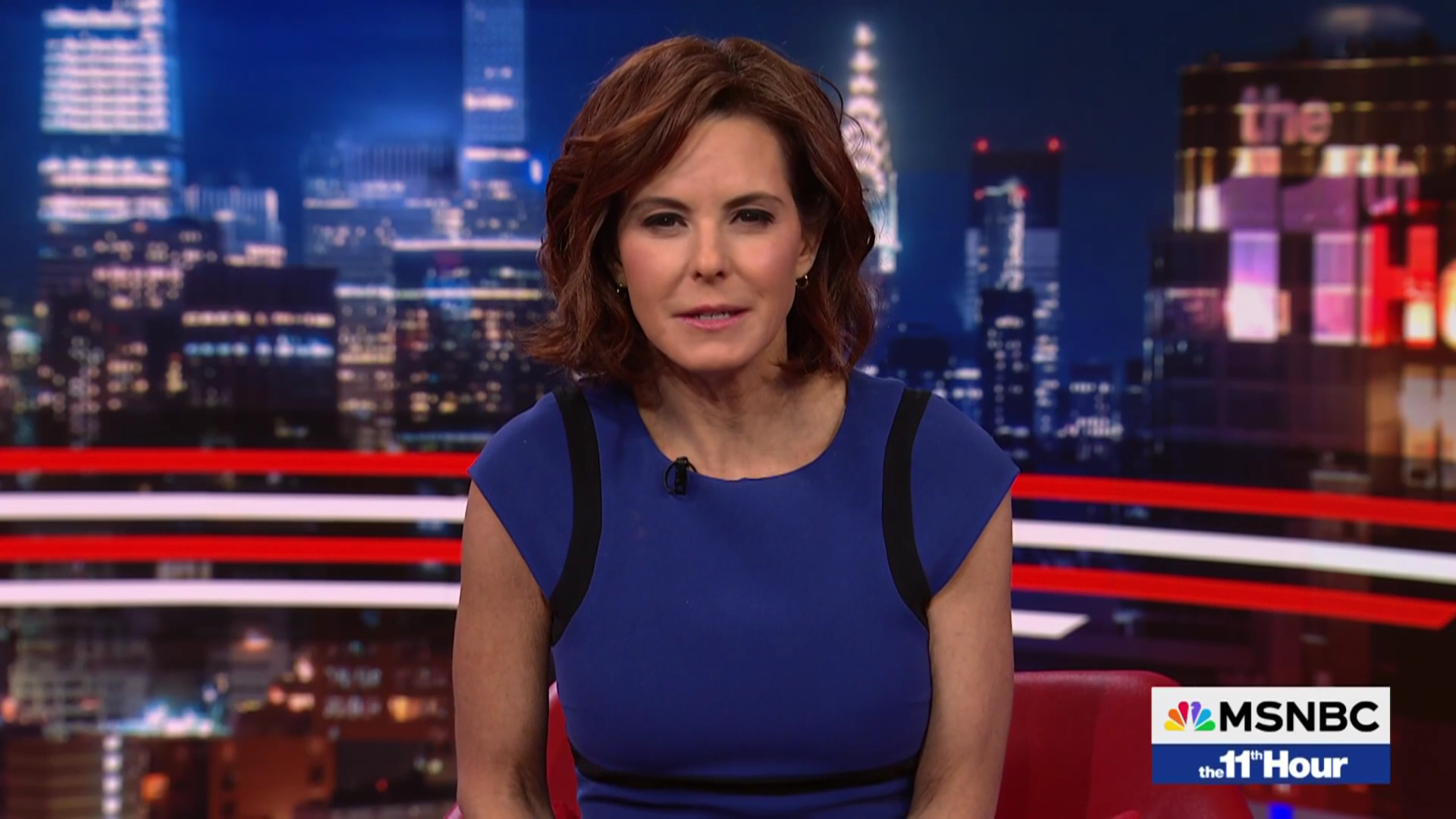
Visual presentation in high-stakes political journalism functions as a non-verbal signaling system engineered to minimize friction between the broadcaster and the audience. When analyzing the wardrobe strategies of senior white-house correspondents and prime-time anchors such as Kaitlan Collins, the underlying objective is not aesthetic self-expression, but cognitive neutrality. In broadcast environments where the primary product is institutional credibility, clothing operates as a risk-management tool designed to prevent visual distraction from eroding perceived objectivity.
The Signaling Economics of Broadcast Attire
To understand why political journalists adhere to rigid sartorial parameters, one must apply Michael Spence’s economic signaling theory to media consumption. In environments characterized by information asymmetry—where viewers must evaluate the trustworthiness of an anchor within seconds—observable visual cues serve as proxies for unobservable traits like competence, rigor, and institutional alignment.
Reducing Cognitive Load for the Viewer
Human visual processing prioritizes novelty and high-contrast anomalies. In a television studio or a live White House lawn hit, an unconventional silhouette, an intricate pattern, or an overly saturated hue forces the viewer's brain to allocate cognitive resources toward decoding the garment rather than processing the spoken analysis.
Broadcast power dressing systematically eliminates this friction through three structural mechanisms:
- Chromatic Discipline: Reliance on a compressed color palette—primarily navy, charcoal, ivory, cobalt, and muted burgundy—anchors the subject against shifting backgrounds. High-chroma primaries like cobalt or crimson are deployed selectively to create focal separation from neutral studio sets without triggering the visual fatigue associated with neon or overly complex prints.
- Silhouette Standardization: Structured blazers, tailored trousers, and clean necklines establish a predictable geometric frame. This consistency creates a visual baseline across broadcasts, signaling stability during breaking news cycles when the informational environment is volatile.
- Texture Control: Matte fabrics such as wool crepe, heavy silk, and structured cotton absorb studio lighting rather than reflecting it. Specular highlights from satin or metallic weaves register on high-definition cameras as visual noise, subtly undermining the sober tone required for hard news reporting.
The Uniform as Institutional Armor
A recurring pattern among top-tier political correspondents is the adoption of a repeatable "work uniform"—a modular rotation of tailored separates that minimizes daily decision fatigue while projecting continuous readiness. For journalists operating on compressed breaking-news timelines, particularly those transitioning from field reporting at the White House briefing room to anchoring a prime-time desk, wardrobe predictability is an operational necessity.
When a correspondent’s visual presentation remains constant across varying contexts, the audience subconsciously transfers the authority of the setting onto the individual. The garment ceases to be fashion and becomes institutional armor, insulating the journalist from the asymmetrical scrutiny that disproportionately targets women in political media.
The Asymmetry of Audience Scrutiny
A rigorous analysis of political power dressing must account for the structural double standard governing male and female broadcasters. Male anchors operate within a narrow, historically codified uniform—the dark suit, white or light-blue shirt, and conservative tie—that renders their physical appearance largely invisible to the audience. Deviation from this standard is rare, meaning viewers evaluate male journalists almost exclusively on vocal delivery and editorial substance.
Female political journalists face a far more complex optimization problem. They must navigate an unwritten regulatory framework where appearing overly stylized invites accusations of frivolity, while appearing under-styled triggers critiques of unprofessionalism.
Navigating the Credibility-Likability Trade-off
In organizational psychology, women in leadership and high-visibility roles frequently encounter a bind between perceived competence and perceived warmth. Wardrobe choices in broadcast news are calibrated to resolve this tension:
- Hard Tailoring for Competence: Sharp lapels, structured shoulders, and monochromatic suiting borrow visual signifiers from traditional corporate and political power structures, reinforcing authority when interviewing heads of state or senior policymakers.
- Color and Softness for Accessibility: Introducing jewel tones, softened necklines, or fluid drape beneath a structured outer layer prevents the aesthetic from reading as overly rigid or adversarial, maintaining parasocial connection with a broad prime-time demographic.
The strategic utility of this balance becomes evident during high-conflict interviews. When a journalist presses a political figure on factual inconsistencies, an understated, sharply tailored wardrobe denies the subject or partisan critics an easy visual vector for ad hominem dismissal. The visual presentation remains unassailable, forcing the public debate to remain anchored to the substance of the questioning.
Technical Constraints of the Broadcast Medium
Beyond psychological signaling, political power dressing is dictated by the hard physics of television production. What registers as sophisticated in a boardroom or an editorial print spread often fails under the specific technical parameters of broadcast cameras and lighting rigs.
Camera Sensors and Moiré Distortion
Digital broadcast cameras utilize pixel grids that interact poorly with fine, high-contrast patterns such as herringbone, houndstooth, or tightly spaced pinstripes. This interaction produces the moiré effect—an optical illusion of wavy, shimmering lines that distorts the image on the viewer's screen. Consequently, broadcast wardrobes rely heavily on solid color blocks and micro-textures that read as smooth surfaces on 4K sensors.
Lighting Temperatures and Chromatic Bleed
Studio lighting arrays typically operate at a color temperature between 3200K (tungsten) and 5600K (daylight-balanced LED). Pure optic white fabrics can blow out camera exposure settings, causing detail loss in the garment and throwing off skin-tone calibration. Experienced broadcast stylists and anchors substitute optic white with off-white, cream, or pale gray to preserve dynamic range. Similarly, pure black absorbs too much light, flattening the visual depth of a tailored jacket on screen; deep navy and charcoal provide superior contrast and structural definition under studio lamps.
Audio Integration Mechanics
Functional broadcast attire must accommodate the physical hardware of live television. Every blazer, dress, or blouse requires structural integrity capable of supporting the weight of a lavalier microphone clipped to the lapel or neckline without sagging, alongside concealed routing paths for wiring and belt-pack transmitters. Structured wovens with substantial fabric weight outperform lightweight knits precisely because they maintain their architectural line under the mechanical load of broadcast audio equipment.
Operationalizing Visual Authority in High-Stakes Environments
The principles governing broadcast power dressing extend directly to executives, legal practitioners, and policy leaders operating in high-scrutiny public or corporate arenas. However, this strategy carries distinct limitations. Over-reliance on rigid sartorial conformity can signal inflexibility in environments that reward disruption, such as early-stage technology ventures or creative industries. In traditional institutional settings, though, visual restraint remains a primary lever for controlling audience perception.
To systematically engineer a high-authority visual baseline, apply the following operational framework:
- Establish a Modular Palette: Restrict core outer layers to three low-chroma anchors (navy, charcoal, deep olive or camel) paired with three controlled accent tones that complement your natural contrast level under harsh overhead lighting.
- Audit Silhouette Geometry: Prioritize garments with structured shoulder seams and clean vertical lines. Eliminate excess fabric, decorative hardware, and asymmetrical draping that fragment the visual frame during video conferences or public appearances.
- Standardize the Core Uniform: Identify two to three repeatable garment combinations that require zero morning cognitive overhead. Consistency builds visual recognition and ensures you remain camera-ready for unscheduled high-stakes interactions.
- Test Under Operational Conditions: Evaluate garments under cool, high-lumen lighting and through a standard camera lens rather than a dressing-room mirror, verifying that fabrics do not glare, wrinkle under seating pressure, or distort on digital sensors.
Treat every visible element of your presentation as a deliberate allocation of audience attention: strip away every detail that does not directly reinforce your institutional credibility.