If you stand on the northernmost fringe of the Isle of Man, where the Andreas coast meets the Irish Sea, you quickly learn that nothing is permanent. The wind here does not blow; it scours. It carries the scent of salt, wet earth, and cold decay. Beneath your boots, the ground is not rock. It is sand. Endless, shifting sand dunes that are constantly trying to slide back into the ocean.
Without the grass, the whole place would dissolve. If you liked this piece, you might want to check out: this related article.
It is called marram grass—or "bent," as the locals name it. It is a tough, wiry plant with roots that spider deep into the shifting grains. It binds the coast. It holds the island together. To the untrained eye, these dunes look like a desolate, windswept wasteland. But step closer, quiet your breath, and you realize the sand is vibrating with life.
This July, as King Charles III stepped onto the Isle of Man for his first official visit as the Lord of Mann, a quiet pen stroke across a piece of parchment changed everything for this fragile strip of land. A 17-acre stretch of these dunes, known as Cronk y Bing Ayres, was officially declared the island’s second statutory National Nature Reserve under the Wildlife Act. For another angle on this development, check out the recent coverage from Travel + Leisure.
To the bureaucrats, it was a timed media release, a nice photo opportunity to align with royal itinerary. To the people who have spent their lives walking these dunes, it was a long-overdue sigh of relief.
The Invisible Fortress of the Dunes
To understand why a tiny patch of coastal sand matters, you have to look at the map. Cronk y Bing forms a crucial link in a 12-kilometer ecological chain stretching from Jurby to the Point of Ayre.
Imagine a castle wall. If you remove a single block from the foundation, the entire parapet eventually crumbles. The dunes of Cronk y Bing are that foundation. They are a buffer against the rising, angry tides of the Irish Sea.
Without this protection, coastal erosion would slowly swallow the low-lying farmlands of the north. But the defense is fragile. A single rogue off-road vehicle, a poorly placed campsite, or even too many unchecked hiking boots can tear the marram grass from its roots. Once the grass dies, the wind takes the sand. The dune becomes a blowout, a gaping wound in the shoreline that grows larger with every winter storm.
The formal designation of a National Nature Reserve is not just a fancy title. It is the highest level of legal protection available under Manx law. Later this year, strict new bylaws will be introduced to govern exactly what can and cannot happen on this thin strip of earth. It is a legal shield for a place that has spent centuries defending itself with nothing but roots.
The Sanctuary of One Hundred and Twenty Voices
For the conservationists at the Manx Wildlife Trust, the victory is deeply emotional. Cronk y Bing is not just a pile of sand; it is arguably the most critical avian sanctuary on the island.
To date, ornithologists have recorded 120 different bird species here. To put that in perspective, 36 of those species are on the Isle of Man’s red list of urgent conservation concern. That is three-quarters of the island's most endangered birds relying on a 17-acre patch of sand dunes to survive.
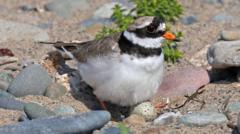
Consider the ringed plover.
This tiny, round bird is the color of wet river stones. It does not build a nest of twigs in a tree. Instead, it scrapes a shallow depression directly into the shingle, just above the high-tide line, and lays eggs that look exactly like pebbles.
When a human walks down the beach, the parent bird quietly slips away from the nest. If they stay away too long because of persistent disturbance, the eggs chill and the embryos die. If a dog runs off-leash through the dunes, a year’s worth of breeding can be crushed in a single second.
The new reserve status will create safe zones where these birds can nest without the constant, terrifying intrusion of human recreation. It is a quiet compromise between our desire to explore the wild and nature’s absolute need to be left alone.
A Legacy Written in Sand
There is a historical symmetry to the declaration. When King Charles visited the Isle of Man back in 2000 as the Prince of Wales, he spent his time walking through the marsh orchids of Close Sartfield, another vital Manx Wildlife Trust reserve.
His lifelong, almost obsessive interest in the natural world is well-documented. He was talking about organic farming and plastic pollution decades before they became fashionable talking points. Marking his first visit to the island as monarch with the creation of a sanctuary feels less like a hollow gesture and more like a continuation of a life's work.
But the real work does not happen in royal palaces or government offices. It happens on the ground, in the rain, at seven in the morning.
It is carried out by volunteers who spend their weekends pulling invasive weeds, monitoring nesting sites, and picking up plastic debris that washed in from the sea. It is carried out by the locals who have agreed to leash their dogs and walk only on designated paths, voluntarily limiting their own freedom so that something smaller and more vulnerable can survive.
Ultimately, Cronk y Bing is a reminder of what we stand to lose if we do not pay attention. The sand will always want to move. The sea will always try to reclaim the land. But for now, held fast by the roots of the marram grass and the strength of a new law, the ground beneath our feet remains solid.