The Weight of a Single Word
Ink does not usually draw blood. But in New Delhi, words are physical objects. They are heavy, jagged things hurled across political chasms, carrying the weight of centuries of caste, class, and silent fury.
Consider the word pappattai. In the rough vernacular of Indian political mudslinging, it translates to cockroach. It is an insectoid dehumanization, a linguistic tool designed to reduce a political opponent not merely to a rival, but to an infestation—something to be swept away, stepped on, eradicated without a second thought. When a ruling party minister deployed that exact term against the opposition, he did not just insult a man. He summoned an ancient instinct of contempt.
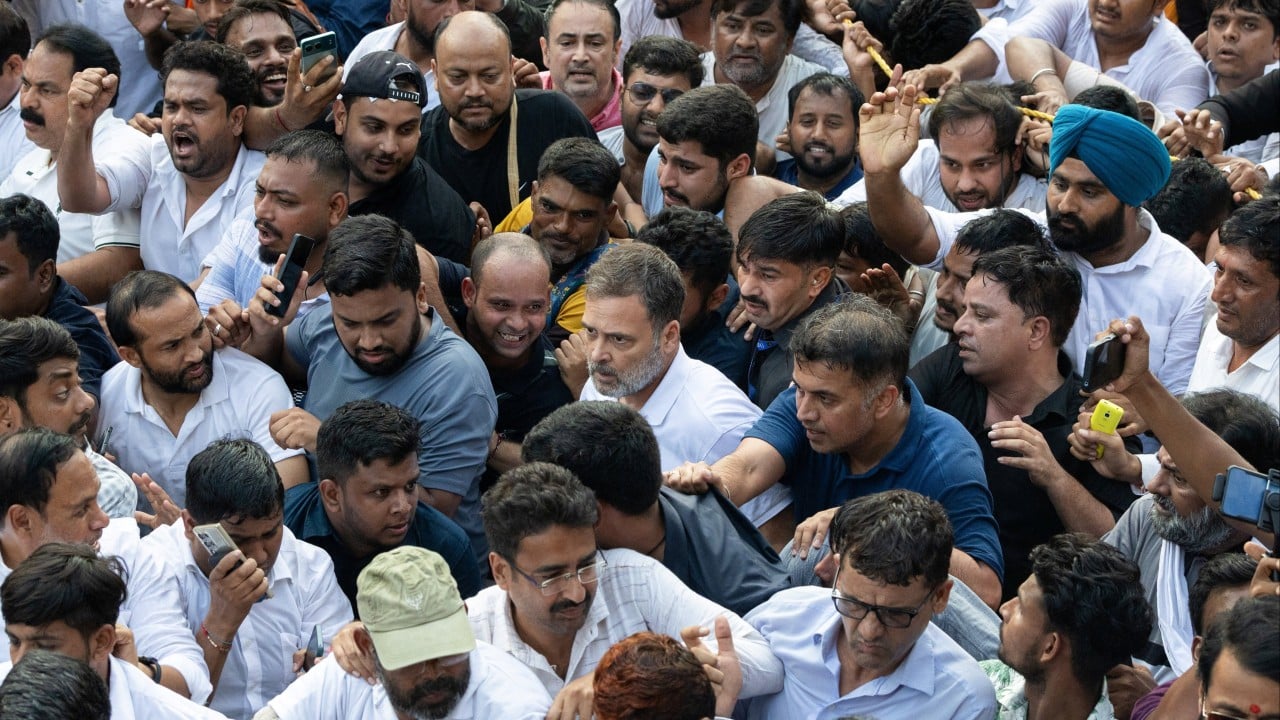
The streets outside did not erupt in immediate, cinematic violence. India is too old and too tired for riots that look like movie sets. Instead, something quieter and far more dangerous happened. The insulted gathered their dignity, polished their protest placards, and began to march toward the Supreme Court.
They walked under a heavy, bruised Delhi sky where the air tastes of diesel and history. Thousands of pairs of shoes hit the asphalt in a steady, monotonous rhythm. These were not revolutionaries high on radical theory; they were politicians, lawyers, and ordinary citizens whose patience had worn as thin as cheap cotton. They carried no weapons. Their ammunition was the Constitution of India, clutched in sweaty palms like a shield against an escalating storm.
When the State Turns Its Back
To understand why a simple political insult sent thousands marching to the highest court in the land, you have to understand the erosion of civic air. For years, the political vocabulary in the world's largest democracy has coarsened. Debate has curdled into mockery. Disagreement has mutated into treason.
When opposition leaders marched toward the marble pillars of the Supreme Court, they were making a desperate diagnosis. They were saying that the normal checks and balances of public life had failed. Parliament had become an arena of suspension and shouting matches. The television studios had turned into circuses of nationalist hysteria. When the political sphere refuses to police its own basic decency, the judiciary becomes the last habitable room in a burning house.
Imagine standing on those marble steps. The heat radiates off the plaza, baking the stone. Riot police stand in crisp, indifferent khakis, holding bamboo lathis that have settled comfortably into the palms of generations of enforcers. Behind the barricades, the opposition leaders speak into clusters of crackling microphones. Their voices are hoarse. They are demanding an apology, an accountability, a legal boundary drawn around hatred.
"If they can call us cockroaches in broad daylight," one veteran lawmaker whispered to me, his eyes bloodshot from the smog, "what do they whisper to the police about our voters when the cameras are off?"
That is the invisible stake of this entire drama. It is never just about the politicians at the podium. It is about the million invisible people watching from cramped apartments in old Delhi or dusty villages in Uttar Pradesh. If the ruling elite can casually dehumanize their peers with pest metaphors, what permission does that grant the local bureaucrat, the beat cop, or the dominant-caste landlord?
Language is a weather system. It shapes the climate we all must breathe.
The Architecture of Contempt
Dehumanization is an old trick, dusted off for modern television ratings. By labeling political rivals as pests, the ruling apparatus attempts a subtle alchemy. Pests do not have rights. Pests do not possess constitutional protections. Pests are vectors of disease that threaten the domestic tranquility of the nation.
When you frame politics this way, compromise becomes a form of hygiene failure. Negotiation is replaced by extermination talk.
The opposition's march to the Supreme Court was an attempt to break that spell. They were asking the judiciary to act as an ethical circuit breaker. But relying on the courts to fix political malice is a fraught business. Judges wear black robes to symbolize neutrality, but they are human beings swimming in the same contaminated political waters. Can a court order a politician to feel empathy? Can an injunction banish bad faith from the human heart?
Probably not. Yet, the act of marching matters regardless of the legal outcome. It creates a historical record. It says: We were here. We did not accept this. We refused to let our humanity be legislated out of existence.
The Long Road Home
As evening fell over New Delhi, the crowds dispersed. The barricades were dismantled. The police rolled up their ropes and climbed back into their rusted green trucks. The Supreme Court sat silent, its vast dome fading into the violet smog of twilight.
Nothing had fundamentally changed in the power equations of the capital. The ministers would wake up tomorrow to their security details and red-beacon cars. The opposition would return to their cramped offices to plot their next parliamentary strategy. The word cockroach would linger in the national lexicon, another jagged shard embedded in the public consciousness.
Yet, something had shifted beneath the surface. Every time a society is forced to march to its highest court just to demand the right to be treated as human beings, the foundation cracks a little more. You cannot build a modern superpower on a foundation of mutual disgust.
The streetlights flickered on, casting long, bruised shadows across the pavement where the marchers had stood. Somewhere in the dark, a siren wailed, cutting through the heavy air, a reminder that the city never truly sleeps, and the tension never truly breaks.