Every morning, before the city of Nanjing fully shakes off its sleep, a man named Zhang Yong walks toward the noise.
He does not carry a megaphone. He does not wear a uniform. He carries a smartphone, a portable charger, and a weight inside his chest that no engineering overhaul has ever managed to lighten. At an unassuming urban junction in eastern China, where commuters surge forward on electric scooters and sedans jostle for a three-second advantage against a turning yellow light, Zhang stands near the curb and watches.
He watches the tires. He watches the crosswalk lines. He watches the faces behind windshields—faces pinched with the minor urgencies of modern life, late for a meeting, late for school, late for nothing in particular.
When a car rolls past a stop line, or a rider weaves recklessly through pedestrians, Zhang raises his phone. He records. Then he uploads the footage to the local traffic police reporting platform.
Hundreds of violations. Month after month. Year after year.
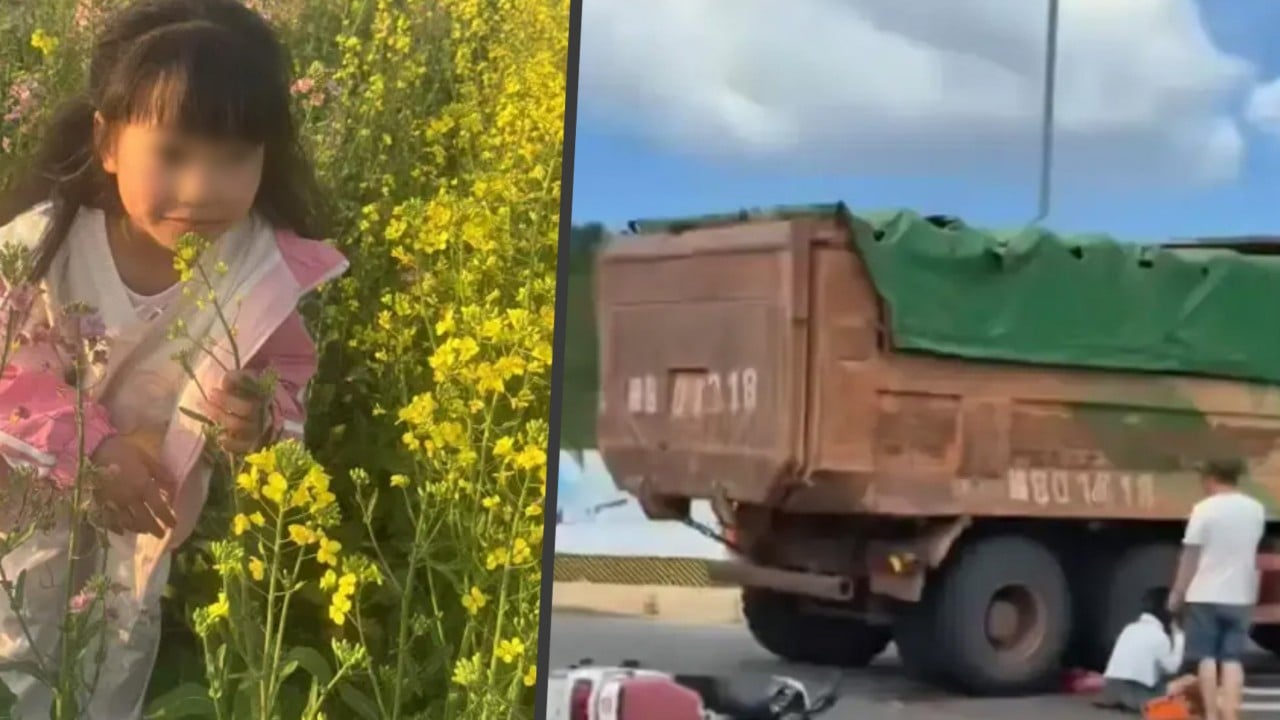
To a passing stranger, Zhang might look like an eccentric vigilante, a man obsessed with petty civic infractions. To understand why he is really standing there, you have to rewind the clock to the day that intersection stole his daughter.
The Architecture of a Preventable Tragedy
Grief usually demands retreat. When tragedy strikes a family, the instinct is to seal the windows, pull the curtains, and stay far away from the geography of the wound. Returning to the exact coordinates of your worst memory feels less like healing and more like self-harm.
Zhang Yong did the opposite.
After a fatal crash at that very junction took his daughter’s life, the asphalt did not become a place for him to avoid. It became a ledger that remained dangerously unbalanced. When a driver ignores a red light or cuts across a lane without looking, the act feels small in the moment—a fraction of a second stolen from the clock, a minor gamble made with two tons of steel. Yet physics does not negotiate with good intentions.
Consider what happens next in the anatomy of an ordinary urban crash. A driver accelerates to beat an amber signal, convinced the intersection is clear. A pedestrian or cyclist steps out, trusting the green walk sign to act as an invisible shield. Neither party wakes up intending to destroy a life. Both are operating inside a shared illusion of routine. When those two paths intersect, the kinetic energy transferred in half a second is enough to erase decades of memories, graduations, quiet Sunday dinners, and a father’s entire future.
According to the World Health Organization, roughly 1.19 million people die each year in road traffic crashes globally, and millions more suffer non-fatal injuries that permanently alter their lives. In rapidly motorizing cities across China, the friction between heavy vehicles, delivery e-bikes, and pedestrians creates thousands of micro-conflicts every single hour. Traffic engineers design signals, paint white zebra stripes, and install overhead cameras, yet systems only work when human beings respect the social contract holding those lines together.
Zhang knew that no amount of camera footage would bring his daughter back. What haunted him was simpler and far more unbearable: the realization that the exact same carelessness was still happening on that same corner every morning.
If he walked away, the intersection would simply reset itself, waiting for the next family.
Living Inside the Aftermath
Have you ever stood beside a busy four-lane road and actually paid attention to how close you are to disaster?
We rarely do. As drivers and pedestrians, we develop a kind of protective blindness. We trust the painted lines on the ground as if they were concrete walls. I remember standing at a chaotic city crosswalk months after a close friend was struck by a turning delivery van—an accident that left him relearning how to walk over fourteen agonizing months. Before that afternoon, an intersection was just a pause in my commute. Afterward, every revving engine sounded like a threat, and every inch of painted asphalt felt fragile. You suddenly notice how many drivers are looking down at their laps instead of the crosswalk, how many scooters treat red lights as mere suggestions, and how thin the margin between an ordinary Tuesday and a hospital waiting room actually is.
That heightened, exhausting awareness is the permanent climate in which Zhang Yong lives.
Standing at the junction day after day is not dramatic work. There are no sirens, no cinematic confrontations, no applause from passing commuters. Most days, it is just wind, exhaust fumes, the hum of rubber on pavement, and the quiet discipline of paying attention when everyone else is rushing.
Yet look closely at what Zhang is actually doing. In behavioral psychology, economists and sociologists often talk about the "broken windows" effect—the idea that visible signs of disorder and unpunished rule-breaking encourage further carelessness. Traffic works the exact same way. When ten drivers roll through a crosswalk unchallenged, the eleventh driver assumes the rule no longer applies. Impunity becomes contagious.
By standing at that corner and documenting violations for official enforcement, Zhang is disrupting that contagion. He is reintroducing accountability into a space where anonymity usually protects bad behavior.
Why Crowdsourced Accountability Changes Driver Behavior
To understand why one man with a smartphone matters so much, it helps to think of urban traffic not as a machine, but as an ecosystem.
Automated speed cameras and overhead sensors are fixed. Locals memorize where they are within a week. Drivers slow down fifty meters before the pole, pass underneath like model citizens, and accelerate the moment they clear the lens. Enforcement becomes a predictable game rather than a genuine habit of caution.
Citizen reporting breaks that predictability.
Across several major Chinese cities, traffic authorities have introduced mobile platforms and WeChat mini-programs that allow residents to submit clear photo or video evidence of traffic violations—such as running red lights, failing to yield to pedestrians at zebra crossings, illegal lane changes, and blocking emergency lanes. Once verified by officers, those submissions result in real fines and demerit points on a driver’s license.
Think of it like the difference between a single lighthouse and a coastline filled with observant neighbors. A lighthouse sweeps its beam in a steady, predictable circle; anyone watching can time their movements around it. A community that refuses to look away creates a culture where safe driving isn't just something you do when a patrol car is visible—it becomes the baseline expectation everywhere.
Of course, this kind of civic vigilance always stirs debate. Some critics worry about privacy, or question whether ordinary citizens should step into roles traditionally reserved for uniformed officers. Those are fair questions, and it would be dishonest to pretend the line between civic duty and overreach is always neat. Nobody wants a society built on constant mutual suspicion.
Look at Zhang’s actions, though, and that abstract debate suddenly clarifies. He is not hiding in bushes to trap people on technicalities. He is standing openly at a known danger zone, documenting behaviors that directly threaten human lives: vehicles encroaching on pedestrian crossings, drivers ignoring signals, riders weaving blindly through foot traffic.
There is nothing ambiguous about a car speeding through a crosswalk where children and elderly residents walk.
The Invisible Math of Five Saved Seconds
Watch any busy urban intersection during morning rush hour and you will witness a strange collective delusion.
A driver edges three feet over the white stop line while waiting for the light to turn green. Another accelerates aggressively to squeeze past a turning cyclist. A scooter rider mounts the sidewalk to bypass four stalled cars. Every single one of those maneuvers is driven by the exact same calculation: I am saving time.
In reality, those risky choices rarely shave more than five or ten seconds off a twenty-minute commute. Modern urban traffic signals are synchronized in waves; rushing through one yellow light almost always means sitting idly at the very next red light two hundred meters down the road. The time saved is an illusion.
The risk transferred to everyone else, however, is completely real.
When a vehicle creeps into a crosswalk, pedestrians are forced to step outside the painted boundary, closer to moving lanes of traffic. When a driver turns right without yielding, an elderly pedestrian carrying groceries has to freeze mid-step or scramble backward. Over hundreds of cycles a day, those tiny encroachments stack up until the odds inevitably turn lethal.
Zhang Yong understands that math better than any traffic manual ever could. He knows the exact price of a driver’s impatience because he paid it in full.
Every video he uploads is a quiet intervention against that false math. When a motorist receives a violation notice days later—a fine deducted, demerit points recorded—the invisible cost of those five saved seconds finally becomes visible. Next time that driver approaches the junction, their foot hovers a little closer to the brake pedal. They stop behind the white line. They wait.
And somewhere on that crosswalk, a child, a parent, or an elderly neighbor crosses safely without ever knowing why the car stopped in time.
Grief Transformed Into Public Armor
There is a wordless dignity in what Zhang has chosen to do with his sorrow.
In the aftermath of sudden loss, anger is easy. Bitterness is easy. Retreating into private despair is completely understandable, and no one could ever fault a grieving father for never wanting to see asphalt again. Instead, Zhang took the sharpest pain a human being can endure and forged it into a shield for strangers.
He cannot rewrite the afternoon his daughter died. He cannot step backward through time to hold her hand at the curb or wave down the vehicle that changed his life forever. That door is locked.
What he can control is the strip of concrete right in front of him today.
By showing up morning after morning, rain or shine, Zhang has turned a site of personal devastation into a zone of fierce protection. His presence sends an unmistakable message to every commuter passing through that junction: A life mattered here. People are watching. Slow down.
Notice what happens to the rhythm of that intersection over time. Drivers who commute along that route begin to recognize the corner—not merely as a bottleneck on their way to work, but as a place where rules carry weight. Pedestrians walk with slightly steadier steps. The chaotic edge of rush hour softens, even if only by degrees.
You do not need a badge to protect a community. Sometimes all it takes is one person who refuses to look away, standing quietly at the edge of the road with a phone in his hand, keeping watch so another father never has to learn what that corner feels like after the sirens fade.
Tomorrow morning, the traffic lights at that junction will cycle from red to green, and green back to red, just as they always have. Cars will hum forward, tires will hiss against the pavement, and Zhang Yong will be standing at the curb, watching the white lines.