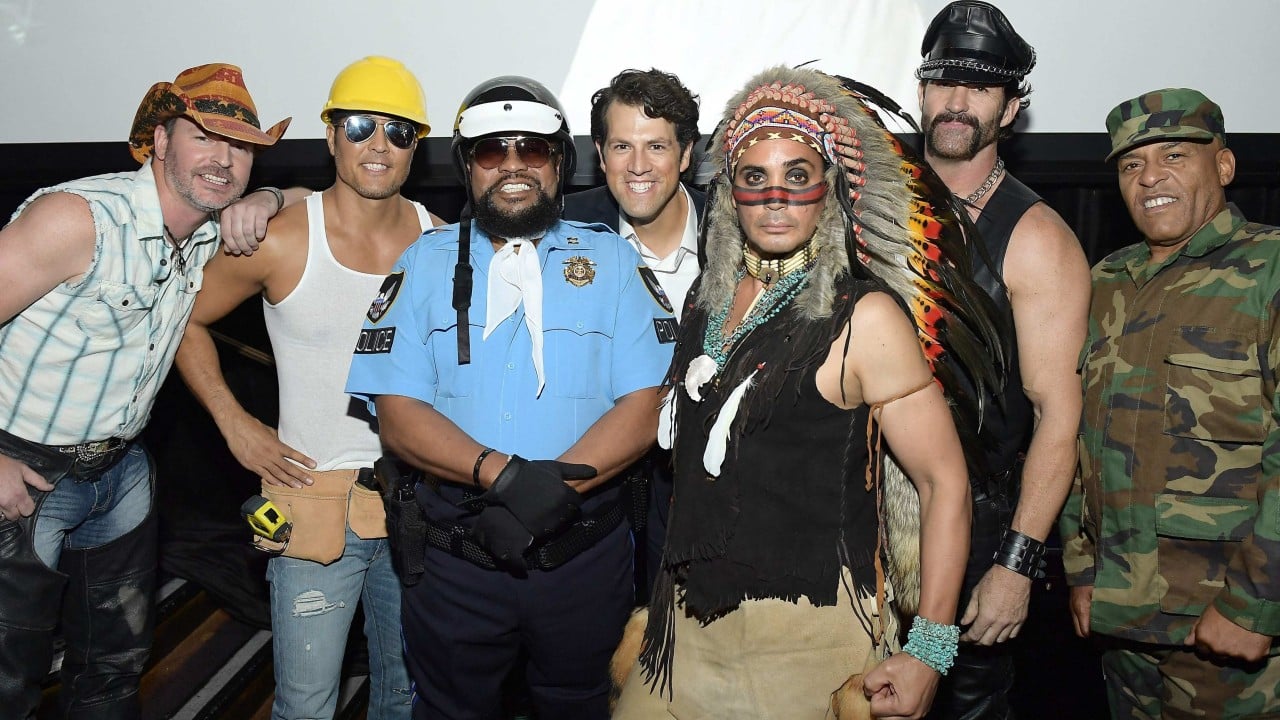
On June 30, 2026, the voice that fueled a billion wedding receptions and stadium sing-alongs went silent. Victor Willis, the original lead singer and co-founder of the Village People, died at 74 years old following a brief but aggressive illness. The news came directly from his wife, Karen Huff-Willis, and a statement posted to the group's official social media pages. He passed away just one single day before his 75th birthday.
Most people know him as the guy in the cop uniform or the naval officer outfit shouting out the letters Y-M-C-A. But reduce him to a mere kitschy character and you miss the entire point of his career. Willis wasn't just a singer who lucked into a gimmick. He was a brilliant songwriter, a fierce defender of artists' rights, and a vocal powerhouse who fought tooth and nail to reclaim his legacy. For an alternative look, see: this related article.
When you hear about a disco icon passing away, the immediate reaction is usually a wave of nostalgia for the late 1970s. We think of strobe lights, platform shoes, and campy dance routines. Willis deserved better than a lazy trip down memory lane. His life tells a massive story about creative ownership, cultural crossover, and how a song can escape its writer's control and become something else entirely.
The Massive Voice Behind the Costumes
People forget that the Village People were built around Willis, not the other way around. In 1977, French producers Jacques Morali and Henri Belolo were looking for someone to anchor a new musical project. Morali reportedly had a dream that Willis sang lead vocals on an album that became huge. He called Willis the young man with the big voice. He wasn't wrong. Related insight regarding this has been shared by Vanity Fair.
Before the costumes ever entered the picture, Willis was a trained actor and singer. He grew up singing in his father’s Baptist church in San Francisco, refining a rich, soulful baritone that could cut through heavy disco basslines. He moved to New York and joined the prestigious Negro Ensemble Company. He even landed a spot in the original 1976 Broadway production of the hit musical The Wiz. He had real theatrical chops.
When Morali and Belolo brought him on, Willis co-wrote the lyrics to the tracks that defined an era. We are talking about Macho Man, In the Navy, Go West, and of course, YMCA. He provided the gritty, masculine vocal anchor that kept those tracks from sounding like disposable studio pop. Without his distinctive delivery, those tracks would have lacked the punch needed to become global phenomena. The rest of the iconic lineup came later, assembled around Willis to flesh out the archetypes.
What Everyone Gets Wrong About YMCA
Let's address the elephant in the room. There is an ongoing debate about the true meaning of YMCA. For decades, the track has been celebrated as a legendary gay anthem. It is a staple of pride celebrations worldwide. But Willis always maintained a very different stance on what inspired those famous lyrics.
He explicitly stated that he did not write it as a gay anthem. He noted that he wrote the track about hanging out in urban neighborhoods during his youth, playing basketball with his friends at the local Y. The lyric about hanging out with all the boys was a literal reflection of his teenage years. He wanted to write something universal that could fit into anyone’s lifestyle, regardless of their background.
Does that mean he hated its status in the LGBTQ+ community? Not at all. Willis frequently expressed how happy he was that the community adopted the track. He had no qualms about it. He loved that it brought people joy. This distinction matters because it shows his skill as a writer. He crafted a pop track so broad and infectious that it could mean completely different things to different people without losing its core energy.
The Groundbreaking Legal Battle for Music Rights
If you want to understand why Willis was an industry heavyweight, you have to look past the charts. Look at the courtroom. Willis left the Village People in 1980, returned briefly, and then walked away again as the music industry shifted. Decades later, he launched a legal battle that shook the music publishing world.
Under the US Copyright Act of 1976, songwriters have the right to reclaim their publishing rights after 35 years through a process called copyright termination. In the early 2010s, Willis decided to exercise this right. Major publishing companies fought him hard. They argued that he was a writer for hire and had no claim to the master compositions.
Willis didn't back down. He won. A federal judge ruled in his favor, allowing him to reclaim up to 50% of his share in YMCA and other hits. It was a massive victory for independent creators everywhere. He proved that artists don't have to remain trapped by the unfair contracts they signed in their youth. He didn't just sing about being a cop; he actually laid down the law.
Navigating the Political Use of His Music
In his later years, Willis found his work caught in the middle of modern American politics. YMCA and Macho Man became absolute fixtures at Donald Trump’s political rallies. This created a bizarre cultural juxtaposition. A 1970s disco anthem was suddenly sound-tracking twenty-first-century political campaigns.
The public response from Willis and his estate was complex. At times, his team requested that the campaign stop using the tracks. At other points, Willis adopted a more pragmatic approach. He acknowledged that the music belonged to the public and that he couldn't easily stop its use at political rallies due to venue licensing agreements. In January 2025, the Village People even performed at the Turning Point Inaugural-eve Ball.
This political tug-of-war shows the sheer, unshakeable power of a true pop hit. Once a song embeds itself into the cultural fabric, the creator loses total control over who sings along to it. Willis understood this reality better than anyone. He chose to focus on the fact that his work remained relevant decades after the disco ball stopped spinning.
Rejoining the Group and Looking Backward
In 2017, Willis did something few expected. He officially rejoined the Village People as lead singer. He revamped the lineup, settled old disputes, and got back on stage in his iconic uniform. He even recorded new material, including a festive album called A Village People Christmas.
He didn't return because he needed the money. He returned because he wanted to reclaim his rightful place at the front of the stage. He spent years watching tribute acts and watered-down versions of his band tour the world. He wanted fans to hear the real voice behind the hits one last time.
He once stated that his goal was to be remembered as the guy who walked away from the business, never gave up, and came back successfully to make people smile. He achieved exactly that. He proved that your career isn't over just because the industry tries to write you off as a relic of a bygone decade.
Protecting Your Own Creative Legacy
The life of Victor Willis offers crucial lessons for modern creators, musicians, and artists. If you are making anything today, you need to take his career trajectory seriously.
First, never sign away your rights forever without understanding the fine print. Willis spent years fighting in court for money and credit that should have been his from the very start. Modern artists have more tools than ever to maintain independence. Use them. Keep your publishing rights whenever possible.
Second, embrace how audiences interpret your work. Your art might start as a personal story about playing basketball in San Francisco, but it can evolve into an anthem for a global movement. Don't fight that evolution. Celebrate it.
If you want to honor his memory, do something simple today. Put on a pair of headphones and listen to the original studio recording of YMCA. Don't just watch the dance moves. Listen closely to the grit in his voice, the timing of his delivery, and the incredible vocal arrangement. That is the real legacy of Victor Willis. It is a masterclass in pop songwriting that will outlive us all.