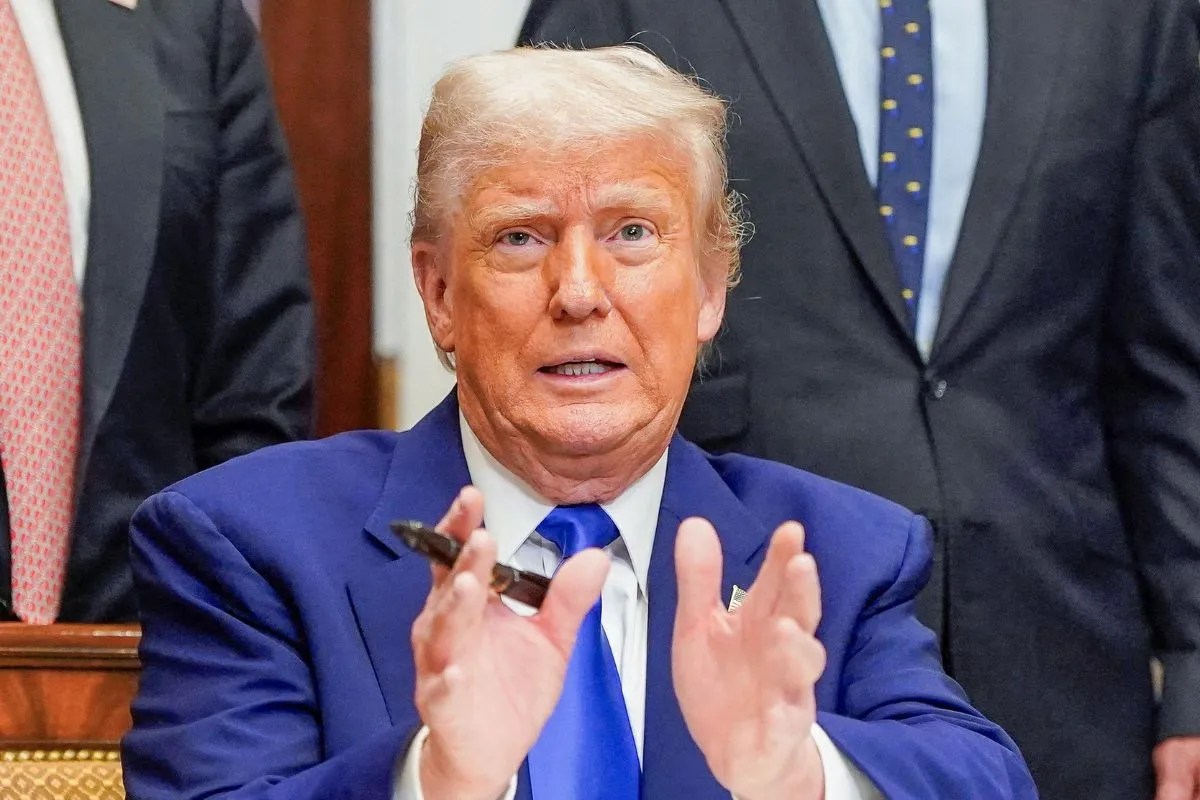
Don't let the headlines fool you. Oil prices just plunged more than 5% on Monday, with global benchmark Brent crude dipping below the triple-digit mark to $97.43 a barrel. US West Texas Intermediate fell right along with it, landing at $91.14. Wall Street is celebrating, Asian stock markets are soaring, and everyone is breathing a sigh of relief because Donald Trump announced that a peace deal with Tehran is "largely negotiated."
But if you think this means cheap gas is returning to your local station next week, you're dead wrong. For a different look, check out: this related article.
The markets are reacting to pure emotion and political optics. Under the surface, the global energy supply chain is in the worst shape it has seen in decades. This sudden price drop isn't a sign of recovery. It's a temporary pause in a crisis that's far from over.
The Mirage of the Strait of Hormuz Reopening
The main driver behind this market optimism is the potential reopening of the Strait of Hormuz. When the US-Israel war with Iran erupted on February 28, the subsequent maritime blockade effectively choked off 20% of the world's petroleum supply. That's nearly one-fifth of the planet's energy flows trapped behind a wall of military tension. Similar insight regarding this has been shared by Reuters Business.
Sure, the semi-official Iranian Students' News Agency reported that over 30 commercial vessels, including a supertanker hauling Iraqi crude to China, cleared the strait under Islamic Revolutionary Guard Corps authorization. But look at the math. Before this war broke out, roughly 130 ships crossed that narrow strip of water every single day. Thirty ships in a 24-hour window isn't a triumphant return to normal shipping. It's a trickle.
Worse yet, the physical infrastructure of the region is a mess. Months of drone strikes, naval blockades, and missile exchanges have severely damaged refining facilities and port infrastructure across the Gulf, including critical sites in Qatar. You don't just flip a switch and repair a bombed-out coastal terminal.
According to Saudi Aramco CEO Amin Nasser, the scale of this disruption means global oil markets won't see actual stability until 2027. Think about that. Even if Trump and the Iranian diplomatic team sign a formal memorandum of understanding tomorrow, the supply deficit is massive.
The Massive Commercial Stockpile Depletion
While politicians talk about diplomacy, energy analysts are watching commercial oil inventories, and the numbers are terrifying. For the last three months, Western economies have avoided total collapse by aggressively draining their strategic oil reserves.
We've been living on borrowed time. The International Energy Agency recently confirmed that global oil stocks are depleting at a record pace. Capital Economics warned that commercial inventories within OECD nations are on track to hit critical, emergency-level lows.
- Before the war: Brent crude traded comfortably at around $70 a barrel.
- Peak of the blockade: Prices rocketed past $126 as the blockade locked down the Gulf.
- Current "dip": We are celebrating $97 a barrel as a discount.
That tells you everything you need to know about the current market psyche. We've normalized a massive price premium. If talks falter, or if Iran's Tasnim news agency is correct that Washington is still blocking the unfreezing of Iranian assets, those depleted reserves mean we have zero buffer left. The market is running on empty.
What This Actually Means for Your Wallet
So why aren't retail fuel prices moving down with the futures market? It comes down to refining capacity and secondary economic shocks. The first phase of this energy crisis was all about raw crude pricing. The second phase, which we are trapped in right now, is much uglier.
The disruption has already spread deep into liquefied natural gas, industrial fertilizers, marine shipping insurance, and refined products. It takes weeks for a drop in crude futures to trickle down to the pump, but it takes months to clear a logistical logjam in global shipping. Airlines, logistics firms, and manufacturers aren't lowering their prices because their operational costs are still pegged to the chaos of the last quarter.
Central banks are stuck in a corner too. Before this war, central bankers were planning to cut interest rates. The energy shock forced them to pivot back to a hawkish stance to fight sticky, oil-driven inflation. A 5% drop on a Monday morning isn't going to make the Federal Reserve or the Bank of England suddenly slash rates at their next meetings. They need sustained stability, not volatile swings based on social media posts from negotiators.
Your Best Financial Protection Moves Right Now
Stop watching the daily ticks of Brent crude futures and start adjusting your personal balance sheet for a structurally expensive energy environment.
First, look at your direct transportation costs. If you've been putting off switching to an electric vehicle or a hybrid because you were waiting for gas prices to settle back to 2023 levels, give up on that dream. The structural cost of moving commodities through the Middle East has semi-permanently shifted higher because the illusion of guaranteed safe navigation is gone.
Second, audit your investment portfolio for secondary inflation exposure. Lock in fixed rates on any remaining variable debt before the next wave of supply data hits the market. Companies heavily reliant on global shipping or petrochemical inputs are going to show ugly margin compression in their next earnings reports. Diversify into domestic energy producers or supply-chain logistics firms that operate entirely outside the Middle Eastern theater. Expect volatility to remain high, and don't mistake a political pause for a permanent cure.