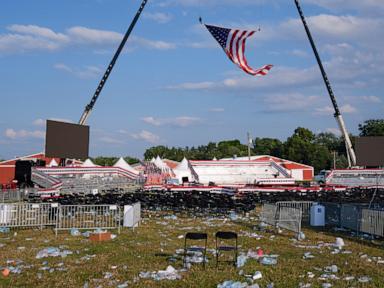
The death of James Copenhaver, a survivor of the July 13, 2024, assassination attempt against Donald Trump in Butler, Pennsylvania, shifts the analytical framework of political violence from immediate casualty accounting to longitudinal morbidity. Copenhaver, who was 74 at the time of the shooting and sustained critical wounds on the grounds of the Butler Farm Show complex, passed away over two years later due to complications directly tied to his injuries. This event recalibrates the metric of impact for mass-casualty political attacks, demonstrating that the cost function of security failures extends far beyond the immediate trauma footprint recorded on scene.
The Mechanics of Delayed Mortality in Ballistic Trauma
When evaluating the lethality of high-velocity firearms such as the AR-15 pattern rifle utilized in the Butler attack, analysis typically centers on initial kinetic energy transfer and immediate surgical interventions. However, survivability in geriatric or middle-aged trauma populations is governed by a secondary set of physiological variables:
- Systemic Inflammatory Response Syndrome (SIRS): Severe penetrating trauma triggers cascading immune responses, increasing multi-organ failure risks long after initial wound closure.
- Cardiovascular Strain: Acute blood loss and subsequent reconstructive surgeries impose severe demands on aging cardiovascular systems, leaving residual microvascular deficits.
- Iatrogenic Complications: Extended rehabilitation cycles introduce secondary infection vectors and chronic pharmaceutical dependencies that erode baseline systemic resilience over multi-year horizons.
Copenhaver’s death reclassifies the total mortality toll of the Butler shooting, proving that ballistic trauma recovery is a prolonged stochastic process rather than a binary binary outcome of survival versus death on impact.
Institutional Failure Analysis: The Perimeter Defense Breakdown
The longevity of these injuries underscores the severity of the initial security failure. The trajectory from threat identification to neutralization exposed structural vulnerabilities in multi-agency coordination between the United States Secret Service, state police, and local emergency services units.
The operational timeline leading up to the first shot revealed critical communication bottlenecks:
- Information Latency: Law enforcement identified the shooter, Thomas Crooks, as suspicious approximately 90 minutes before shots were fired, tracking him with a rangefinder. The data transmission pipeline from local tactical spotters to federal counter-snipers suffered from delayed visual handoffs and radio channel segmentation.
- Elevation and Vantage Point Deficits: The AGR International complex roof provided an unmonitored high-ground advantage. Standard protective operations mandate the physical securement of all structural dominant elevations within the direct-fire envelope of a principal target. The reliance on perimeter observation rather than physical occupation of the rooftop created a fatal spatial blind spot.
- Counter-Sniper Reaction Threshold: While counter-snipers neutralized the threat within seconds of the initial shots, the reactive operational posture guaranteed that the offensive initiative remained with the shooter.
Systemic Externalities and Public Trust Decay
The delayed passing of a victim reactivates public scrutiny regarding institutional accountability. In incidents of political violence, trust depreciation follows a predictable curve:
- Immediate Outrage: Directed at tactical blunders and operational oversight.
- Investigative Fatigue: Characterized by prolonged congressional hearings and multi-year federal reports that often fail to yield definitive institutional restructuring.
- Longitudinal Resonance: Triggered by milestones such as late-onset fatalities, which reset the public accountability clock and force agencies to re-defend their operational readiness.
The FBI's conclusion that the shooter acted without a discernible ideological motive deepens the operational challenge for protective details. Traditional threat-matrix profiling relies on ideological association, prior threat dissemination, or observable organizational ties. Lone actors operating outside networked cells neutralize conventional signals intelligence filters, forcing security architecture to pivot from predictive profiling to absolute physical containment.
Strategic Protocol Optimization
To mitigate the recurrence of cascading vulnerabilities observed in Butler, security design must transition from threat-probability models to zero-tolerance spatial control.
- Mandatory Interoperable Command Structures: Eliminate communication silos between local tactical assets and federal details by integrating command feeds onto a single shared digital display.
- Universal Elevation Securing: Mandate physical occupation or locked-access control for all structures within line-of-sight range, regardless of primary perimeter designations.
- Long-Tail Impact Accounting: Expand post-incident institutional liability metrics to track multi-year medical and psychological morbidity among civilian survivors, ensuring that the true cost of security failures is accounted for in ongoing operational audits.