Silence has a weight in the high hills of Japan. It is not the quiet of an empty room, but a heavy, watchful stillness born of memory. For more than four hundred years, the wind that sweeps across the slopes of Nagasaki has carried whispers of an era when a whispered prayer could cost a life. In the late sixteenth and early seventeenth centuries, the archipelago turned inward with a terrifying, absolute resolve. The authorities decided that foreign faith was a threat to the fragile peace of the shogunate, and so began a systematic campaign to purge Christianity from the soil.
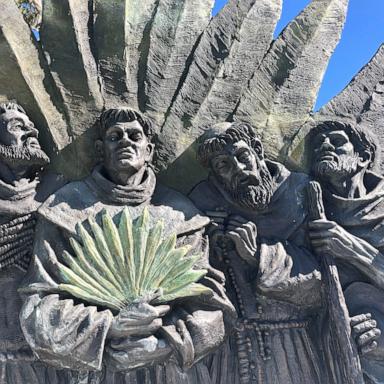
Picture a cold morning in 1632. Frost clings to the rugged coastline of Unzen. Five men stand together on a ridge, their robes worn thin by weather and persecution. They are Franciscan friars—Spaniards, Portuguese, and Italians—who crossed oceans not for gold or glory, but because they believed their message belonged to everyone. They knew the risks. They knew the edicts. Yet they stayed, ministering to a hidden community of believers who had been forced underground, practicing their rites in dark cellars and forest clearings under the constant threat of execution.
When the end came, it was swift and brutal. They were martyred for their defiance, their bodies cast aside or consumed by the volcanic sulfur springs of Mount Unzen, where believers were tortured to force recantation. To the officials of the day, it was a closed case. Order was restored. The foreign creed was stamped out, reduced to ashes and buried secrets.
Except history has a strange way of remembering what power tries to erase.
Centuries passed. The world forgot the names on the old parchment rolls, or relegated them to dusty ecclesiastical archives in Rome and Madrid. But down in the villages of Kyushu, the descendants of the Kakure Kirishitan—the hidden Christians—remembered. They passed down prayers disguised as Buddhist chants, keeping the flame alive through generations of absolute secrecy until the ban on Christianity was finally lifted in the nineteenth century.
Now, nearly four hundred and thirty years after their execution, those five friars are stepping out of the shadows of anonymity. The Vatican has advanced their cause toward sainthood, moving them one critical step closer to the altars of the universal Church.
Why does this matter today? In an age dominated by the immediate, the hyper-connected, and the ephemeral, the story of these men feels almost alien. What drives a person to endure agony and death for an abstraction? How do we measure conviction that outlasts empires, revolutions, and four centuries of silence?
We live in a culture obsessed with short-term return on investment. We want our beliefs validated instantly, our careers tracked by quarterly metrics, our moral stances rewarded with immediate social currency. The friars offer a jarring counter-narrative. Their investment horizon was measured in eternity, not years. They planted seeds in soil so hostile that they knew they would never see a single sprout.
Consider the sheer logistics of their existence before the end. Imagine walking through narrow mountain paths at night, knowing that a single informant could mean arrest, torture, and a horrific public execution. Imagine the psychological toll of whispering your native language in secret, of teaching children to make the sign of the cross inside the fold of a sleeve so no neighbor would notice. It was a life of radical, unglamorous endurance.
When we look at the process of canonization, we often see a bureaucratic machine of the Catholic Church—miracles investigated, theological arguments weighed, historical documents scrutinized by jaded scholars. But at its heart, canonization is an act of historical reclamation. It is the Church saying that these specific human lives, with all their terror, courage, and stubborn devotion, matter deeply to the human story. They are archetypes of resistance against totalitarian conformity.
The road to sainthood is notoriously grueling. It requires proof of heroic virtue and, usually, verified miracles attributed to the intercession of the candidate. For martyrs, the path is slightly different because their blood is seen as the ultimate witness. Yet, even for martyrs, the paperwork takes centuries. The Church moves at geological speed because it refuses to be swayed by the emotional winds of any single decade. It wants to know if a life holds up when the cheering stops, when the political regimes that killed them have crumbled into dust, and when the language they spoke is no longer understood by the people walking the streets.
These five men—Pedro de Bautista and his companions—passed that ultimate test of time. Their cause reminds us that history is not just written by the victors. Sometimes, history is preserved by the defeated who refused to let go of what they loved.
Walk through Nagasaki today, and you will find a city that has made peace with its complicated past. There are grand cathedrals overlooking the harbor, quiet museums dedicated to the hidden faithful, and monuments standing where blood once soaked the earth. The modern world hums with neon lights, high-speed rail lines, and the relentless chatter of smartphones.
Yet, beneath the modern veneer, the old stones remember. The beatification and upcoming path to sainthood for these friars is not merely an internal affair for one religious institution. It is a cultural mirror. It forces us to ask ourselves what we would stand for if the ground beneath our feet suddenly gave way. It challenges our comfortable cynicism.
The friars did not change the politics of seventeenth-century Japan. They did not overthrow the shogunate or launch a counter-offensive. They simply refused to stop believing. Four hundred and thirty years later, their stubbornness is the only thing left standing from that era that anyone still cares about.
The executioners are gone. The empire that ordered their deaths is a distant chapter in a textbook. But the men in the rough robes, looking toward a gray sea with an impossible hope in their hearts, are still speaking to us across the centuries.