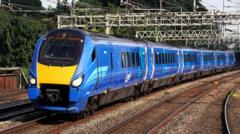
Passengers boarding a six-hour direct rail service from London to Stirling recently discovered a grim reality awaiting them on the tracks. Every single onboard toilet was out of order. For three hundred and sixty minutes, travelers faced an archaic endurance test across hundreds of miles of British countryside, trapped on a malfunctioning LNER Azuma train with zero sanitary facilities.
This was not a minor inconvenience. It was a complete breakdown of basic operational duty.
When a modern intercity train departs the capital for central Scotland with locked bathroom doors, the failure goes far beyond a single broken valve or a faulty sensor. It exposes systemic vulnerabilities in maintenance schedules, depot turnaround times, and contingency planning across the privatized rail network. Commuters pay hundreds of pounds for advance tickets, only to find themselves subjected to conditions that violate basic human dignity.
The Anatomy of an Onboard Failure
To understand how a multi-million-pound intercity fleet sends passengers on a half-day journey without functional plumbing, you have to look inside the depot. Modern trains like the Hitachi-built Azumas running on the East Coast Main Line are complex marvels of engineering. They rely on sophisticated closed-loop retention systems rather than the old-fashioned drop pipes of Victorian rail history.
These retention tanks require dedicated pumping equipment, chemical treatments, and precise maintenance windows at overnight depots.
When operators face tight turnaround schedules, maintenance windows shrink. A train arriving late into an Edinburgh or London yard loses precious hours of scheduled servicing. If a shift is short-staffed or a depot lacks the necessary parts, technicians face an impossible choice. They can cancel the service entirely, triggering massive financial penalties and public fury, or they can dispatch the train on time and cross their fingers that the waste tanks do not overflow or the vacuum pumps do not fail midway through Scotland.
They rolled the dice. The passengers paid the price.
Operating a six-hour journey without working toilets should trigger an immediate, mandatory service withdrawal under consumer protection standards. Instead, railway bureaucrats often rely on ambiguous guidelines that treat sanitary failures as secondary operational hiccups rather than critical safety and health violations.
The Passenger Experience of Degradation
Imagine boarding a train at King's Cross station in London. You have a cup of coffee in hand, a laptop bag over your shoulder, and a ticket that cost more than a budget airline flight to the continent. You settle in for the long haul north toward Stirling, anticipating a productive morning of work or a quiet stretch of reading.
Two hours in, the announcement crackles over the intercom. The tone is casual, almost practiced. Staff regret to inform you that all onboard toilets are out of service.
An immediate shift occurs inside the carriage. A low murmur ripples down the aisle. The social contract of public transport fractures in real time. People begin eyeing their water bottles with deep suspicion. Parents with young children realize they are trapped in a moving metal tube with no escape hatch for the next four hours. Elderly passengers calculate whether they can physically endure the remainder of the trip without medical consequences.
The psychological toll of this degradation is rarely captured in corporate quarterly reports. Rail executives sit in air-conditioned boardrooms discussing key performance indicators, punctuality metrics, and revenue passenger kilometers. They do not calculate the humiliation of a commuter begging the train manager to let them off at an unscheduled rural station just to find a patch of bushes or a station platform restroom.
Why Fixing the Fleet is Not Happening Fast Enough
The root cause of these failures runs deep into the procurement and maintenance contracts that govern modern rail franchises. Operators do not always own their trains. Rolling stock is frequently owned by massive asset management companies and leased back to the operating companies over decades.
This creates a fractured ecosystem of responsibility.
When a toilet pump fails, the operator blames the manufacturer for supplying unreliable subcomponents. The manufacturer blames the operator for failing to use the correct chemical additives or for operating the train beyond specified duty cycles. Meanwhile, the leasing company watches its asset depreciate while pointing to the maintenance contract signed by the operating firm.
Accountability vanishes in the paperwork.
Furthermore, depot infrastructure across the United Kingdom is aging rapidly. Many maintenance facilities were designed for older, simpler train classes that required less specialized servicing. Upgrading these depots to handle modern, high-capacity retention systems requires millions of pounds in capital expenditure. With the rail industry operating under intense financial scrutiny and government subsidies being squeezed from every angle, long-term capital investments in depot plumbing often take a backseat to short-term political demands for lower ticket prices and punctual departures.
The Regulatory Blind Spot
Transport watchdogs and consumer advocacy groups regularly decry these incidents, yet real penalties remain rare. When a train runs without toilets, passengers are usually directed toward a cumbersome compensation scheme. They are told to fill out online forms, upload ticket stubs, and wait weeks for a fraction of their fare to be refunded as a goodwill gesture.
This is a broken feedback loop. A partial refund does not restore lost dignity, nor does it compel corporate leadership to overhaul their depot maintenance protocols. If an airline attempted to fly a commercial aircraft across an ocean without working lavatories, aviation regulators would ground the fleet within minutes.
Rail operators operate under a different set of expectations. They treat basic sanitation as an optional luxury rather than a non-negotiable baseline of public infrastructure.
What Accountability Actually Looks Like
If the rail network wants to regain public trust, treating sanitation as an afterthought must end immediately.
First, the threshold for mandatory service cancellation must be lowered. A train without functional toilets is unfit for service, period. Punctuality cannot be prioritized over human decency. Running a late train with working facilities is always preferable to running an on-time train that forces passengers into a degrading ordeal.
Second, maintenance penalties must directly benefit the affected passengers rather than disappearing into government coffers or corporate general funds. Automatic, full-fare refunds should trigger the moment a train departs with locked restrooms, funded directly from the operating company’s executive bonus pool.
Until the financial cost of running a broken train outweighs the inconvenience of canceling it, passengers will continue to board London-to-Stirling services wondering if they will reach Scotland with their comfort and their dignity intact.