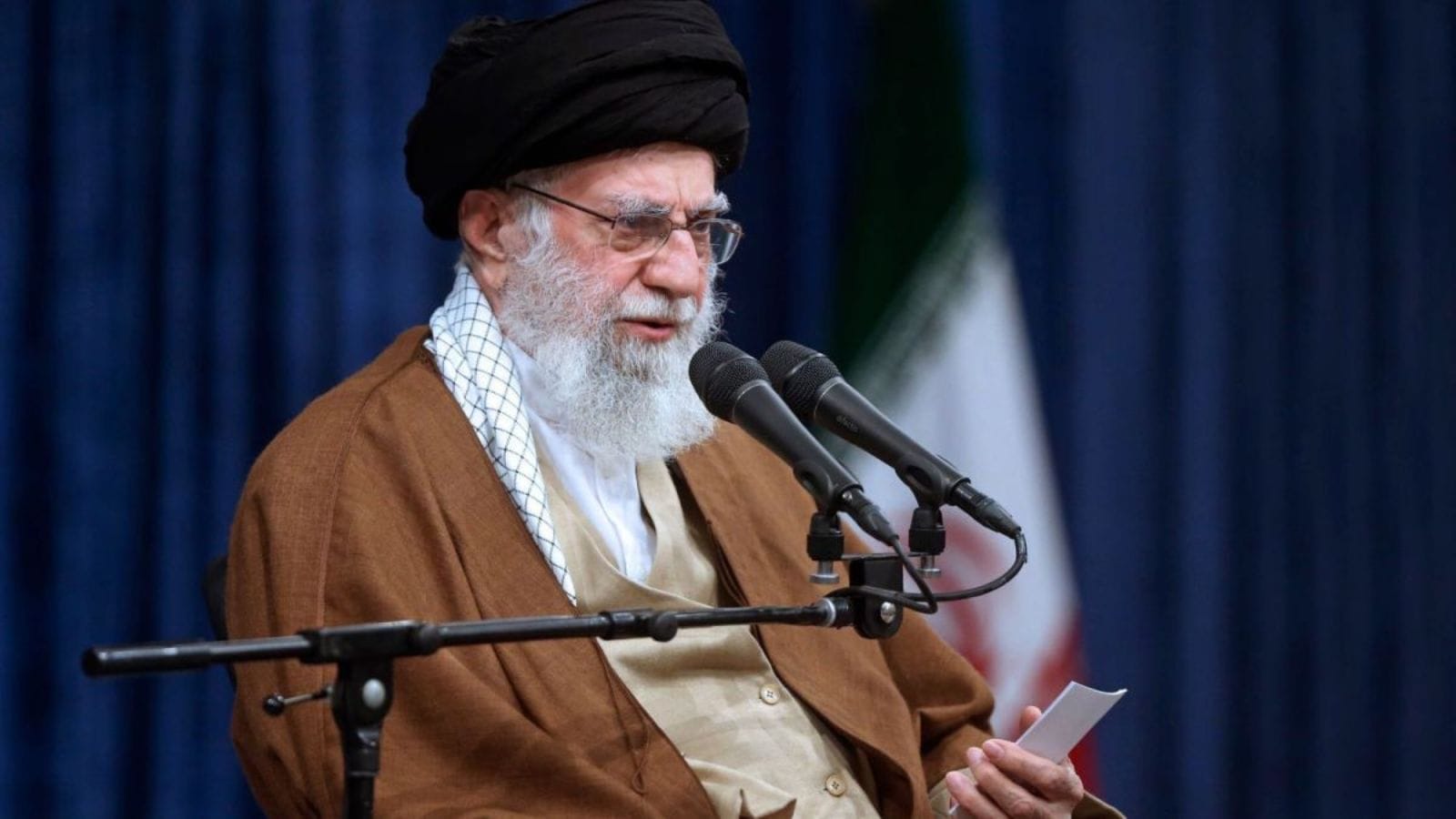
The four-month delay between the death of Iranian Supreme Leader Ali Khamenei on February 28, 2026, and his scheduled burial on July 9, 2026, represents a profound departure from traditional Islamic jurisprudence. Standard Shi'ite orthopraxy dictates that burial must occur as close to the time of death as possible, typically within 24 hours. By postponing the state funeral ceremonies until July 4 through July 9, the Iranian regime has prioritized strategic theater and regime survival over religious immediacy.
This scheduling decisions operates not as an arbitrary timeline, but as a carefully calculated political mechanism designed to achieve two primary strategic goals: stabilizing the domestic transition of power to his successor, Mojtaba Khamenei, and synchronizing a mass nationalist demonstration with the conclusion of the war with the United States and Israel.
The Chronological Architecture of the Mourning Route
The state funeral is engineered as a highly structured, multi-city logistical operation designed to reinforce the legitimacy of the Islamic Republic across its three critical geographic axes: political power, theological authority, and populist devotion.
- July 4–5 (Tehran): The Political Axis. Farewell ceremonies will commence at the Imam Khomeini Mosalla prayer hall in the capital. This serves to anchor the memory of the state’s second Supreme Leader directly to its revolutionary founder, establishing a visual and historical continuum.
- July 6–7 (Qom): The Theological Axis. The funeral procession moves to the central city of Qom, the ideological heartland of Shia clerical scholarship. Securing the public participation of the Qom seminary (Hawza) is functionally mandatory for validating Mojtaba Khamenei's religious credentials as the new Supreme Leader, especially given his sudden ascension under wartime duress.
- July 9 (Mashhad): The Populist and Devotional Axis. The final ceremony and burial will occur at the holy shrine of Imam Reza in Mashhad, the late leader's birthplace. By placing his remains in the ultimate spiritual sanctuary of Shia Islam in Iran, the regime seeks to permanently sanctify his legacy.
This geographical progression functions as an intentional mechanism to mobilize distinct sectors of Iranian society sequentially, consolidating domestic control before the transition process is finalized.
The Geopolitical Signaling Variable
The selected start date of July 4 holds an explicit, adversarial symbolic utility. Coinciding with the 250th Independence Day of the United States, the commencement of the national mourning period is structurally timed to contrast a milestone of Western democracy with a massive display of anti-Western, revolutionary solidarity. This creates a calculated propaganda dynamic: matching American national celebration with an Iranian show of ideological defiance.
More critically, the delay has served as a buffer for intense diplomatic maneuvering. The initial postponement in March was an operational necessity due to ongoing military hostilities, but the confirmation of the July dates aligns precisely with mediation breakthroughs. According to regional diplomatic channels, Iran and the United States have formulated a framework for a peace deal to end the conflict, with an initial signing highly anticipated.
The regime required a stable, non-combat environment to execute a state funeral of this magnitude. Burying the supreme leader during active air strikes would have signaled vulnerability; burying him during a negotiated armistice allows the state to frame the conclusion of the war as a resilient survival victory engineered by the ruling elite.
Managing the Succession Bottleneck
The structural vulnerability of the Islamic Republic lies in its highly centralized authority model. The death of a supreme leader who ruled for nearly 37 years creates an immediate vacuum. While Mojtaba Khamenei was selected by the Assembly of Experts in early March to succeed his father, his leadership remains unseasoned and unvouched for by prolonged public exposure.
Mojtaba Khamenei was wounded in the very airstrikes that killed his father and has remained entirely out of public view, communicating exclusively through written proxy statements. The four-month interregnum between the death and the funeral has functioned as an onboarding period for his administration.
This window has allowed the new Supreme Leader to consolidate control over the Islamic Revolutionary Guard Corps (IRGC), manage factional rivalries within the clerical establishment, and direct ongoing peace negotiations through intermediaries like Secretary of State Marco Rubio, all while shielded from the immediate pressures of a public debut. The upcoming July ceremonies will serve as his official introduction to the state and the international community.
Strategic Operational Outlook
The execution of the July 4–9 ceremonies carries significant tactical and political risks that the Iranian security apparatus must mitigate:
First, the mass mobilization of millions of citizens across Tehran, Qom, and Mashhad presents a severe domestic security bottleneck. While the regime intends to channel public emotion into an anti-imperialist, pro-government demonstration, these dense crowds are vulnerable to internal dissent, sabotage, or sudden flare-ups of anti-regime protests, particularly given the economic degradation caused by the war.
Second, the structural reliance on state media (IRIB) to broadcast an image of total stability will be tested by cyber capabilities. The recent widespread disruptions targeting the Iranian banking system demonstrate that opposition or foreign actors possess the digital infrastructure to disrupt state-run networks during high-stakes national broadcasts.
To successfully navigate this transition, the clerical and military leadership must execute a tightly controlled security lockdown across the three funeral hubs, prioritizing signals intelligence and cyber defense over raw troop deployments. The success of the funeral will not be measured by the size of the crowds, but by the regime's capacity to maintain absolute narrative discipline as the new Supreme Leader steps into the public domain.