Twenty minutes after lifting off from Glasgow Airport on a Friday afternoon, a light aircraft stopped transmitting over Stirlingshire and went down near Loch Lomond, killing an 80-year-old flight instructor and a 16-year-old boy.
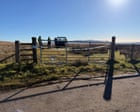
The crash happened on October 16, 2026, in a rural area north-east of Drymen, with emergency services called around 4:45 p.m. local time. The two people who died were named in local tributes and reports as experienced instructor Ian Haggis, affectionately known in Scottish flying circles as the "Flying Haggis," and 16-year-old Ryan Sprott. The aircraft involved was a Piper Tomahawk II operated in connection with Leading Edge Flight Training and Flying Club.
Basic breaking news reports stop at the siren call, the cordon near Old Drymen Road, and a brief quote from the Air Accidents Investigation Branch (AAIB). That leaves out the real story for anyone trying to understand what happened or how general aviation training works in busy Scottish airspace. Flying out of a major commercial hub like Glasgow Airport into hilly terrain near Loch Lomond mixes commercial traffic corridors, shifting autumn weather, and piston-engine training quirks in ways that every student pilot, instructor, and aviation watcher needs to grasp.
Why This Light Aircraft Crash Near Loch Lomond Stunned Scottish Aviation
For pilots around central Scotland, losing an instructor of Ian Haggis's standing alongside a teenager just starting out hits hard. Tributes following the Drymen crash described him as a calm, seasoned aviator who had taught generations of flyers, while fellow pilots mourned the loss of a teenager with his whole aviation future ahead of him.
According to flight-tracking data cited in media coverage, the Piper Tomahawk II departed Glasgow Airport at 4:17 p.m. on October 16 after spending roughly an hour on the ground, and its signal ceased at 4:37 p.m. north-east of Drymen. An eyewitness near the area reported seeing a light aircraft descending in a spiral over its final seconds before dropping out of view.
Let's be crystal clear about what we know and what we don't. Police Scotland confirmed both occupants were pronounced dead at the scene, and the AAIB deployed a field team over the weekend to examine the site and gather evidence. Investigators have not yet determined who was at the controls at the time or what caused the aircraft to go down. Speculating on a cause before the AAIB publishes its findings is a classic mistake in aviation reporting, because wreckage forensics, maintenance logs, and radar or transponder data often point somewhere nobody guessed on day one.
The Reality of Training Out of Glasgow and Flying Near Loch Lomond
People who haven't spent time in general aviation cockpits often picture light aircraft drifting lazily over scenic lochs on calm afternoons. Honestly, it doesn't work like that.
Sharing Airspace With Commercial Airliners
Departing Glasgow Airport means operating inside or adjacent to controlled airspace shared with scheduled commercial jets and regional airliners. Even for a seasoned instructor, getting clearance, routing cleanly out of busy terminal airspace, and maintaining strict situational awareness takes real discipline. Small piston trainers fly at modest speeds compared with commercial airliners, so airspace transitions and radio coordination are part of daily life from your very first lessons.
Hills, Valley Wind, and Late-Afternoon Light
Drymen sits on the southeastern edge of the Loch Lomond and The Trossachs National Park, where low hills, open fields, and undulating ground meet the Highland boundary. In mid-October, daylight fades fast in Scotland—sunset is already pushing toward early evening—and temperature drops can bring brisk surface winds, low cloud bases, or mechanical turbulence over ridges.
Anyone who has flown around central Scotland knows how quickly a pleasant afternoon can turn tricky near high ground. A spiral descent seen from the ground can stem from many different factors, ranging from an aerodynamic stall or spin entry to a sudden engine issue, spatial disorientation, or an attempted maneuver in changing conditions. Only physical inspection of the airframe, engine, fuel system, and flight path will narrow that down.
What to Know About the Piper Tomahawk and Flight School Scrutiny
The Piper PA-38 Tomahawk (often referred to in training reports as the Piper Tomahawk II) is a two-seat, single-engine trainer with a distinctive T-tail and low wing, powered by a Lycoming piston engine. Thousands were built as dedicated flight-school trainers, prized for side-by-side seating that makes instructor-student communication natural.
In my experience looking closely at light-aircraft accident reports, trainers like the Tomahawk demand respect because they are light, responsive, and unforgiving of sloppy energy management. If airspeed decays too far—especially close to the ground or near rising terrain—recovery margins shrink fast. That isn't an indictment of the airframe itself; it's simply physics. Every light trainer has trade-offs between nimble handling, visibility, and stability.
Following the crash, media reports also noted that aircraft owned by Leading Edge Flight Training had been the subject of at least five prior AAIB investigations since 2019 across a fleet of eight light aircraft. Having prior investigation entries on a training fleet's record raises fair questions for regulators and families, yet context matters hugely. A flight school logging lots of instructional hours in older general aviation aircraft will naturally accumulate incident records over several years—ranging from minor runway mishaps to more serious events—and prior history alone does not prove what happened on October 16. The AAIB's job is to separate coincidence from causation.
How the AAIB Investigates a Crash Like Drymen
When a light aircraft crashes in the UK, the Air Accidents Investigation Branch leads an independent safety investigation under Department for Transport oversight. Its goal isn't to assign criminal blame—that's separate—but to figure out what went wrong so similar tragedies can be prevented.
Right after the crash, Police Scotland established temporary airspace restrictions over the Drymen area, explicitly warning that flying drones or other aircraft inside restricted airspace is a criminal offence. That rule exists for a practical reason: AAIB teams routinely use their own drones to map wreckage and ground scars from roughly 130 feet (40 meters) up, creating high-precision 3D site models accurate to around 0.4 inches (1 centimeter). Unauthorized drones hovering nearby create collision hazards and muddy the evidence scene.
From there, investigators typically look at several core threads:
- Aircraft and engine health: Maintenance records, airworthiness directives, fuel condition, and physical examination of controls, carburetion or engine components, and structure.
- Flight path and performance: Radar, air traffic control recordings, GPS or tracking data, and witness accounts to reconstruct altitude, speed, and maneuvering.
- Pilot, weather, and environment: Instructor and student experience, recent currency, local meteorological observations, and terrain elevation around the impact point.
Light-aircraft inquiries often take months rather than days, especially when components need laboratory testing or metallurgy checks. Patients waiting for the final report are sometimes frustrated by the silence in between, yet rushing conclusions in aviation safety usually gets things wrong.
Practical Next Steps for Students, Families, and Local Flyers
If you're a student pilot, a parent thinking about flight lessons for a teenager, or someone living near a flight corridor, a tragedy like this brings real questions to the surface. Don't let fear paralyze you, and don't brush past the lessons either.
- Ask direct safety questions at any flight school: Before booking lessons or trial flights, ask about aircraft maintenance schedules, instructor currency, how the school handles marginal weather or late-day flights, and how they brief airspace and terrain hazards.
- Respect airspace restrictions around active scenes: If an accident happens near you, stay well clear on the ground and never launch a drone near an active emergency or AAIB investigation zone.
- Follow official AAIB updates rather than rumor: Check the official AAIB publications portal for preliminary or final reports rather than relying on social media theories about what caused the spiral or loss of signal.
- Support those affected: Keep Ian Haggis's and Ryan Sprott's families, friends, and fellow trainees in mind—small flying communities feel every loss deeply, and steady support matters long after the initial headlines fade.