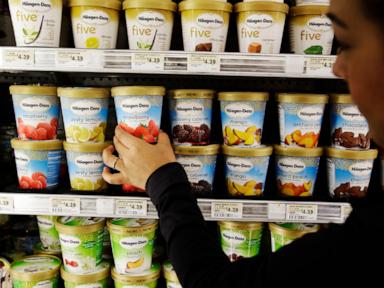
The transition of multinational consumer brands in mainland China from equity-heavy, directly operated models to asset-light licensing frameworks represents a fundamental structural shift in global retail asset valuation. General Mills entering a definitive agreement to sell its Häagen-Dazs retail shops and gifting business in mainland China to an investor group led by local tea retailer Ningji is not an isolated retreat. It is a calculated optimization of the corporate cost function. By retaining the high-margin packaged retail and foodservice distribution channels while shedding the operational liabilities of physical brick-and-mortar storefronts, General Mills is attempting to resolve the localization paradox: how to extract brand equity from a consumer market without absorbing its escalating operational complexities.
The economic reality confronting foreign fast-moving consumer goods (FMCG) and quick-service restaurant (QSR) operators in China is defined by two structural pressures: stagnating consumer confidence and aggressive, highly localized price-to-value competition. The premium parlor model that sustained western brands for two decades faces a sharp decline in marginal utility. Western multinationals are systematically converting direct operational control into royalty-bearing licensing structures to insulate their balance sheets from real estate exposure, escalating labor costs, and localized product lifecycle failures.
The Structural Drivers of the Divestiture
The transaction isolates two distinct commercial channels within the Häagen-Dazs brand ecosystem in China:
- The Divested Asset Group: The physical ice cream shops and the dedicated seasonal gifting business (historically anchored by premium mooncake sales). This segment passes to the Ningji-led consortium via an exclusive, geography-specific brand license.
- The Retained Asset Group: The consumer packaged goods (CPG) manufacturing, traditional retail distribution (supermarkets, convenience stores), and B2B foodservice supply chains. General Mills retains complete equity ownership and operational control over this footprint.
This bifurcation addresses a core divergence in asset efficiency. Operating physical retail locations requires continuous capital expenditure for lease renewals, store remodeling, and localized frontline labor. Conversely, selling packaged inventory through established third-party retail channels scales with significantly lower marginal cost and shifts real estate risk entirely to the distributor or retailer.
The strategy directly supports the parent company’s global portfolio reshaping objectives. Since fiscal 2018, General Mills has turned over nearly one-third of its net sales base through targeted acquisitions and divestitures. Amid a 7.4% year-over-year decline in net sales to $13.81 billion for the nine-month period ending February 22, 2026, the corporation must aggressively defend its operating profit. The storefront divestiture eliminates an operationally complex, capital-intensive unit, converting volatile retail revenues into predictable, higher-margin licensing fees.
Macro Context: The Institutional Shift to Local Capital
The transfer of Häagen-Dazs stores aligns with a systemic repositioning across the broader QSR and beverage sectors in China. International corporations are recognizing that domestic investment groups and operators possess an asymmetric advantage in executing hyper-localized supply chains and digital commerce strategies.
| Brand | Global Parent Company | Local Partner / Buyer | Deal Structure Valuation / Capital Injection |
|---|---|---|---|
| Starbucks China | Starbucks Coffee Company | Boyu Capital | Joint Venture (60% local equity stake; $4 billion valuation) |
| Burger King China | Restaurant Brands International | CPE (Private Equity) | Joint Venture (83% local equity stake; $350 million investment) |
| Häagen-Dazs Shops (China) | General Mills, Inc. | Ningji Consortium | Exclusive Brand License & Asset Purchase (Undisclosed) |
These transactions demonstrate that local scale has superseded global brand equity as the primary determinant of retail survival in China. Ningji, founded only in 2021, operates an expansive footprint of more than 3,000 quick-service retail tea outlets. Backed by institutional capital from ByteDance and Shunwei Capital, Ningji possesses deep integration into the domestic short-form video ecosystem, localized supply chain networks, and real estate relationships necessary to secure premium commercial footprints at optimized lease rates—capabilities that a centralized multinational corporate structure cannot replicate with equal agility.
Product Lifecycle Decay and the Price-to-Value Squeeze
When Häagen-Dazs entered mainland China in 1996, it functioned as a premium lifestyle brand. In a market lacking widespread cold-chain infrastructure and premium dessert options, Western branding commanded an extraordinary price premium. Storefronts operated less like ice cream parlors and more like luxury boutiques, where high prices reinforced consumer status.
This value proposition has collapsed under the weight of market maturation and shifting consumer preferences, creating a mismatch between product design and consumer demand:
Macroeconomic Margin Compression
The premium pricing architecture of Häagen-Dazs faces immediate pressure from a polarized consumer landscape. At the value tier, domestic giants like Mixue have scaled to tens of thousands of locations, anchoring consumer price expectations for frozen desserts at nominal levels. Concurrently, middle-tier consumers are demanding greater product innovation for every renminbi spent, rendering static product portfolios unviable.
Macro-Nutritional Incongruence
The core formulation of traditional Western super-premium ice cream relies on high milk fat content and high density. Modern Chinese consumer cohorts exhibit a distinct preference for lighter, low-fat profiles, driving the rapid expansion of artisanal gelato and localized tea-infused frozen desserts. The legacy formulation has passed its demographic peak utility.
Failure of Cultural Differentiation
A premium brand must continuously justify its price point through experiential novelty or deep cultural resonance. While local tea and dessert brands launch rapid product iterations and weekly collaborative marketing campaigns tied to domestic micro-trends, the bureaucratic product-approval cycles of multinational corporations generate structural stagnation.
Operational Mechanics of the Licensing Framework
The transaction converts General Mills from an active brick-and-mortar operator into an upstream supplier and brand supervisor. This introduces a specific operational framework designed to extract economic rents while mitigating direct downside risks.
[General Mills]
   │
   ├── Retains Packaged Retail & B2B Foodservice
   │
   └── Grants Exclusive Brand License ──> [Ningji Consortium]
                                              │
                                              ├── Operates Physical Stores
                                              └── Manages Gifting Business
Capital Risk Asymmetry
Under the direct-operation model, General Mills absorbed 100% of the financial loss if a specific parlor underperformed due to local foot-traffic shifts or skyrocketing real estate costs. Under the licensing model, the Ningji consortium assumes all lease liabilities, working capital requirements, and store-level labor obligations. General Mills receives a contractual revenue stream, typically structured as an upfront licensing fee paired with recurring royalties indexed to top-line store sales.
Optimization of Supply Chain Densities
Ningji’s existing network of 3,000 premium tea shops provides massive procurement leverage and logistical synergies that a standalone network of roughly 170 to 330 ice cream parlors cannot achieve. Ningji can cross-utilize real estate footprints, consolidate regional dairy and fruit supply lines, and integrate Häagen-Dazs products directly into the high-frequency purchasing habits of the modern premium tea consumer.
The Inherent Vulnerabilities of Third-Party Brand Licensing
While this framework optimizes financial capital, it introduces significant long-term strategic vulnerabilities that must be rigorously managed:
- Principal-Agent Friction: The licensee (Ningji) may prioritize short-term volume extraction and rapid franchise expansion over long-term brand equity preservation, potentially diluting the premium positioning of the Häagen-Dazs trademark.
- Operational Quality Asymmetry: Any degradation in store-level execution, food safety, or customer service at a licensed retail parlor immediately tarnishes the brand equity of the packaged retail products that General Mills continues to sell independently in supermarkets.
- Channel Cannibalization: If the licensee heavily discounts products in-store to drive traffic, it risks cannibalizing the pricing integrity of the premium packaged items distributed by the parent company in neighboring retail channels.
The Strategic Path Forward
To insulate its retained asset portfolio from these systemic risks, General Mills must implement a strict governance structure over the licensing agreement. The priority must shift from day-to-day store management to the enforcement of rigorous brand guardrails.
First, the contract must include explicit, non-negotiable service-level agreements (SLAs) regarding ingredient sourcing and preparation standards to ensure that product quality inside the licensed parlors matches the premium baseline of the global brand. Second, General Mills should establish clear boundary lines between the retail parlor product portfolio and the CPG distribution channel. The licensed stores should focus primarily on experiential, freshly prepared, and localized dessert concepts—leveraging Ningji's expertise in tea and beverage innovation—while leaving the standard pint and bar formats exclusive to General Mills' direct retail accounts.
Finally, the royalty structures should be tied not just to absolute top-line revenue, but to brand health indices and quality audit scores. This aligns the financial incentives of the local investor group with the preservation of the long-term asset value, ensuring that the transition to an asset-light model achieves sustainable margin expansion without destroying the underlying brand equity.