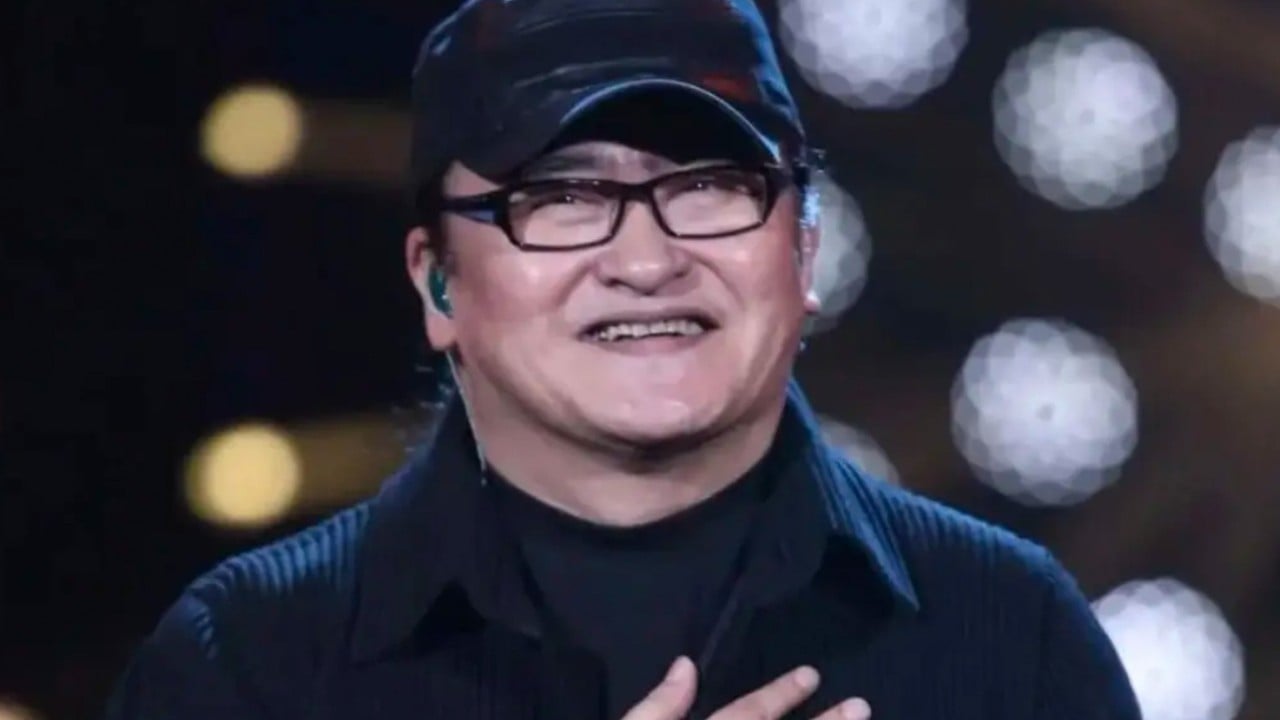
When Liu Huan stood beneath the stadium lights of the Bird's Nest in Beijing alongside Sarah Brightman in August 2008 to sing "You And Me", an estimated four billion television viewers heard a voice that defined an era of rapid national ascent. Liu, who passed away in Shanghai at the age of sixty-three following a private, fourteen-year battle with bladder cancer, was far more than an Olympic vocalist. He was the architectural pillar of modern Chinese popular music. Yet the true weight of his legacy lies not in the glittering anthems broadcast to the world, but in the fierce, stubborn independence with which he navigated an industry built on state spectacle and commercial compromise.
The Academic Outsider Who Built A Genre
Long before he stood on the global stage, Liu carved out an improbable path. Born in Tianjin in 1963, he studied French literature at the University of International Relations, entering the public consciousness in the late 1980s without the backing of formal conservatory pop training. His instrument was a booming, operatic baritone that effortlessly bridged classical European structures with raw, emotive Chinese pentatonic phrasing. Discover more on a connected subject: this related article.
In an era when Chinese pop music was heavily derivative of Taiwanese ballads or recycled Hong Kong Cantopop, Liu injected academic rigor and gritty rock textures into his arrangements. Songs like "A Dedicated Miner" and television theme tracks that accompanied massive historical dramas established him as a heavyweight artist who commanded respect from both elite intellectuals and ordinary factory workers. He did not chase trends. He forced the mainstream to adapt to his gravity.
The Secret Struggle And The Price Of Dignity
When news of his passing broke, public grief was immediate and profound, yet the full narrative of his final years remained strictly guarded. Months after his death, an open letter published by his family revealed that Liu had been diagnosed with bladder cancer back in 2012 while serving as a mentor on the reality singing competition Sing! China. More analysis by Deadline explores comparable perspectives on this issue.
When the disease recurred years later, attending physicians recommended radical surgery involving the removal of his bladder. Liu flatly refused, declaring to his family that he would rather face death than live with the indignity of an external urine bag. It was a stark, uncompromising stance that mirrored his artistic life. He maintained absolute control over his body, his schedule, and his public image until his final breath, quietly continuing to compose and mentor young musicians while enduring grueling treatments away from the flashbulbs of Beijing.
In accordance with his explicit instructions, his family bypassed the elaborate state memorials and official committees typically afforded to cultural treasures of his stature, opting instead for a quiet resting place near the foot of the Great Wall.
Beyond The Olympic Echo
The temptation surrounding figures like Liu Huan is to reduce their entire career to a single night in 2008. Doing so misses the structural transformation he brought to China's creative class. He proved that an artist could achieve monumental commercial success without selling out to fleeting pop idol factories. He navigated the tension between state-sponsored megaprojects and genuine artistic authorship with rare tactical precision.
As China's entertainment sector grapples with superficial streaming metrics and hyper-commercialized trainee systems, the void left by Liu is structural. He leaves behind an industry that has plenty of performers, but very few heavyweights willing to carry the weight of authentic cultural identity on their own terms.