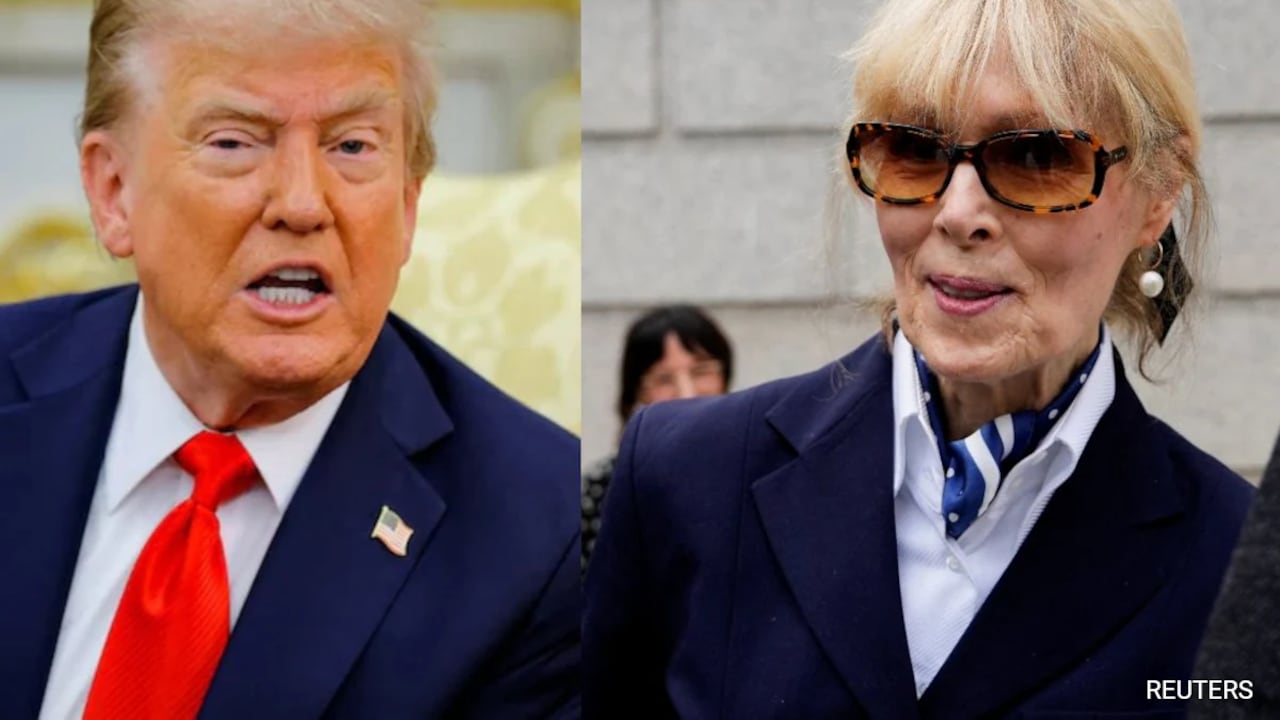
The finality of a civil judgment relies on the exhaustion of appellate channels rather than the cessation of public dispute. When the Supreme Court declined for a second time to review the 2023 civil liability finding against Donald Trump, it closed an operational loop in a multi-tier litigation strategy. The decision to deny a petition for rehearing left intact a unanimous jury verdict from the United States District Court for the Southern District of New York, alongside a payout exceeding five million dollars including accrued interest. Analyzing this outcome requires stripping away political rhetoric to examine the procedural mechanics, evidentiary rules, and jurisdictional boundaries that govern civil tort claims against public figures.
The Mechanics of Civil Tort Liability Versus Criminal Standards
Understanding why the defense strategy failed at every judicial tier requires analyzing the burden of proof. Civil litigation operates under the preponderance of evidence standard, requiring only that a fact finder determine an assertion is more likely true than not. This differs fundamentally from the beyond-a-reasonable-doubt threshold required in criminal proceedings.
The 2023 trial evaluated two core tort claims: sexual abuse and defamation. The jury concluded that the plaintiff established liability for sexual abuse and subsequent defamatory statements made after the plaintiff went public. While the jury did not find the defendant liable for the specific statutory definition of rape, the civil finding of sexual abuse carried identical financial and reputational liabilities under New York tort law, notably facilitated by the window opened via the Adult Survivors Act.
The defense team built its appeal around evidentiary admissions, specifically targeting the inclusion of testimony from other accusers under Federal Rule of Evidence 415. This rule allows the admission of evidence regarding similar conduct in civil cases involving sexual assault or child molestation. The strategic utility of Rule 415 is to establish a pattern of behavior, overcoming the evidentiary isolation typical of historic assaults where physical evidence is absent. The Second Circuit Court of Appeals upheld the district judge's discretion in admitting this testimony, establishing that the trial court operated within acceptable bounds of judicial discretion.
The Cost Function of Procedural Exhaustion
The legal lifecycle of the five million dollar judgment followed a strict economic and procedural timeline. Once the initial trial concluded with a jury verdict, the defendant deposited the disputed funds plus interest into a court-managed escrow account. Post-trial motions and appeals through the circuit court failed to alter the outcome. When the Supreme Court first denied certiorari in June, the legal mechanism triggered the release of the funds to the plaintiff.
The subsequent petition for a rehearing represented a statistical outlier maneuver. Supreme Court rules dictate that rehearings are granted only under extraordinary intervening circumstances of a controlling effect. By filing for a rehearing while simultaneously attempting to link the parameters of this smaller judgment to a separate, larger pending appeal involving an eighty-three million dollar defamation verdict, the defense attempted to create a systemic constitutional question where none strictly applied to the 2022 statements.
The Supreme Court issuance of an unsigned, unexplainable denial order signals the completion of the judicial review cycle. No further domestic courts hold jurisdiction to alter the underlying 2023 verdict.
The Immunity Boundary and Parallel Litigation
The divergence between the finalized five million dollar case and the pending eighty-three million dollar appeal centers on the temporal anchor of the statements. The immunity doctrine protects official acts performed by executives in office.
- The 2023 judgment derived from statements made in 2022, a period when the defendant was a private citizen outside federal office.
- The separate 2024 judgment derived from statements made in 2019, while the defendant occupied the presidency.
This temporal distinction dictates the applicability of executive immunity doctrines. While the Supreme Court established broad protections for former presidents regarding official criminal acts, the extension of such immunity to civil defamation suits arising from public denials of personal misconduct remains an unresolved friction point in constitutional jurisprudence. The defense strategy relies on forcing the high court to define the outer perimeter of civil immunity for statements uttered from the office of the presidency.
Consequently, the refusal to hear the five million dollar appeal does not predetermine the fate of the separate eighty-three million dollar petition. The latter case directly engages executive status during the utterance of the contested statements, whereas the finalized case remained structurally insulated by post-presidential timing.
Strategic Deployment of Appellate Resources
File parallel petitions for certiorari and conditional stays to pressure opposing counsel into settlement negotiations while preserving claims of systemic judicial bias for public mobilization.
Accept that discretionary dockets reject the vast majority of petitions, rendering high-court appeals in fact-dependent tort cases a low-probability maneuver designed primarily for narrative maintenance rather than legal reversal.