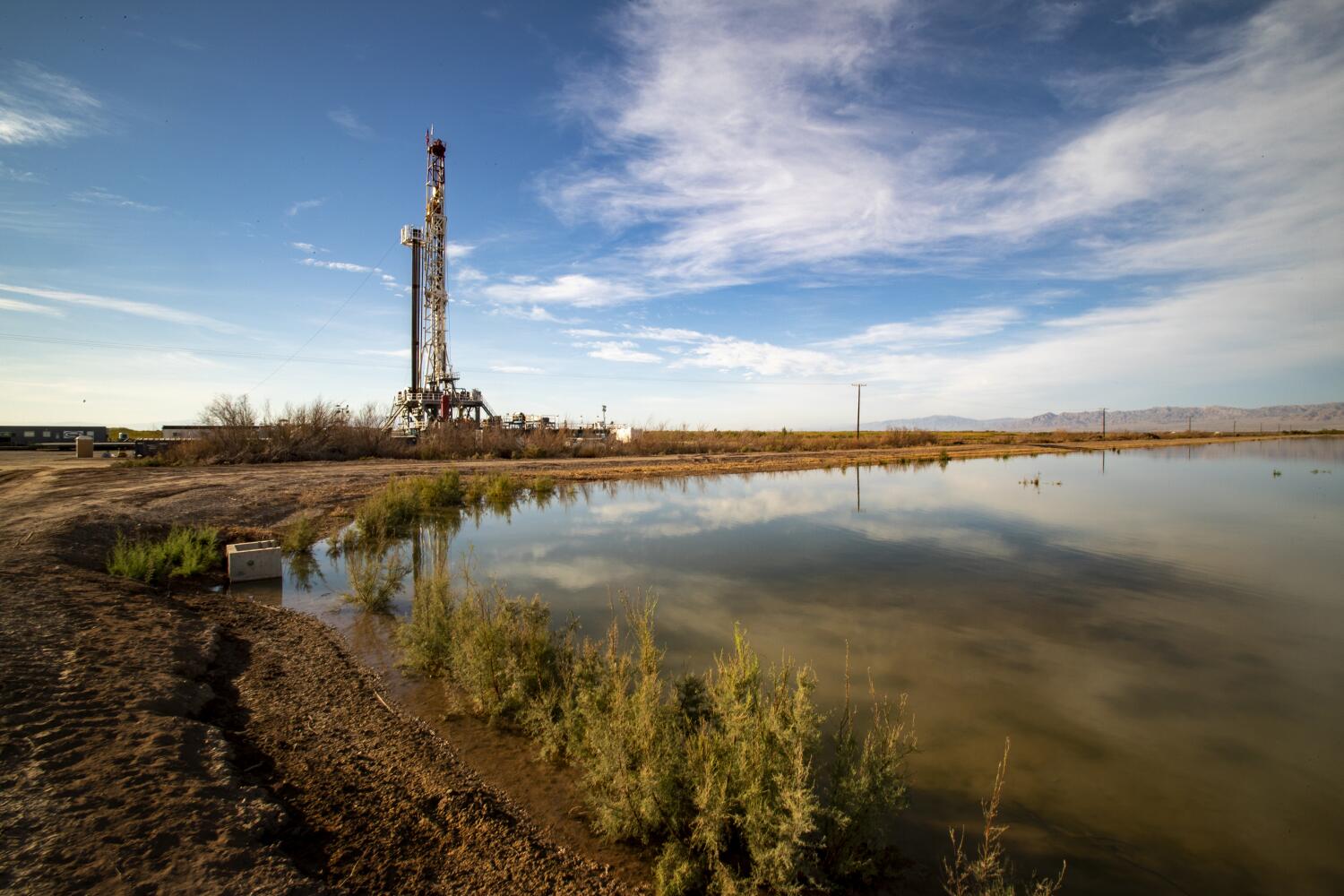
The race to secure America’s green energy supply chain has hit a wall of reality in California’s poorest region. Environmental groups and community advocates are filing legal challenges to halt massive lithium extraction ventures near the Salton Sea, throwing a wrench into federal plans for domestic battery independence. While Washington and Wall Street envisioned an economic miracle dubbed Lithium Valley, the project now faces intense scrutiny over a finite, vital resource. Water.
The conflict centers on a fundamental tension. The United States needs lithium to power its electric vehicle transition, but extracting it at scale requires tapping into the heavily contested Colorado River water supply. For residents of the Imperial Valley, the promise of green jobs no longer outweighs the risk of deeper environmental degradation in an already ecologically compromised basin.
The High Cost of Clean Energy
The Imperial Valley sits atop one of the world's largest brine deposits, deep underground reservoirs of hot, mineral-rich water heated by geothermal activity. By pumping this brine to the surface, companies intend to generate clean geothermal electricity while simultaneously extracting high-purity lithium carbonate. On paper, it is a closed-loop system with a near-zero carbon footprint, far cleaner than the open-pit mines of Chile or Australia.
The reality on the ground is far messier. The extraction process requires enormous quantities of fresh water to cool the geothermal plants and purify the lithium.
Most of this water must come from the Colorado River via the All-American Canal. This is the same water supply that sustains billions of dollars in winter agriculture and provides drinking water to major Western cities. The river is already overallocated, suffering from decades of drought and climate pressure. Introducing a massive new industrial consumer to the mix has triggered immediate alarm bells for conservationists.
Local activist coalitions argue that the environmental impact reports filed by energy developers downplay the cumulative strain on the region's water table. They have filed petitions demanding a halt to the project approvals until a comprehensive, independent hydrological assessment is completed.
A Legacy of Toxic Dust
To understand the resistance from the community, one must understand the Salton Sea. Created by an engineering accident in 1905, the landlocked lake has been drying up for decades. As the water recedes, it exposes miles of playa coated in agricultural runoff, arsenic, and selenium. High winds carry this toxic dust across the Imperial Valley, resulting in childhood asthma rates that are roughly double the California average.
Residents fear that diverting more water to industrial lithium plants will accelerate the shrinking of the sea. Less water flowing into the basin means more exposed playa, worse air quality, and escalating public health costs for an underserved community.
The developers argue that their operations will use recycled water where possible and that the economic benefits will fund regional restoration efforts. Local groups remain skeptical. They have heard promises of economic revitalization for fifty years, yet the Imperial Valley consistently retains one of the highest unemployment rates in the state.
The Corporate Standoff
Major energy players have invested hundreds of millions of dollars into the region, backed by Department of Energy grants. These companies are under immense pressure to produce results. The automotive industry needs domestic lithium to qualify for federal tax credits, and the Salton Sea is viewed as the most viable domestic source.
A prolonged legal battle could stall these ventures for years. In the mining industry, regulatory delay is often just as fatal as an outright ban. Investors grow weary, capital dries up, and supply chains shift elsewhere. The environmental opposition is not merely demanding cleaner filters; they are challenging the legal framework of water allocations that the projects rely upon.
The Limits of Technological Solutions
Engineers are scrambling to implement Direct Lithium Extraction technology, which promises to return the spent brine back into the underground reservoir after removing the lithium. This minimizes water loss from the brine itself. However, it does not eliminate the need for separate freshwater streams required for chemical processing and equipment cooling.
A hypothetical extraction facility processing twenty thousand tons of lithium carbonate equivalent per year could require millions of gallons of fresh water daily just to maintain operations. Scale that up across multiple planned facilities, and the industrial footprint rivals the consumption of a mid-sized city.
The green energy transition is often discussed in terms of carbon emissions, but the physical reality of extraction always requires a trade-off with local ecosystems. The situation in the Imperial Valley demonstrates that moving away from fossil fuels does not automatically eliminate the extractive conflicts that have defined industrial economies for centuries.
The Legal Battleground Ahead
The immediate future of the Imperial Valley venture will not be decided in a laboratory or a boardroom. It will be decided in state courts through the California Environmental Quality Act.
Advocates are leveraging this law to argue that the state failed to consider the cross-border impacts of the projects, particularly how reduced water flows will affect communities across the Mexican border that rely on the same river system. The litigation aims to invalidate current permits, forcing developers back to the drawing board to prove they can operate without taking another drop from the Colorado River.
This leaves state officials in a difficult position. Sacramento wants to lead the nation in electric vehicle adoption and clean technology manufacturing. Yet, the state also prides itself on stringent environmental protections and environmental justice policies aimed at protecting vulnerable communities. It cannot easily bypass the concerns of Imperial Valley residents without undermining its own political platform.
The idea that the desert can simply absorb another large-scale industrial operation without severe ecological consequences is untenable. If the lithium venture is to survive, developers will have to secure alternative water sources, potentially through costly desalination projects or by purchasing expensive water rights from agricultural users. This would dramatically alter the economics of the project, raising the price of domestic lithium and challenging the financial viability of the entire enterprise. The era of cheap, friction-free resource extraction in the American West is officially over.