Ink is dry on Washington stationery, but the paper still burns.
Thousands of miles away from the marble halls where speeches echo about dominance and national pride, a hospital ward in Havana smells of salt water and vinegar. There is no gauze left for the third-degree burns. A doctor whose grandfather taught him surgery under the old regime looks at an empty shelf where morphine should be. He does not talk about geopolitics. He talks about children whose skin sticks to cotton sheets because the embargo, tightened by a stroke of a distant pen, shut the valves of medicine tighter than a fist.
Across the water, in the dry heat of Tehran, a chemist with silver hair and hands stained yellow by decades of laboratory work watches his life’s labor wither. He wanted to design treatments for rare blood disorders. Instead, he spends his mornings calculating how to stretch dwindling reagents across six more months of desperate research.
These are not statistics on a congressional slide deck. They are breathing, suffering human coordinates on a map that Washington treats as a chessboard.
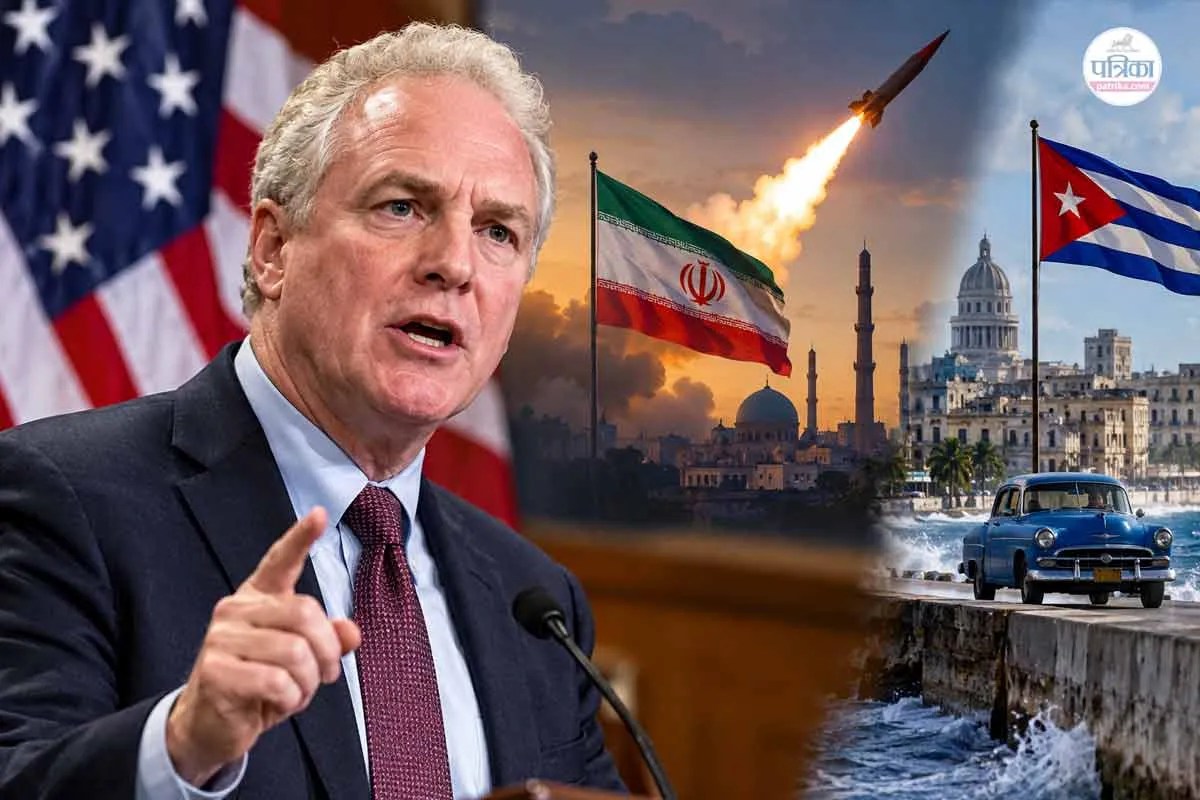
When Senator Chris Van Hollen stepped to the microphone recently to confront the architecture of the America First doctrine, he was not just picking a partisan scab. He was naming a quiet, persistent friction. He was pointing out what happens when a powerful nation turns its back on diplomacy and treats foreign policy as a zero-sum bar fight. The debate over how the United States handles Iran and Cuba is often framed in the crisp, bloodless language of national security briefs. Sanctions packages. Maximum pressure campaigns. Deterrence. Strategic leverage.
Words that keep the floor clean of blood.
Consider what happens when a doctrine built on isolation and economic warfare collides with human reality. The pitch sounds simple enough to a crowd looking for simple answers. Put your own people first. Close the gates. Starve your adversaries of resources until they collapse under their own weight. It sounds like strength. It feels like protection.
But sovereignty is a complicated mirror.
When you tighten the screws on Cuba, cutting off the fragile lifelines of trade and remittances, you do not unseat a government entrenched by decades of survivalist paranoia. You simply ensure that an elderly woman in Santiago de Cuba cannot get her heart medication. You force a young engineer to build a raft out of rusted oil drums and Styrofoam because the economy has been squeezed until it stopped breathing altogether.
When you lock the doors on Iran, tearing up agreements designed to keep the nuclear reactor cool and transparent, you do not spark a democratic awakening among a proud, ancient populace. You hand the hardliners a megaphone. You validate every paranoid sermon preached from the pulpits of Tehran. You tell eighty million people that the world outside hates them, and in doing so, you make their resistance a matter of survival.
Power without empathy is just raw physics. It is weight falling on glass.
The Senator’s critique was sharp precisely because it touched a raw nerve in the American conscience. For generations, the national myth was expansive. It was messy, hypocritical, and often violent, yes, but it carried an ambition of engagement. It suggested that America was strong enough to talk to its enemies, wise enough to negotiate from strength rather than spite, and secure enough to offer a hand instead of a fist.
America First, in its most rigid iterations, flips that script inward. It builds walls and calls them strategy. It mistakes isolation for purity.
Listen closely to the arguments coming out of the Capitol committees. The defenders of maximum pressure insist that any compromise is a surrender, that talking to Havana or Tehran is an endorsement of their governance. It is a seductive moral trap. It suggests that keeping our hands clean requires letting others drown.
History disagrees. History whispers of other moments when pragmatism won over pride.
Think of the old men who sat across from each other in Geneva during the coldest winters of the twentieth century. They did not love each other. They did not share values. They understood that the alternative to talking was a smoking ruin. They understood that foreign policy is not a Sunday school class where you refuse to sit next to the kid who broke the rules. It is an emergency room where you have to treat the patient standing in front of you, no matter how much you despise his politics.
The human cost of our current posture rarely makes the evening news. It is invisible. It lives in the quiet desperation of families divided by travel bans. It lives in the black market prices of insulin in Havana and the silent closing of independent bookstores in Tehran. It lives in the slow erosion of America’s moral authority, which was never built on how many people we could starve into submission, but on the magnetic pull of our ideals.
When we tell the world that our security requires their misery, we poison the well of our own future.
There is an alternative, though it lacks the cinematic punch of a tariff or a blockade. It requires patience. It requires the courage to look a domestic critic in the eye and say that diplomacy is not weakness. It means understanding that lifting an embargo on medical supplies to an island ninety miles off our coast does not threaten our republic; it validates our humanity. It means testing the waters of engagement with a regional power like Iran, knowing full well they will try to cheat, because the alternative is a march toward a war nobody wants to fight and nobody knows how to end.
The desk in the Senate office building is quiet now. The transcript of the hearing is filed away in a cabinet, awaiting the historians who will judge whether we chose wisdom or pride.
Out on the Florida Straits, the water is dark and indifferent. A wave crests, catches the moonlight for a fraction of a second, and breaks against the hull of a wooden boat heading north into the dark. On the other side of the world, an alarm clock rings in a damp apartment in Tehran, waking a worker who has forgotten what a stable currency feels like.
They are waiting. Not for a speech. Not for a hashtag. They are waiting for the largest democracy on earth to remember that the lines we draw across the sea are lines we drew ourselves, and that with the stroke of a pen, we can choose to erase them.