Ink dries on a customs manifest in Beijing, and a kitchen table in Ohio wobbles.
That is how it feels to watch two superpowers trade blows through tariffs and export controls. We talk about the global economy as if it were a weather system—remote, massive, and entirely out of our hands. We hear reports of retaliation, of diplomatic doors slamming shut, of strategic resources locked behind bureaucratic walls. But behind every headline about sanctions and countermeasures sits a merchant who cannot source silicon, a manufacturer watching margins evaporate, and a quiet realization that the map of the world is being redrawn while we sleep.
Consider a hypothetical logistics manager named Marcus. Every morning, Marcus opens his spreadsheet to a graveyard of delayed shipments. Rare earth metals, precision electronics, and chemical precursors are no longer just commodities; they are diplomatic leverage. When one government tightens a screw, a factory floor thousands of miles away grinds to a halt. This is the architecture of modern friction.
We forget that trade is a conversation. When one side raises its voice, the other shouts back.
The recent escalation between Washington and Beijing follows a familiar, exhausting rhythm. Sanctions meet counter-sanctions. Restrictions on advanced technology breed indigenous workarounds. It is a cycle born of mistrust, fueled by national security imperatives, and paid for by ordinary consumers who simply want stability. The economic machinery that once hummed with quiet efficiency now stutters under the weight of political ambition.
Yet, halfway across the globe, headlines capture a entirely different kind of cultural friction.
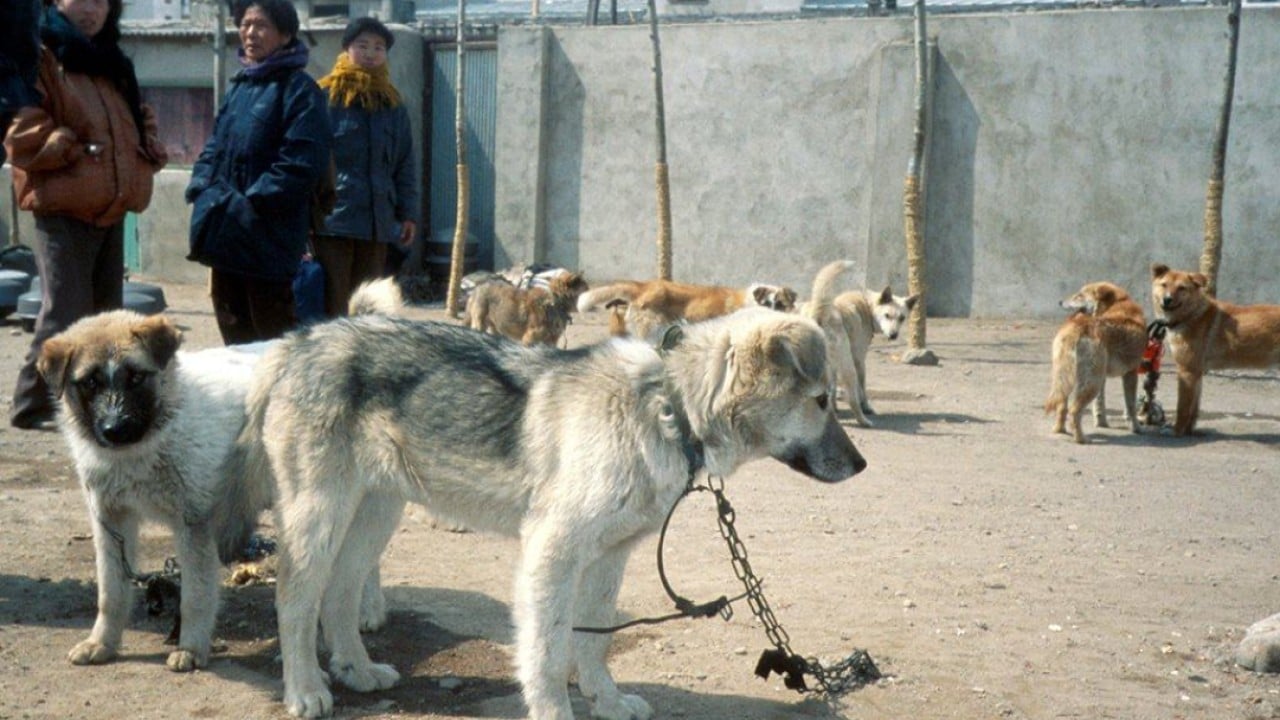
Far from the trade desks of Washington and the ministries of Beijing, another story unfolds quietly in the newspapers of East Asia. A government advisory regarding dog meat in North Korea surfaces through regional reporting, reminding us that the human experience encompasses vastly divergent cultural norms, survival mechanisms, and traditional practices that defy Western intuition. It is a jarring juxtaposition—multibillion-dollar semiconductor restrictions sharing a news cycle with deeply localized dietary debates.
Why do these disparate threads land on the same front page? Because they both describe the boundaries of sovereignty.
One boundary is economic and enforced with legal threats and asset freezes. The other is cultural, bound by centuries of local custom, climate, and necessity. Both reveal how fiercely societies cling to their own rules when outsiders attempt to dictate terms.
I remember sitting in a port city office years ago, watching cargo manifests roll in like tide charts. Back then, globalization felt like an unstoppable tide. We were told borders were dissolving, that digital networks and container ships had rendered distance obsolete. Every supply chain was a straight line drawn between the cheapest producer and the eager consumer.
That line snapped.
Now, the line zigzags around checkpoints. It loops through allied ports and avoids restricted waters.
When Beijing retaliates against US sanctions, it is not merely striking back at a specific policy. It is asserting a doctrine of non-submission. The official announcements from ministries speak of safeguarding national interests and legitimate rights. Strip away the diplomatic polish, and the message is simple: we will absorb the cost to prove we cannot be cornered.
And the cost is real.
Supply chains do not uncouple overnight. They tear. Contracts are broken. Long-standing partnerships built on decades of trust dissolve over a single regulatory decree. A factory that relied on specialized components from a single overseas supplier must now reinvent its entire production line, searching for domestic alternatives or pivoting to neutral markets.
Prices rise. Innovation slows. The consumer pays the difference, often without understanding why the everyday items on store shelves suddenly cost twenty percent more or take months to ship.
Meanwhile, the cultural divides deepen. When international media reports on local practices in isolated nations like North Korea, the framing often reinforces a sense of alienation. We look at the rest of the world through a lens of judgment, forgetting that every nation is fighting its own immediate battles for survival, stability, and identity.
The truth is messier than any editorial board cares to admit.
We want heroes and villains. We want a clear narrative where one side is defending international order and the other is disrupting it. But power politics rarely affords such moral clarity. Both sides act out of fear—fear of obsolescence, fear of dominance, fear of vulnerability.
Think about what happens when an economy like China's decides to build its own technological ecosystem from the ground up. At first, the Western markets scoff. The substitutes are less efficient; the software is clunky; the chips run hotter.
Then comes the pivot.
Necessity breeds capability. Billions of dollars in state backing pour into domestic research. Universities churn out engineers tasked with solving specific embargoed problems. Slowly, the gap narrows. What began as a defensive reaction transforms into an independent capability. The sanctions that were meant to permanently cripple an adversary instead force them to stand on their own two feet, permanently altering the global balance of power.
We are living through the fracturing of the old world order.
The friction is everywhere. It is in the price of your morning coffee, the delay on your new laptop, the nervous whispers in corporate boardrooms, and the stark cultural divides broadcast across international news feeds.
We can pretend that these events are temporary disruptions, storms that will eventually pass so we can return to business as usual. Or we can look at the map and see the new walls rising.
The ships still cross the ocean. But they sail through troubled waters.
Silence.
The horizon remains dark, heavy with the weight of what comes next.