The Price of a National Backdrop
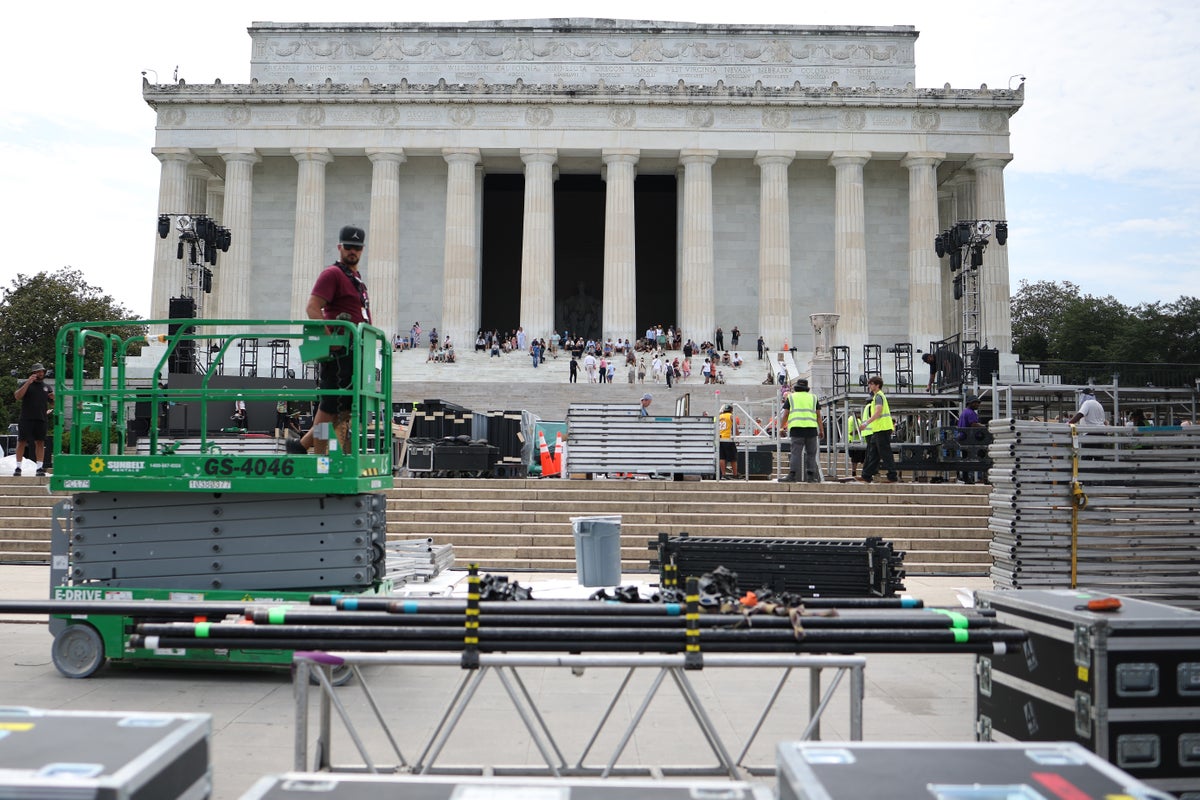
Tourists standing at the base of the Lincoln Memorial this week are not looking at the Reflecting Pool. They are looking at steel scaffolding, black plywood, and the skeleton of a massive corporate broadcast stage. The Ultimate Fighting Championship is moving into the heart of the National Mall, and the immediate casualty is the view that millions of people travel to Washington D.C. to see.
This is not a temporary inconvenience caused by routine maintenance. It is a calculated commercial takeover of public space, approved at the highest levels of federal land management. While visitors express outrage over blocked sightlines and ruined vacation photos, the real story lies in the shifting priorities of the National Park Service. The agency has quietly turned one of America’s most sacred historic landscapes into a premium billboard for combat sports.
The conflict exposes a deeper tension in how public lands are managed. On one side are the taxpayers who fund these monuments and expect unrestricted access to their heritage. On the other is a massive entertainment conglomerate leveraging federal permitting loopholes to buy cultural legitimacy.
Inside the Permitting Machine
The National Park Service routinely issues permits for special events on the National Mall. Most of these events are civic demonstrations, presidential inaugurations, or cultural festivals rooted in public service. The arrival of a multi-billion-dollar mixed martial arts promotion represents a stark departure from that tradition.
Internal guidelines for the National Park Service dictate that commercial activity on the Mall should be strictly limited to minimize disruption to the visiting public. Yet, the footprint for the UFC setup stretches across key viewing areas, effectively cutting off the classic vistas connecting the Lincoln Memorial to the Washington Monument.
Getting a permit for a structure of this scale requires navigating a bureaucratic labyrinth. It involves environmental impact assessments, structural safety reviews, and significant financial deposits. The UFC managed to clear these hurdles because federal regulations contain gray areas regarding "special events" that blur the line between public expression and corporate marketing. By framing the broadcast stage as an extension of a sporting event that brings economic activity to the district, the promotion secured access that a standard commercial advertiser could never obtain.
The financial arrangement behind these permits is surprisingly modest compared to the commercial value generated. The National Park Service charges cost-recovery fees rather than market-rate rent for the space. The UFC pays for the staff time required to monitor the build, the restoration of any damaged turf, and standard application fees. In exchange, they receive a multi-million-dollar broadcast backdrop that money cannot buy anywhere else on earth.
The Valuation of Sacred Space
Corporations have long sought to associate themselves with national symbols to build brand equity. For the UFC, an organization that spent decades fighting for mainstream athletic acceptance, broadcasting from the steps of the Lincoln Memorial is the ultimate validation. It places cage fighting on the same geographic plane as the civil rights movement and presidential history.
This branding strategy comes at a direct cost to the travel economy. Tourism in the nation's capital relies heavily on the unhindered experience of its core monuments. When a major piece of that infrastructure is obscured, the economic damage ripples outward to tour operators, local guides, and hospitality workers who must handle disappointed clients.
Imagine a family saving for years to visit Washington D.C., only to find a corporate construction site blocking the view where Martin Luther King Jr. delivered his most famous speech. That hypothetical scenario is playing out in reality for thousands of visitors every day this week. The frustration is not about aesthetics. It is about the commodification of a space that is supposed to belong to everyone equally.
The Footprint of Corporate Infrastructure
The physical scale of the construction is unprecedented for a non-civic event in this specific zone.
- Height restrictions: The stage structures push the absolute limits of temporary building codes for the National Mall, deliberately designed to sit within the camera frame of international broadcasts.
- Pedestrian rerouting: Security barriers have forced foot traffic into narrow corridors, creating bottlenecks at the base of the memorial steps.
- Visual pollution: High-contrast branding materials break the monochromatic marble aesthetic of the memorial grounds, creating an aggressive visual clash.
The Counter Argument for Engagement
Defenders of the permit point to the economic injection that a major fight week brings to Washington D.C. Hotels fill up, restaurants see increased foot traffic, and the city receives global media exposure. The argument suggests that occasional disruptions are a fair trade-off for keeping the district relevant as a host for major modern sports culture.
Furthermore, proponents argue that the National Mall has always been a living, evolving space. It was never meant to be a static museum frozen in time. If the space can host massive music concerts and commercial sports festivals like the NFL Draft, then combat sports should not be excluded based on elitist notions of what constitutes acceptable culture.
This perspective ignores the fundamental difference in scale and access. Public concerts on the Mall are generally free and open to the public. The UFC infrastructure is built to serve a pay-per-view television audience and a select group of ticket holders, leaving the average tourist to peer through chain-link fencing.
The Permanent Erosion of Public Access
The true danger of the Lincoln Memorial construction is the precedent it establishes. Once the National Park Service demonstrates that it will compromise the integrity of its most iconic views for a commercial sports broadcast, the floodgates open. Every major entertainment entity will use this event as a case study to demand equal access.
The compromise of public space happens slowly, then all at once. It begins with a single permit for a popular sport. It ends with a rotating calendar of corporate activations that permanently alter the character of the national landscape. The tourists shouting over the roar of construction generators at the Lincoln Memorial are not just complaining about a ruined view. They are witnessing the quiet privatization of American public space, one scaffold at a time.