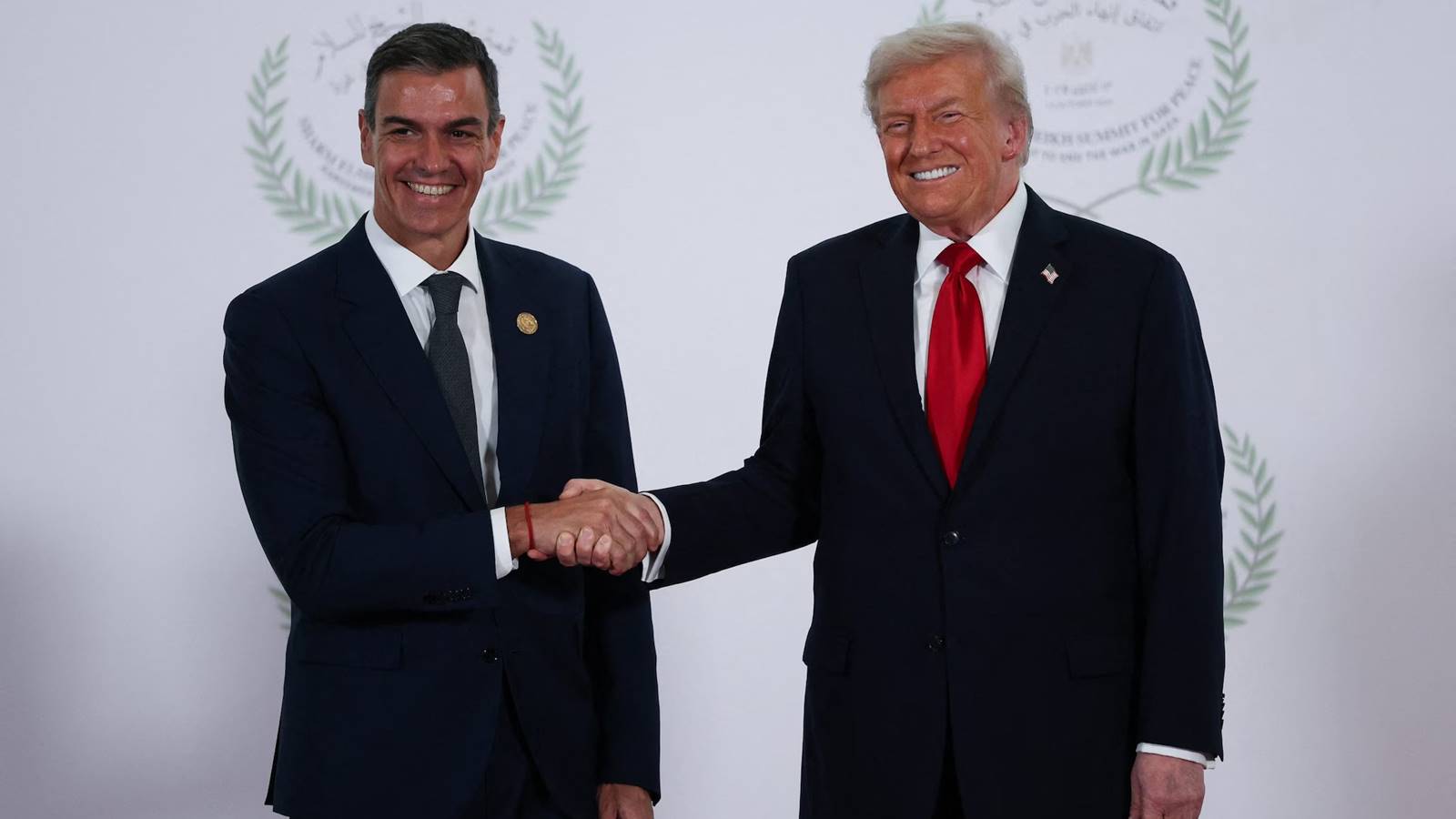
The room in Brussels always smells faintly of stale coffee and damp wool when the rain hits the glass. It is a sterile, fluorescent world where bureaucrats trade in the currency of acronyms and decimal points. But when Donald Trump stepped into the NATO summit, the atmosphere shifted from tedious to electric. For months, the public rhetoric had been a sledgehammer. The American president had been hammering a single, unyielding rhythm: Europe was slacking, America was paying, and the alliance was obsolete.
Behind closed doors, diplomatic poker is rarely won with a royal flush. It is won with a spreadsheet.
Madrid knew this. While the cameras outside chased the flashes of outrage, Spanish officials were quietly preparing a defense built not on ideological grandstanding, but on cold, unassailable arithmetic. They understood that to change the mind of a man who views the world through the lens of a balance sheet, you have to speak in numbers.
Consider a hypothetical negotiator—let us call him Alejandro—sitting in the back row of that delegation. His tie is straight, but his palms are slightly damp. He knows that if the American president decides to pull the rug out from under the alliance, the geopolitical architecture of the last seventy years collapses. The stakes are not abstract policy points; they are the literal security boundaries of the Western world. Alejandro’s weapon is a single folder.
For years, Spain had been a frequent target of Washington’s ire regarding defense spending. The arbitrary benchmark of two percent of GDP spent on defense was a hurdle Madrid consistently missed on paper. To the untrained eye, or the aggressive campaigner, Spain looked like a free rider.
But numbers on a single ledger rarely tell the whole story.
When the Spanish delegation finally got their moment to present, they did not offer excuses. They changed the metric. They pulled back the curtain on what those defense euros actually purchased. They laid out Madrid’s massive, often overlooked contributions to collective security: the deployment of troops to the Baltic states, the naval missions in the Mediterranean, and the hosting of critical American missile defense destroyers in Rota.
Rota is not just a naval base. It is a strategic linchpin. It is the place where American steel meets European soil, providing a shield that protects not just Spain, but the entire southern flank of the alliance.
The reaction was immediate, though silent. The tension in the room did not break; it dissolved.
Reports emerging from the Spanish government later confirmed a fascinating behavioral pivot. Once the data was visualized—once the American president saw the tangible, physical infrastructure and the deployment numbers that Spain brought to the table—the rhetoric softened. The public tweets remained sharp, because the public theater demands a villain, but the private reality shifted. The sledgehammer was set down. A transactional mind had found a transaction it could respect.
This is the hidden friction of modern diplomacy. We are led to believe that global politics is a clash of civilizations, a grand war of ideas played out by larger-than-life personalities. It makes for excellent television. But the real machinery of peace is remarkably mundane. It is the grueling work of proving your worth to an ally who views loyalty as a line item.
The lesson Madrid taught the world in that room is one of psychological alignment. You cannot fight a transactional worldview with moral appeals. If someone asks you what you have done for them lately, you do not remind them of a treaty signed in 1949. You show them the radar screens in Rota. You show them the boots on the ground in Latvia.
It is a fragile way to run a world. It means security is never a permanent state, but a lease that must be renewed with every budget cycle. For smaller nations, or those with struggling economies, the anxiety is constant. They must perpetually audition for their own protection.
The rain in Brussels eventually stopped, and the motorcades rolled away. The headlines moved on to the next crisis, the next clash, the next burst of political theater. But inside the empty conference room, the folders remained, filled with the quiet math that kept the world spinning on its axis for another day.