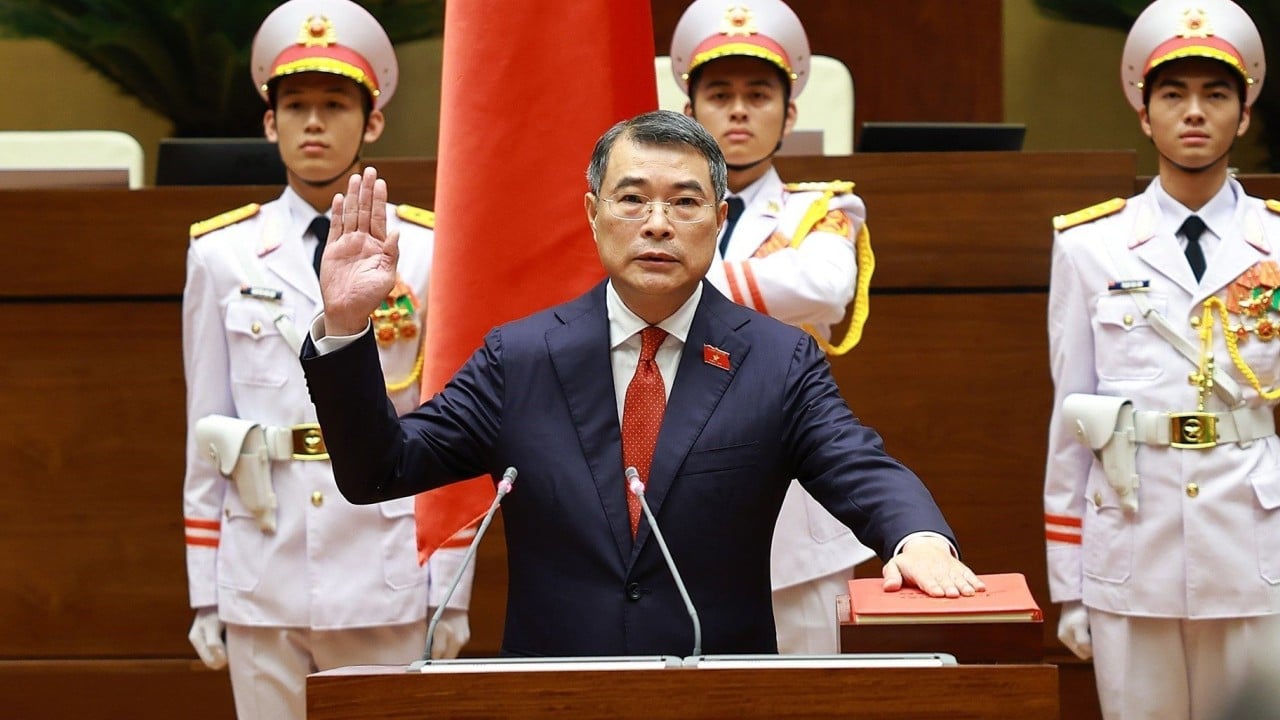
Vietnam just hit the reset button on its executive leadership, and the choice for Prime Minister tells you everything you need to know about where the country's headed. On April 7, 2026, the 16th National Assembly handed the keys of the government to Le Minh Hung. He isn't just another career bureaucrat; he’s a 55-year-old technocrat with a background that screams "economic stability" at a time when the world feels anything but stable.
If you’re wondering why this matters beyond the borders of Hanoi, look at the math. Vietnam is racing to escape the middle-income trap by 2030. They don't need a populist; they need a surgeon who understands global finance, central banking, and the intricate gears of the Communist Party’s internal machinery. Hung is that person.
The man behind the math
Hung didn't just appear out of nowhere. Born in 1970 in Ha Tinh province, he’s part of a younger, highly educated generation of Vietnamese leaders. He’s got a Master’s in Public Policy from Saitama University in Japan and a Bachelor’s in French. That international exposure is a big deal. It means he doesn't just look at the Vietnamese economy through a local lens; he understands how the IMF, the World Bank, and foreign investors think.
Before he was the Prime Minister, he was the youngest Governor of the State Bank of Vietnam (SBV) in history, taking the job at just 46. During his time at the SBV, he wasn't just sitting in a plush office. He was the one managing inflation and cleaning up a banking sector that was, frankly, a bit of a mess. His tenure was defined by a "no-nonsense" approach to monetary policy that kept the Vietnamese Dong relatively steady while neighboring currencies were swinging wildly.
Why the Party picked a banker
You don't get to be Prime Minister in Vietnam just by being good at spreadsheets. You have to be a master of the "Blazing Furnace" (dot lo) anti-corruption campaign. Hung has spent the last few years as the Chairman of the Central Organization Commission. In plain English? He was the head of HR for the entire Communist Party.
He knows where the bodies are buried. He's overseen the vetting of thousands of officials and helped purge those who didn't meet the Party’s increasingly strict ethical standards. This combination—economic genius plus internal disciplinarian—makes him the ultimate safe pair of hands. The Party is betting that he can keep the economy growing at 6-7% while making sure the government stays clean.
What this means for your wallet
If you’re an investor or someone doing business in Southeast Asia, Hung’s appointment is a green light. He’s a known quantity. Unlike some political appointments that leave markets guessing, the financial world knows exactly what Hung stands for:
- Fiscal Discipline: Don't expect wild government spending that leads to runaway inflation.
- Digital Transformation: He’s been a vocal supporter of fintech and modernizing Vietnam’s aging administrative systems.
- Foreign Direct Investment (FDI): He understands that Vietnam needs Apple, Samsung, and Intel to keep moving their supply chains into the country.
He’s replacing Pham Minh Chinh, who was more of a "get things done" infrastructure guy. Hung is likely to be more of a "make the system work better" guy. Expect fewer massive bridge-opening ceremonies and more reforms aimed at cutting red tape.
The shadow of the 14th Congress
This transition happened right after the 14th National Party Congress in January 2026. This was the moment Vietnam solidified its "Four Pillars"—the top four leadership positions. With To Lam serving as both General Secretary and State President, the power structure is more centralized than we've seen in decades.
Hung’s role is to be the CEO to To Lam’s Chairman of the Board. While Lam handles the high-level ideology and security, Hung is the one who has to make sure the lights stay on and the GDP keeps climbing. It’s a high-pressure job. If the economy stutters, the buck stops with him.
A new era of technocracy
Honestly, the days of "revolutionary" leaders in Vietnam are fading. The new guard is made up of people like Hung—people who studied abroad, speak multiple languages, and think in terms of global supply chains. He’s inherited a country that is currently the darling of the "China Plus One" strategy, but that window won't stay open forever.
Vietnam has about 15 to 20 years to become a high-income nation before its population starts aging rapidly. Hung knows the clock is ticking. He’s already signaled that his government will focus on "innovation-led growth." That’s not just a buzzword; it’s a survival strategy.
What to watch for next
Keep an eye on the first 100 days. You should look for two things: how he handles the ongoing energy crunch and whether he can speed up the sluggish disbursement of public investment funds. If he can fix the bureaucracy that’s been holding up big projects, he’ll prove he’s more than just a banker.
If you’re looking to get ahead of the curve, start watching the Ministry of Finance and the State Bank of Vietnam. Hung will likely fill those spots with his own proteges—men and women who share his pragmatic, data-driven worldview. The "Banker PM" is here, and he’s got a lot of work to do.