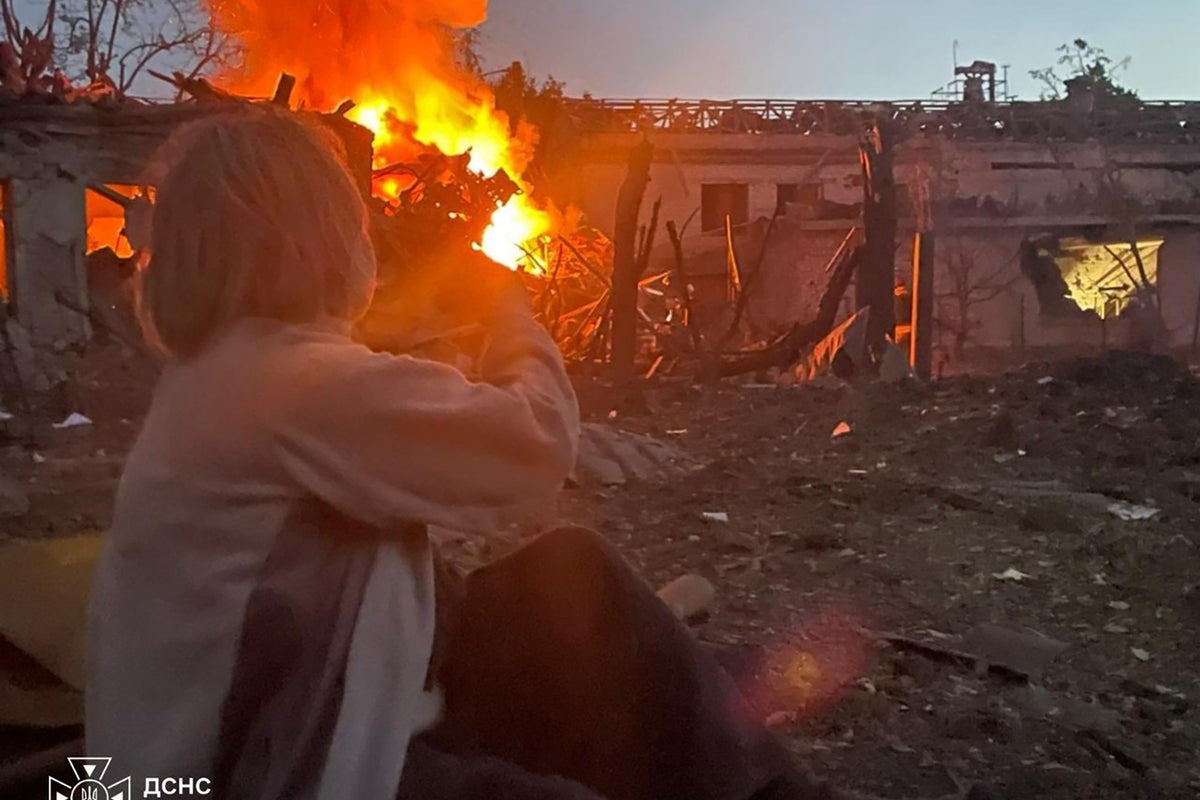
Air raid sirens don't stop sleeping patterns anymore. They become background noise until the windows shatter. Nine people are dead in Kyiv and its surrounding areas following an intense wave of Russian missile and drone strikes. This marks the sixth consecutive day of relentless capital bombardments, shattering any illusion that the front lines remain isolated from everyday urban life.
If you're wondering why these attacks keep escalating, you have to look at the shifting tactics on both sides. Moscow is pouring massive quantities of jet-powered drones and ballistic ordnance into central Ukraine. Ukrainian authorities report that over 800 jet-powered drones have been launched in just a few days, marking a brutal evolution from the slower, propeller-driven models used previously. Kyiv's air defense network is stretched to its absolute limit, desperately trying to intercept incoming hardware while citizens shelter underground in subway stations for hours on end.
The Regional Spillover and NATO's Quick Trigger
The danger isn't staying inside Ukraine's borders. When aerial barrages reach this scale, errors happen, and defense systems get nervous.
NATO mission aircraft scrambled immediately after airspace violations and nearby threats triggered high alerts in the Baltic region and along eastern borders. Latvia's military rushed fighter jets into the air following proximity warnings near Ludza, while Finland restricted local air and maritime traffic near its Russian frontier. Estonia's foreign ministry openly thanked the alliance for reacting with textbook precision as unidentified drones and regional threat alerts cascaded across the map.
European capitals are realizing a grim reality. You cannot host a grinding war of attrition on the edge of the European Union without the shockwaves hitting neighboring territory. Every miscalculated trajectory or stray debris field brings the wider continent dangerously close to a direct confrontation nobody wants.
The Technological Arms Race in the Skies
You hear a lot about political summits and diplomatic peace talks, but the real story on the ground is technical desperation. Ukraine's domestic defense sector is racing to deploy faster interceptor drones to counter Moscow's shift toward high-speed, jet-powered hardware. President Volodymyr Zelenskyy recently noted that multiple domestic firms are vying to scale up production of specialized interceptors, but manufacturing under constant bombardment is brutally difficult.
Meanwhile, economic warfare continues to expand horizontally. Ukrainian long-range strikes hit targets deep inside Russian territory, sparking fires at export ports like Ust-Luga and hitting industrial facilities in the Samara region. Both sides are trying to choke out the other's logistics chain while diplomatic channels move at a glacial pace.
Where Diplomacy Stalls and Reality Bites
International pressure is shifting, though it rarely translates to immediate relief for civilians taking cover. Indian Prime Minister Narendra Modi recently pressed Vladimir Putin directly during international meetings, stating that the conflict must stop for humanity's sake. Simultaneously, diplomatic envoys from Washington are holding intensive talks with Ukrainian leadership to map out potential negotiation frameworks.
Talks mean nothing to a family waking up to a collapsed apartment building in Boryspil. As long as the factories keep turning out ballistic missiles and air defenses remain scarce, the cycle repeats. Check local updates through verified emergency channels if you have contacts in the region, and support humanitarian efforts working on the ground to clear the rubble.
Why the Latest Aerial Blitz on Kyiv Proves This War Is Nowhere Near Over
This video provides an overview of the ongoing missile strikes and NATO's response actions during recent escalations.
http://googleusercontent.com/youtube_content/1

