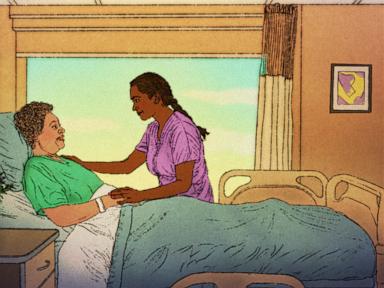
Sarah sits across from a man who is about to cry. His name is David. He is forty-six, wears a faded blue button-down shirt, and has spent the last twelve years managing supply chains for a mid-sized logistics firm. Yesterday, David was told that a newly integrated large language model would be handling eighty percent of his scheduling, routing, and vendor communication starting next month.
David is not angry. He is terrified. He stares at his hands, palms up, as if looking for a physical tool he misplaced. "If the software can predict the shipping delays before they happen," he asks Sarah, "what am I supposed to do between nine and five?"
Sarah is a corporate restructuring consultant. For the past three years, her entire job has been walking into rooms just like this one, watching the blood drain from the faces of highly skilled professionals. She knows the statistics by heart. She knows that corporate spending on artificial intelligence grew by double digits again this year. She knows the algorithms can process a million supply chain variables in three seconds.
But Sarah also knows a secret that the software vendors do not put in their pitch decks.
Two months ago, a massive freak storm flooded a key rail yard in Ohio. The algorithm did exactly what it was programmed to do: it instantly rerouted forty tons of perishable cargo through an alternative hub in Indiana. On paper, the math was flawless. The logic was airtight.
The problem was humanity.
The yard manager in Indiana was grieving the sudden loss of his brother. He was short-staffed, overwhelmed, and drinking coffee out of a paper cup that shook in his hand. When the automated system flooded his terminal with rerouted manifests, he simply stopped answering the digital alerts. He locked the gate. The math fell apart because the machine could calculate the capacity of the tracks, but it could not calculate the weight of a broken heart.
Sarah had to step in. She did not use data. She drove to the yard, bought two coffees, sat on a rusted shipping container with the manager, and listened to him talk about his brother for an hour. By evening, the trains were moving again.
That is the invisible stakes of the modern workplace. We are told we are being replaced by engines of pure logic. What we are actually doing is being forced to discover what makes us irreplaceable.
The Illusion of the Flawless Answer
We have spent the last few years looking at technology through the wrong end of the telescope. We see a machine write a sonnet or generate a line of functional Python code, and we assume it understands what it means to create. It does not. It predicts. It looks at a billion data points and guesses the next most logical word.
This creates a dangerous trap for businesses: the cult of the optimized average.
Consider the modern hiring process. A company receives ten thousand resumes for an engineering role. An AI sifts through them, scanning for keywords, specific universities, and precise career timelines. It outputs a pristine list of five candidates who look spectacular on a spreadsheet.
Then the interview happens.
Elena, a veteran engineering director, sat across from one of these mathematically perfect candidates last Tuesday. The young man had a flawless pedigree. His answers to technical riddles were instantaneous. But when Elena asked him about a time he had to deliver bad news to a team that had worked eighty hours a week on a failed project, the candidate froze. He offered a textbook response about project management frameworks and key performance indicators.
He spoke like the machine that had selected him.
"I didn't hire him," Elena told me later over dinner. "He knew how to build the bridge, but he didn't know how to talk to the people who were scared to cross it."
Elena ended up hiring a woman whose resume had been flagged as a secondary option. The woman had a gap in her employment history because she had spent a year helping her sister open a bakery. But during the interview, when asked about failure, she smiled ruefully and said, "When the sourdough doesn't rise at four in the morning, you don't read the manual. You look at the humidity, you look at your team's tired faces, and you figure out how to make biscuits instead so the customers still get fed."
The bakery owner understood context. She understood nuance. She possessed the one trait an algorithm can never replicate: situational adaptability born of lived experience.
The Three Anchors of Human Labor
Workplace psychologists who study the intersection of automation and human capability continuously point toward three specific areas where machines hit a cognitive wall. These are not soft skills in the corporate sense of the word. They are survival mechanisms.
The Friction of Genuine Persuasion
An algorithm can optimize an email subject line to increase open rates by four percent. It can write a sales script that hits every psychological trigger known to behavioral economics.
But it cannot build trust.
Trust is a biological transaction. It requires the observation of microscopic facial cues, the modulation of vocal tone, and the shared vulnerability of saying, "I don't know, but we will find out."
When a company faces a crisis—a data breach, a failed product launch, a plummeting stock price—the employees do not look to a generated memo to find their footing. They look at the CEO's eyes. They listen for the slight tremor in the voice that signals honesty rather than corporate strategy. Persuasion is not just about presenting facts; it is about transferring conviction from one human chest to another.
The Art of Productive Defiance
Machines are compliant by design. They obey the parameters of their architecture. Even when they generate unexpected outputs, they are simply exploring the outer boundaries of their statistical training.
They cannot rebel.
Think about the greatest breakthroughs in business history. They rarely come from following the data to its logical conclusion. They come from someone looking at a mountain of data and saying, "This data is stupid. We are going left."
In 1979, Sony’s market research teams looked at consumer data and concluded that nobody would ever buy a tape player that couldn't record music. The data was clear: consumers wanted utility. But Akio Morita defied the data. He wanted to listen to music while walking through Tokyo streets without forcing his environment to listen with him. He insisted on manufacturing the Walkman.
A machine would have killed that project in the simulation stage. True innovation requires the capacity to be irrational for the right reasons.
The Architecture of Synthesis
An AI can analyze a legal brief or diagnose a skin rash based on millions of historical images. It excels at deep, narrow tasks.
Humans excel at looking at a garbage dump and seeing a playground.
We synthesize completely unrelated domains to solve novel problems. A chef borrows a technique from a glassblower. A software designer uses a concept from architecture to build a user interface. This cross-pollination happens because our minds are messy. We do not store memories in neat databases; we store them in tangled webs of emotion, sensory input, and accidental associations.
Our errors are often where our genius lives.
The Desk in the Corner
Let us return to David, the logistics manager who felt his life slipping away into a digital mist.
Sarah did not fire him. Instead, she changed his title. He is no longer the Coordinator of Routing. He is now the Director of Anomalies.
His new desk is small, and his computer monitor no longer shows the green, orderly grids of normal shipping lanes. It only flashes when something goes completely wrong—when a border crossing closes due to geopolitical tension, when a port strike looms, or when a local vendor goes bankrupt overnight.
David spends his days on the phone. He talks to truck drivers who are stuck in snowstorms. He negotiates with warehouse owners who are angry about late payments. He uses his twelve years of relationships to ask for favors that money cannot buy.
The software runs the business when the sun is shining. David runs the business when the storm hits.
The fear we feel about automation is real, and it is valid. It is terrifying to realize that the technical proficiencies we spent decades acquiring can be replicated by a machine running on a server farm in Oregon. But this technological shift is not an erasure of humanity; it is a filtration system. It is burning away the rote, the repetitive, and the mechanical aspects of our days, leaving behind only the raw material of human connection.
The future does not belong to the people who can calculate the fastest. It belongs to the people who can look at the calculations, see the human beings waiting on the other side of the numbers, and understand exactly what is worth saving.
David’s phone rings. It is an emergency. A driver in Texas has a broken-down rig and a truck full of medicine that needs to stay cold. The software says the nearest replacement vehicle is four hours away. David ignores the screen. He dials a personal cell phone number of a competitor he has known for a decade.
"Hey Frank," David says, leaning back in his chair, his voice steady and calm. "I need a massive favor."
The machine sits silent, waiting for the data to update.