History is often written in broad, sweeping strokes. We talk about beaches choked with iron and foam. We talk about strategic breakthroughs, massive armadas, and the sudden, violent collision of empires on a stretch of French coastline. But history is not made of maps or official communiqués. History is made of nineteen-year-olds who misplaced their boots in the surf. History is made of heartbeats stopped short in the wet grass of Normandy, and of the rare, stubborn few who managed to crawl out of the wreckage and live a whole, quiet life afterward.
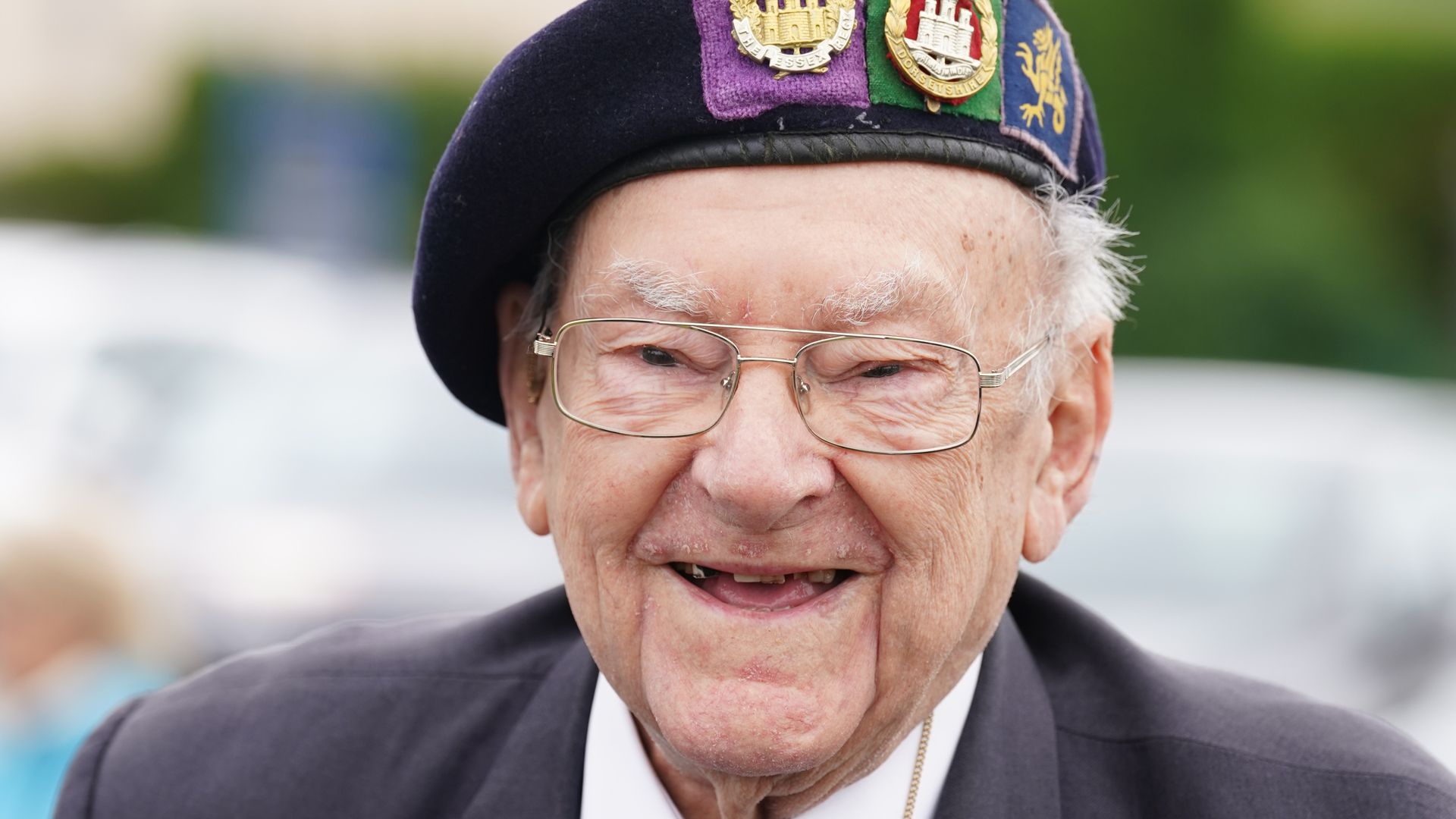
When a man reaches one hundred and one years of age, he has lived through the architecture of an entire epoch. He has seen horses replaced by horsepower, radio static replaced by digital hums, and the world shift on its axis multiple times over. But when that man is also one of the vanishingly few who stepped onto the beaches of Normandy in June 1944, and who survived weeks of brutal captivity behind enemy lines before the war even reached its halfway point, his departure takes on a different weight. It is not just the closing of a chapter. It is the extinguishing of a living bridge to an era that modern memory can barely comprehend.
Imagine the salt. Imagine the heavy, suffocating smell of diesel, wet wool, and vomit rolling in the bilge of a landing craft as dawn struggles to break through a low, indifferent Atlantic sky. The water is cold enough to seize the lungs. The air is thick with the metallic taste of fear and anticipation. For most of us, this is cinema. For him, it was a Tuesday morning that smelled like cordite and salt water.
The initial assault was only the opening movement of a symphony of survival. The popular imagination freezes D-Day in amber: the ramp drops, men rush into the surf, flags wave, victory follows. The reality was infinitely more chaotic, messy, and terrifying. Lines dissolved. Units fragmented. Every hedgerow in the bocage country became a fortress, every sunken lane a potential ambush. It was within this labyrinth of mud and gunfire that our soldier found himself cut off from his unit just weeks after the landings.
Capture is a peculiar kind of violence. It is not the sudden, clean shock of a bullet; it is a slow, grinding erosion of agency. One moment you are fighting for every yard of French topsoil, pushing forward with the desperate adrenaline of youth. The next moment, the noise stops. The rifles are lowered. Hands go behind heads. The uniform, which had felt like a shield, suddenly feels like a target.
To be a prisoner of war in the summer of 1944 was to step into a gray zone of existence. The rules of civilization receded, replaced by the arbitrary authority of guards whose own world was collapsing around them as the Allied pincers closed. Food dwindled. Sleep became a fragmented rumor punctuated by shouts, barking dogs, and the distant, reassuring thunder of friendly artillery moving closer by the day.
How does a human mind endure that? How do you keep the internal flame burning when the external world offers nothing but barbed wire, cold rations, and the constant, gnawing uncertainty of whether you will see another sunrise?
The answer is found in stubbornness. Not the cinematic, flag-waving heroism depicted in recruitment posters, but a quiet, stubborn refusal to let go of tomorrow. It is the mental discipline of counting fence posts, of recalling the taste of your mother's cooking, of whispering names of people you loved back home into the dark lining of your collar. It is a psychological fortress built out of ordinary memories, designed to withstand extraordinary cruelty.
When the war finally ended and the camps were opened, the men who returned home did not come back whole in the way civilian eyes expected. They carried invisible luggage. They walked a little slower, flinched at sudden loud noises, and developed a profound, heavy silence. For decades, the veterans of that generation did not speak of the hedgerows, the interrogation rooms, or the faces of the friends they left behind in the French dirt. They packed the war away into a box in the back of the closet, locked it with a heavy key, and set about building a new world.
They laid asphalt. They built houses. They raised children who would grow up complaining about mundane civilian troubles, listening with half an ear when their grandfathers muttered in their sleep about mud and guns. The veterans absorbed the shock of peace just as they had absorbed the shock of war: without complaint, without fanfare, and entirely on their own terms.
Decades passed. The world forgot the details, reducing the greatest cataclysm of the twentieth century to black-and-white documentary footage shown in high school history classes. The veterans grew old. Their numbers thinned. Every year, the reunions at local American Legion halls or British pubs became smaller, the empty chairs outnumbering the living men.
Yet, he remained. One hundred years old. Then one hundred and one.
Think about what it means to be one of the last. To walk down a modern street filled with glowing screens and speeding electric cars, knowing that your mind still held the exact sound of a propeller-driven bomber straining against the night sky over Normandy. Think about the profound isolation of outliving your peers, your commanders, your enemies, and almost everyone who understood firsthand what you endured.
When a centenarian veteran passes away, we often reach for clichés about an era ending. But the end of an era is too abstract. What actually ends is a voice. A specific cadence of speech. A particular set of lines etched around the eyes by decades of looking both backward into memory and forward into an unexpected future.
We lose the living proof that human beings are capable of enduring absolute nightmares and returning to tell the story—or, more often, refusing to tell the story, choosing instead to live it through quiet dignity.
The news of his death at one hundred and one did not shake the global stock markets. It did not alter geopolitical borders. It was a small obituary, perhaps a brief segment on the evening news, easily missed by anyone scrolling past with thumb and smartphone. Yet, it carried more historical gravity than a thousand political speeches.
He survived the initial chaos of the beaches. He survived the terrifying vacuum of capture behind enemy lines. He survived the claustrophobia of captivity, the hunger, the cold, and the endless waiting. And then, he survived eighty years of peace, watching the world evolve into something he could scarcely have imagined as a teenager shivering in a landing craft off the coast of northern France.
We owe these men something more than a poppy on Remembrance Day or a polite nod during a parade. We owe them our attention. We owe them the effort to remember that freedom is not a natural state of the universe, but a fragile, hard-won miracle purchased with the youth, blood, and silent endurance of boys who just wanted to go home.
The storm has finally passed for him. The hedgerows are quiet now. The barbed wire has rusted away into the soil of a Europe that learned, however temporarily, how to heal itself. But the footprints left in that Normandy mud remain deep, permanent, and impossible to wash away.
He is gone. The silence he leaves behind is vast. Listen closely, and you can still hear the tide coming in.