There is a specific weight to silk pressing against the hollow of the throat.
Most people dismiss it as a nuisance. A strip of woven fabric knotted into a precise, downward-pointing triangle, pulled tight enough to remind the wearer of gravity, posture, and the quiet contract they made with the morning before they stepped out the door. For centuries, this little slip of cloth has served as armor. It tells the world that you are serious, that you respect the room you are entering, and that you have taken the time to tame the chaos of your own collar.
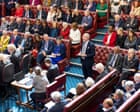
Then came the red leather benches of the House of Lords.
The news broke quietly, as institutional shifts often do. The peers of the realm, those venerable guardians of legislative tradition sitting in gilded chambers beneath painted ceilings, decided they could breathe a little easier. They relaxed the rules. Ties, long treated as a mandatory badge of citizenship within the chamber, were suddenly optional. A subtle flick of a wrist on a procedural update, and suddenly, centuries of starch were allowed to soften.
Fashion connoisseurs—those watchful archivists of human vanity—gasped. Not out of outrage, necessarily, but out of a sudden, shivering realization. If the House of Lords can let the tie go, who is left to hold the line?
Consider what happens when a uniform loses its anchor.
For generations, the necktie has been the great equalizer of professional anxiety. It matters little whether the wool was woven in Biella or purchased off a rack in a department store basement; once knotted, it demands a ritual. You must stand before a mirror. You must cross the narrow end over the wide end. You must tuck, loop, and slide the knot upward until it rests snugly in the V of your shirt collar, choking off any temptation to slouch. It is an act of physical self-binding.
When that requirement vanishes from the highest chambers of power, the ripple effect is immediate. It tells the ambitious young lawyer, the nervous corporate analyst, and the university graduate standing nervously in a cramped hallway that the old rules were never eternal. They were just habits. And habits can be broken.
To understand why this matters, you have to look past the silk and examine the psychology of constraint.
Human beings crave freedom, yet we are notoriously terrible at handling an absolute blank canvas. Total sartorial liberty is exhausting. When every morning presents an infinite array of choices about how to present oneself to a skeptical world, decision fatigue sets in before you have even poured your first cup of coffee. The tie—restrictive, archaic, and stubbornly formal—was a shortcut. It decided for you. It said: Today, we play our part.
Now, picture the peer walking into the House of Lords without one. His shirt collar gapes just a fraction of an inch. His neck is exposed to the drafty corridors of Westminster. It is comfortable, certainly. But it is also vulnerable.
Historians of dress will tell you that the modern necktie is a direct descendant of the cravats worn by Croatian mercenaries serving in France during the Thirty Years' War. Those bright cloths caught the eye of Louis XIV, who instituted a regiment of royal cravat-makers, transforming a battlefield identifier into a courtly flourish. From its very inception, the tie was about belonging to a tribe. It signaled allegiance to an order, a standard, a code of conduct that transcended the individual body.
When the Lords relax that requirement, they are not just making their meetings airier. They are signaling an erosion of collective performance.
We live in an era that worships authenticity above all else. We want our leaders to look like us, to feel like us, to take off their armor so we can verify their humanity. But there is a dangerous trade-off in this unmasking. When we strip away the formal markers of our roles, we often strip away the gravity of the work itself. A courtroom, a Parliament, a boardroom—these are theaters of consequence. Costumes matter because they remind the actors and the audience alike that the stakes are real.
Walk through any major financial district today, and you will see the ghost of the tie haunting the streets. Open-collar shirts paired with unstructured blazers dominate the landscape. Tech founders in hoodies lecture governments on the future of humanity. The tie has retreated to weddings, funerals, and job interviews—occasions bookended by extreme emotional states.
Yet, there remains a stubborn resistance among those who view clothing as a language rather than mere utility.
Fashion connoisseurs look at the relaxation of the dress code in the House of Lords not as a victory for personal comfort, but as the dismantling of a visual vernacular. When everyone dresses down, nobody stands out. The rebellious gesture of discarding the tie loses its edge when it becomes the uniform of the establishment. The rebels of the nineteen-sixties threw off their ties to smash the machine; today's politicians discard them to blend in with the electorate.
The irony is thick enough to choke on.
Think of the young men entering the workforce who look to these institutions for cues on how to behave. If the lawmakers of the land can no longer be bothered to knot a strip of silk around their necks, why should anyone else care about presentation? Why bother with polish when the highest officeholders signal that casualness is the new currency of power?
The danger is that we mistake the removal of friction for progress.
Friction is often where excellence lives. The minor discomfort of a tailored suit, the snugness of a collar, the symmetry of a Windsor knot—these tactile reminders keep us anchored in the present room. They prevent us from slumping into the sofa cushions of our own minds. They remind us that we are presenting our best selves to an audience that deserves our respect.
When the House of Lords opened the door to the collar-only look, they opened a much larger door to a culture that increasingly values ease over elegance, and comfort over craft.
Perhaps the tie is dead. Perhaps we are watching the final, slow-motion unraveling of an accessory that outlived its practical purpose centuries ago. But as those silk bands disappear from the benches of Westminster and filter down into the daily routines of millions, something else goes with them.
We lose the ritual of preparation. We lose the physical boundary between the messy interior life and the public duty we owe the world.
The next time you stand before your mirror, consider the strip of fabric waiting on your dresser. It is useless. It offers no warmth. It provides no protection from the elements. It is entirely, gloriously impractical.
And that is precisely why it matters.
In a world desperate to strip away every unnecessary layer in the name of efficiency, choosing to knot a piece of silk around your throat is a quiet, radical act of defiance. It says that you are willing to bear a little weight for the sake of beauty, tradition, and form.
The Lords may loosen their collars. They may breathe a little easier in the damp London air. But as the last knots come undone, the rest of us are left to decide whether a life of absolute comfort is worth the quiet erosion of our style.


