Dawn on the southern tip of the Iberian Peninsula does not break with a whisper; it starts with the low, collective rumble of thousands of diesel engines.
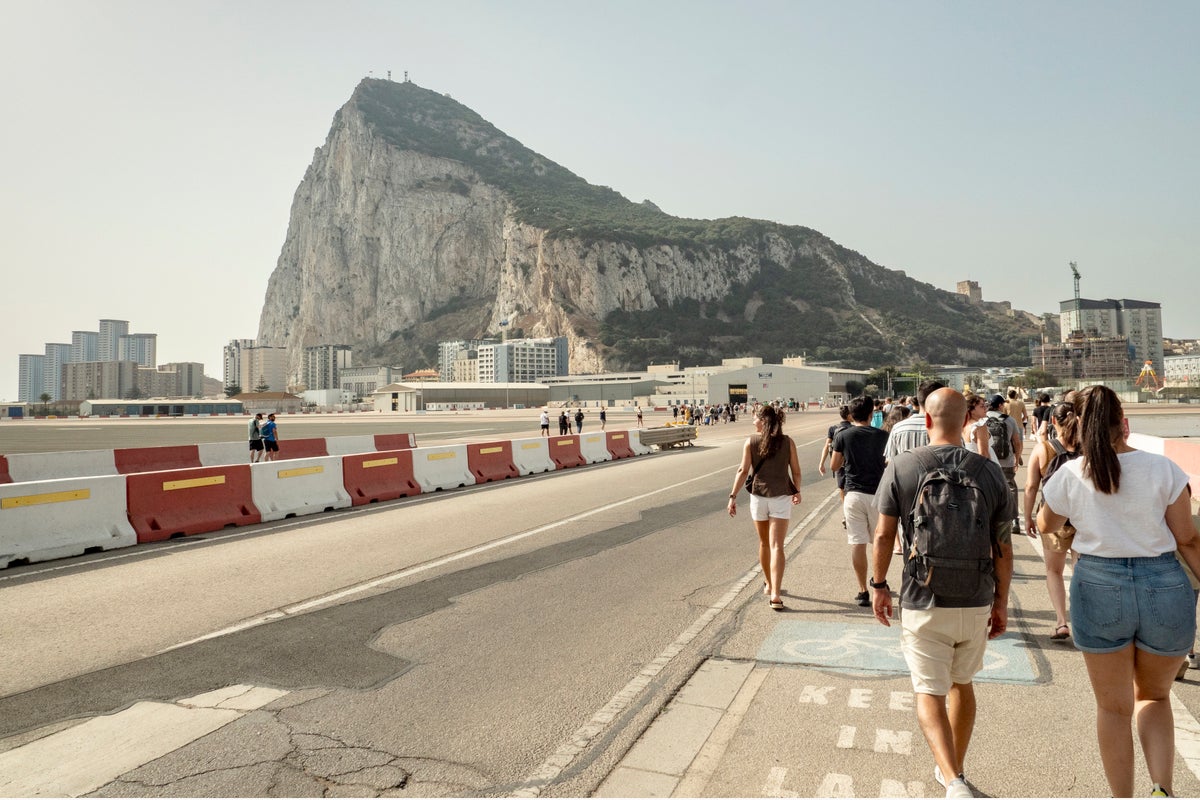
Every morning, a small army of 15,000 people converges on a single, narrow strip of asphalt. They are teachers, construction workers, waiters, and nurses. They live in the sun-bleached Spanish border town of La Línea de la Concepción, where rent is affordable, but they work in Gibraltar, the tiny, defiant British outpost that clings to the base of a towering limestone monolith.
For decades, this daily migration was a simple, thoughtless routine. You walked or drove past a sleepy guard, flashed an ID, and crossed from Spain into Britain.
Then came Brexit.
Suddenly, a physical line on a map threatened to harden into a concrete wall. For years, the people who live in the shadow of the Rock have lived with a quiet, persistent dread. A hard border would not just mean paperwork; it would mean economic strangulation. It would mean three-hour queues in the blistering summer heat just to get to work. It would mean families divided by a bureaucratic chasm.
On July 14, 2026, in Brussels, that dread was finally traded for a signature.
The Anatomy of a Border
To understand why this treaty is a lifeline, consider the life of someone like Maria.
Maria is a hypothetical composite of the 15,000 cross-border workers who keep Gibraltar running. She lives in Spain but manages a bustling café near Gibraltar’s Main Street. Her entire livelihood depends on the fluid, uninterrupted movement of her own body across an invisible line.
Under the old, post-Brexit limbo, Maria woke up at 5:30 AM, her stomach tight with anxiety. Would the Spanish frontier guards be conducting "go-slow" passport checks today? Would she be late to open the café? Would her boss replace her with someone who didn’t have to cross an international frontier every day?
Now, consider the alternative.
The newly signed UK-EU treaty on Gibraltar entirely dismantles the land border. The physical gates and passport booths at the frontier are effectively gone. For Maria, and for the thousands of Spanish commuters who make up over half of Gibraltar’s workforce, the daily commute is saved. They will continue to cross using simple ID cards.
But this freedom at the land border was not free. It required a geopolitical compromise that would have seemed unthinkable a decade ago.
To keep the land border open, Gibraltar has essentially allowed the European Union's outer boundary to wrap around its coastline and airport. The Rock is now a de facto member of the Schengen free-movement zone, despite being a British territory.
The "Schengen Shack"
The real tension of this new era unfolds not on the road from Spain, but at Gibraltar’s international airport, where the runway famously intersects with a civilian highway.
If you fly into Gibraltar from London, the experience is about to change radically.
Because the land border is open, the Schengen frontier has been pushed back to the airport terminal. When you step off a plane, you will face two distinct checkpoints. First, the familiar, polite nod from Gibraltar’s own border officials. Then, you will step into a newly constructed, joint facility.
Gibraltar’s Chief Minister, Fabian Picardo, has dryly dubbed this facility the "Schengen shack."
Inside this shared space, Spanish border police will operate. For a territory ceded to Great Britain under the Treaty of Utrecht in 1713—and whose population voted by 99 percent in 2002 to reject shared sovereignty with Spain—the physical presence of Spanish officers on Gibraltar soil is a bitter pill to swallow.
To make matters more complicated, these officers are wielding the EU’s brand-new, highly controversial Entry/Exit System (EES).
If you are a British traveler arriving for a weekend getaway, you cannot simply stroll through. You must submit to biometric scanning. Your face will be photographed. Your fingerprints will be digitally recorded.
On a quiet Tuesday, with one flight landing every hour, the system might work. But picture a chaotic Saturday in late July. The temperature is hovering around 35°C. A budget airline flight touches down, packed with families. Children under twelve cannot have their fingerprints taken, but they must still have their photos registered. The software glitches. The queues begin to snake out onto the tarmac.
This is the compromise. To keep the land border fluid for the working class, travelers from the British mainland must bear the brunt of Europe’s digital fortress.
Sovereignty and the Double Lock
For those who view the world solely through the lens of national pride, the presence of Spanish police at the airport looks like a retreat. Critics will whisper that Britain has ceded ground, that the Spanish flag has crept a few inches closer to the top of the Rock.
But look closer at the mechanics of the deal.
The treaty spans over a thousand pages of dense, painstaking legal prose. Yet, the core of the agreement rests on an absolute refusal to compromise on sovereignty. The UK's military base—a highly strategic foothold at the gateway to the Mediterranean—remains entirely autonomous. British troops and their families are exempted from the Schengen rules.
More importantly, the treaty includes a strict "without prejudice" clause. It explicitly states that nothing in the document alters the legal claim of either Britain or Spain over the territory.
It is a masterpiece of modern diplomacy: a functional, pragmatic surrender of physical space at the airport to secure the economic survival of the community, all while keeping the constitutional "double lock" firmly bolted. The people of Gibraltar remain proudly, fiercely British. They have simply realized that you cannot eat sovereignty if your economy is starved of its workers.
The Human Cost of Walls
In a world increasingly obsessed with building walls, drawing lines, and retreats into nationalism, the Gibraltar treaty is a rare, quiet rebellion.
It is a recognition that communities living on the border do not experience geopolitics as an intellectual debate. They experience it as a physical barrier to their survival. When politicians in faraway capitals argue about borders, they are playing with the hours of a working mother’s day, the viability of a small business, and the peace of mind of thousands of families.
As the provisional treaty takes effect, the physical fence that has symbolized tension since the days of General Franco is quietly rendered obsolete.
The queues of cars stretching back into Spain will fade. The morning rush hour will lose its edge of panic.
But as you sit in the terminal at Gibraltar airport, waiting for a Spanish officer to scan your retinas before you can walk out into the shadow of the great limestone Rock, you will realize that the border has not truly disappeared. It has merely changed its shape, waiting for you at the baggage carousel.