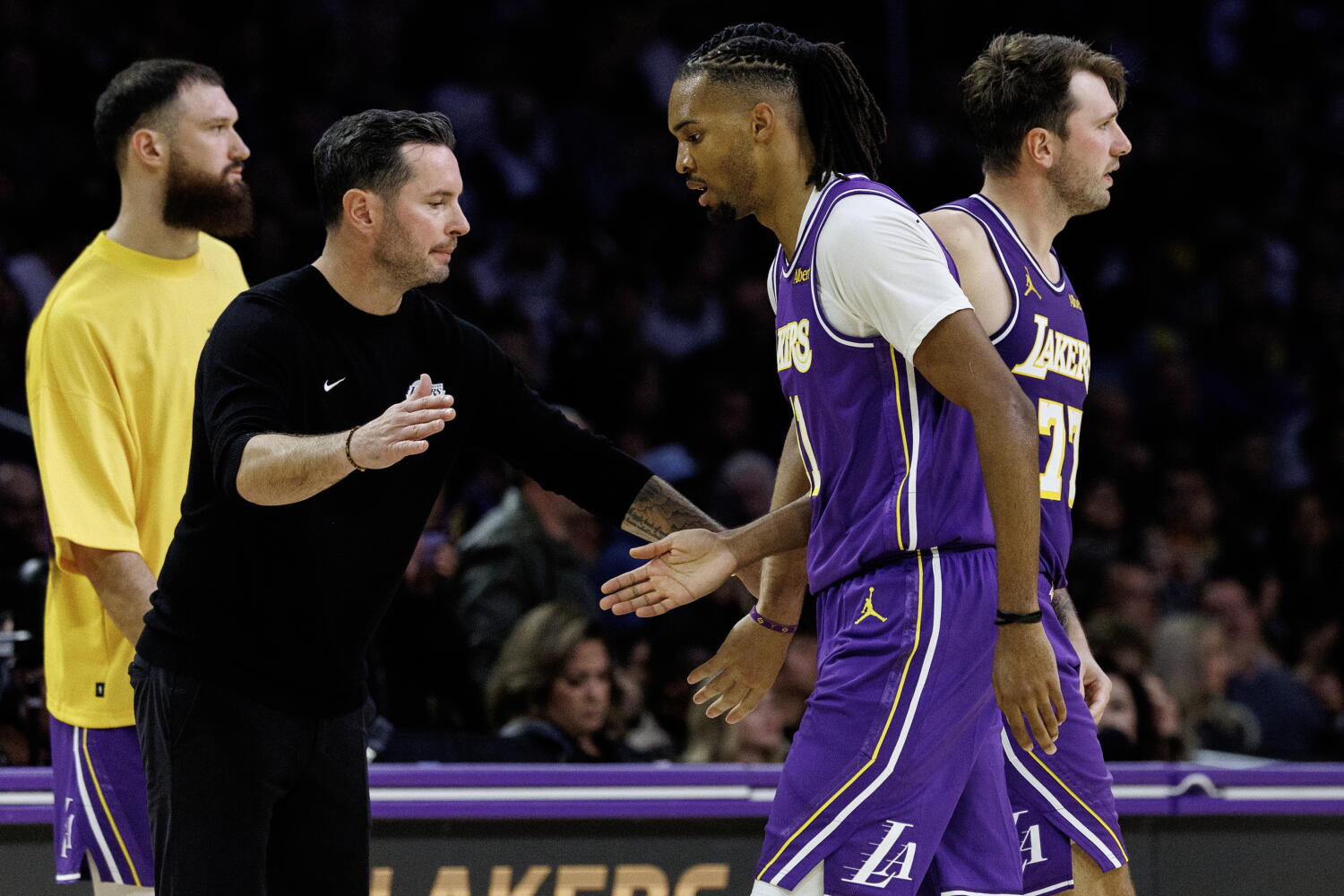
Standing atop the NBA standings rarely buys peace of mind in Los Angeles, and the current Lakers roster knows better than to mistake early-season wins for playoff readiness. Despite sitting tied for the league's best record, the coaching staff and veteran core remain openly dissatisfied with their execution. That restlessness is not false modesty or media-trained deflection. It is a calculated reaction to structural vulnerabilities that regular-season box scores easily hide—specifically half-court offensive stagnation, perimeter defensive lapses, and an overreliance on high-usage stars to rescue broken possessions.
The league's long history is littered with regular-season titans who collapsed the moment a seven-game series stripped away transition opportunities and exposed weak links. Inside the Lakers' film room, the focus is less on the win column and more on the fragile margins separating dominant stretches from sudden, double-digit swings.
The Illusion of the Regular Season Win Column
Regular-season basketball rewards volume, effort, and star power over an 82-game marathon where opponents are often traveling on back-to-backs or missing key rotation players. A team with elite top-end talent can sleepwalk through three quarters, tighten the screws for six minutes in the fourth, and walk away with a comfortable victory.
That formula works in November and December. It fails spectacularly in May.
When a coaching staff looks at a tie for the best record in basketball and expresses concern, they are reading the underlying metrics rather than the standings. Point differential, defensive rating against top-ten offenses, and half-court efficiency tell a much sharper story than raw wins and losses. Winning close games against depleted rosters inflates confidence without building sustainable habits.
The Trap of Clutch-Time Reliance
Winning games in the final two minutes sounds like a badge of honor. In reality, living in the clutch is a warning sign for a legitimate contender.
Elite championship teams blow inferior opponents out by the third quarter, allowing their primary ball-handlers to rest their legs for the spring. When a top-seeded team repeatedly relies on late-game heroics, hero-ball isolations, and whistle-dependent drives to survive average competition, they are burning postseason fuel prematurely. The Lakers' internal push for improvement stems directly from recognizing that surviving tight fourth quarters is not a repeatable blueprint for four consecutive playoff rounds.
Half-Court Execution and the Spacing Tax
Transition basketball is an equalizer, but the postseason slows the game to a crawl. Once opposing defenses get set, every weakness in floor spacing and off-ball movement gets magnified.
For the Lakers, generating clean looks when the initial action breaks down remains an ongoing puzzle. Too many possessions still devolve into static perimeter passing while defenders pack the paint, daring secondary scorers to beat them from deep. Even when the three-point shots fall at a respectable clip during a winning streak, the process behind those shots often lacks consistency.
What Happens When the First Option Dies
Watch any elite playoff defense against a star-heavy offense, and you will see the same blueprint. They take away the primary pick-and-roll action, force the ball out of the main creator's hands early, and make the weak-side players make rapid decisions against scrambling closeouts.
- Predictable Entry Passes: When opposing wings deny the initial post-up or high screen, secondary ball-handlers must initiate offense without burning twelve seconds off the shot clock.
- Weak-Side Stagnation: Standstill shooters are easy to guard. Without constant baseline cuts, flare screens, and relocation along the arc, a single defender can zone up two offensive players.
- Turnover Spikes Under Pressure: Trying to thread needles into crowded lanes produces live-ball turnovers, which instantly fuel the opponent's fast break and erase ten minutes of solid half-court defense.
Fixing these habits requires painful, repetitive drilling during the regular season. It means sacrificing easy, star-driven buckets in the short term to force role players into uncomfortable decision-making spots now, rather than waiting until an elimination game forces their hand.
Defensive Rotations and the Perimeter Leak
Championship defense is built on a string. When one defender gets beat off the dribble, four teammates move in unison to plug the gap, protect the rim, and recover to the three-point line.
Right now, the Lakers' defensive string frays too often against quick, multi-handler backcourts. Point-of-attack containment remains uneven, forcing the interior anchor to step up and contest drives while leaving the backside vulnerable to offensive rebounds and corner threes. You can survive that breakdown against a lottery team that misses open jumpers. Against a disciplined Western Conference rival, those defensive cracks turn into 40-point quarters.
The Communication Gap on Switches
Modern NBA offenses hunt mismatches relentlessly. They run empty-side pick-and-rolls specifically to force a slower big onto a shifty guard or a smaller guard onto a bruising forward.
Surviving those switches depends entirely on early, loud communication and pre-switching before the screen even arrives. When the Lakers lose focus for a fraction of a second, two defenders either chase the ball-handler—leaving a roll man wide open down the lane—or both stay home, gifting an uncontested pull-up three. The roster possesses the physical length to smother passing lanes, yet mental lapses repeatedly undo that natural advantage.
Managing Minutes Without Sacrificing Edge
Every contender walks a tightrope between chasing home-court advantage and preserving the physical durability of its cornerstone players. Pushing too hard for the number-one seed can leave a roster battered by April, while coasting breeds bad habits that cannot simply be switched off when the playoffs begin.
The Lakers' veteran leadership understands this tension intimately. Having endured grueling postseason runs and injury-derailed campaigns in previous years, they know that availability and sharpness carry equal weight.
Consider a hypothetical scenario common across long NBA seasons: a team builds a fifteen-point lead in the first half through crisp ball movement and aggressive closeouts, only to surrender the cushion in the third quarter by settling for contested mid-range jumpers and jogging back on defense. Even if that team rallies to win by four, the film session the next morning will look like a funeral. That exact dynamic drives the current urgency in Los Angeles. Winning ugly teaches bad lessons, and veteran teams refuse to let a shiny record mask sloppy execution.
Role Player Accountability and Rotation Clarity
Superstars establish a team's ceiling, while the sixth through ninth men in the rotation determine its floor. Across an 82-game schedule, bench production fluctuates wildly depending on matchups, foul trouble, and shooting variance.
The Lakers are still searching for ironclad reliability from their supporting cast. On any given night, a bench unit might swing momentum with frantic defensive energy and timely cutting, only to follow it up two nights later with blown assignments and hesitant shooting.
- Defensive Versatility Over Scoring: In the playoffs, rotation spots shrink to eight or nine players. Anyone who cannot hold their own defensively gets played off the floor, regardless of their offensive spark.
- Decisive Catch-and-Shoot Triggers: Hesitating on an open three-point look kills offensive rhythm. Role players must shoot with conviction or immediately attack the closeout without holding the ball.
- Rebounding Discipline: Ending defensive possessions with a clean rebound prevents second-chance backbreakers, requiring guards to crash down and box out athletic wings rather than leaking out early.
Why Paranoia Is a Championship Trait
History shows that the most dangerous teams in sports are the ones that treat success with suspicion. Complacency rarely arrives all at once; it creeps in through skipped box-outs, late defensive rotations, and rationalizing bad shots because they happened to go in.
By publicly acknowledging that their current level is nowhere near good enough, the Lakers are setting an internal standard that ignores outside praise. The standings say they are tied for the best team in basketball, yet the tape shows a group still wrestling with identity, cohesion, and forty-eight-minute discipline. Until the execution matches the record, every win in Los Angeles remains an unfinished draft.