Every time a humanitarian catastrophe unfolds on television screens, the ritual begins. Secretaries-general wring their hands. Moralists scream about institutional paralysis. Diplomats deliver soaring, empty speeches about the sacred duty of the international community. At the center of this theatrical outrage sits the perennial punching bag: the United Nations Security Council veto power.
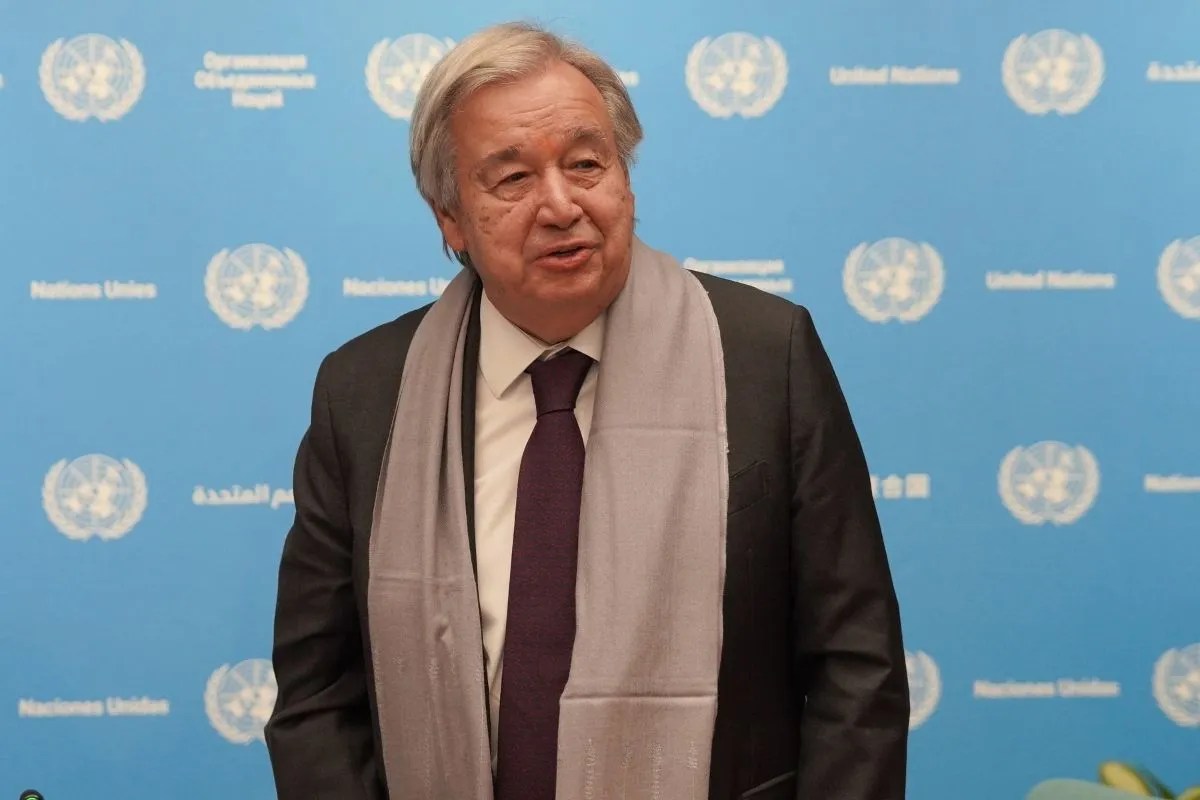
Antonio Guterres calls it an absurdity. Pious editorial boards demand its abolition. The lazy consensus among global commentators is unanimous. The veto is an undemocratic relic of 1945, a toxic instrument used by five nuclear superpowers to shield their allies, block accountability, and render the global peacekeeping apparatus completely toothless.
It is a comforting narrative. It is also entirely, dangerously wrong.
Strip away the diplomatic etiquette and the idealistic fairy tales taught in political science textbooks. The United Nations is not, and has never been, a global parliament. It is not a temple of international justice, nor is it a democracy club. It is a high-stakes containment chamber designed by the victors of the Second World War to prevent nuclear-armed empires from incinerating the planet.
The veto is not a bug in this system. It is the load-bearing pillar. Remove it, and the entire edifice collapses into total war within a fiscal quarter.
The Great Delusion of Global Democracy
To understand why the anti-veto crusaders are peddling a dangerous fantasy, look at what happened to the League of Nations. In the interwar period, the League operated on principles of collective security and procedural majority rule. Any nation could be outvoted. Moral consensus was supposed to override national interest.
The result? Total irrelevance. When aggressive powers like Imperial Japan invaded Manchuria or Fascist Italy invaded Abyssinia, the League passed resolutions, wrung its hands, and watched helplessly as those nations simply packed their bags and walked out of the assembly hall. Without a mechanism to bind the great powers to the institution through absolute self-preservation, the League dissolved into the most destructive conflict in human history.
The architects of the United Nations in San Francisco in 1945—led by diplomats who had just witnessed fifty million corpses pile up—understood a brutal truth that modern television pundits refuse to accept: great powers will never submit to being outvoted on matters of vital national security.
If the United States, Russia, China, the United Kingdom, or France can be forced by a majority vote of countries with zero projection capability to take military or economic actions that threaten their survival, they will not comply. They will secede. They will build rival blocs. And the moment the great powers leave the diplomatic table, the countdown to direct kinetic warfare begins.
The veto is the safety valve. It guarantees that no superpower can ever be legally cornered into a position where total war is its only remaining exit.
Why Paralysis is Actually Peace
Critics love to point out how many resolutions the veto has killed. Since 1945, the Soviet Union and Russia have used it over a hundred times, the United States scores of times, and the other members as needed. Every single one of those vetoes represents a crisis averted or a diplomatic line held.
Consider the Cold War. For decades, the US and the Soviet Union were locked in a zero-sum ideological death match, armed with thousands of thermonuclear warheads. Proxy wars raged across Vietnam, Korea, Angola, and Afghanistan. Millions died in those regional conflicts.
Yet, Washington and Moscow never traded direct atomic strikes. Why? Because no matter how intense the rhetoric got, diplomats met daily in New York. They knew the rules. They knew that if one side tried to use the UN security apparatus to authorize direct military force against the other's vital sphere of influence, the veto would drop like an iron curtain.
The veto forced the superpowers to fight through proxies, diplomats, and intelligence agencies rather than armies on European plains. Paralysis in the Security Council is not a failure of diplomacy. It is the physical manifestation of a nuclear stalemate. When the council cannot agree, it means the superpowers disagree so fundamentally that any forced "action" would mean direct war between nuclear-armed states.
If you want a Security Council that can pass sweeping, unanimous interventions against major powers, you are wishing for a world where major powers no longer exist or where one hegemon rules unchecked. Neither option is peaceful.
The Dangerous Fantasy of Expansion and Reform
Every few years, regional aspirants demand a seat at the permanent table. India, Brazil, Germany, Japan, and South Africa point to their economic weight, population size, or moral standing and argue that the current P5 structure is an outdated oligarchy.
Let us play out the logical conclusion of their demands.
Suppose the UN caves to pressure and grants permanent seats to four or five new regional heavyweights. If you give them seats without the veto, you have created a second-class tier of permanent members—a recipe for immediate resentment and institutional paralysis of a different kind.
If you give them seats with the veto, you multiply the friction points exponentially. Instead of managing friction between five nuclear powers with established red lines, you now have ten or twelve veto-wielding actors with overlapping regional disputes, historical grievances, and conflicting territorial claims. A system where ten different states can unilaterally grind global security to a halt is not more democratic; it is completely ungovernable.
Furthermore, the obsession with reforming the Security Council treats the symptoms while ignoring the disease. The UN does not fail because the council has five permanent members. The UN fails because the global distribution of power has shifted, and states use international bodies as propaganda megaphones rather than genuine arenas for compromise.
The Real Pathology of the Security Council
If the veto is not the problem, where does the real rot lie?
It lies in the weaponization of economic sanctions and the selective enforcement of international humanitarian law.
Over the past three decades, Western powers discovered they could bypass the need for Security Council authorization by using regional coalitions or imposing unilateral economic blockades. These measures rarely topple rogue regimes; instead, they crush middle-class populations, starve children of medicine, and drive desperate citizens into the arms of authoritarian leaders.
Conversely, when powerful states violate international norms themselves—whether through unauthorized regime-change interventions or selective blind spots toward strategic allies—they shatter the credibility of the entire institution.
The crisis of the United Nations is not that the veto protects dictators from UN resolutions. The crisis is that the global order has become so multi-polar, fractured, and cynical that no single state or coalition possesses the moral authority or economic dominance to enforce rules universally.
Blaming the veto is an intellectual cop-out. It allows diplomats and commentators to pretend that if we just changed voting procedures in New York, geopolitical rivalries in the Middle East, Eastern Europe, and the South China Sea would magically dissolve.
The Uncomfortable Reality
You can abolish the veto tomorrow morning. You can hold a global referendum, rewrite the Charter, and replace the Security Council with an elected assembly.
Within forty-eight hours, the United States, China, and Russia will withdraw their ambassadors, stop paying their dues, and begin forming aggressive military alliances outside the framework of international law. Within six months, minor regional skirmishes will escalate into unchecked great-power confrontations because no institutional buffer remains to absorb the shock.
The veto is an ugly, undemocratic, cynical instrument. It protects the strong, frustrates the righteous, and preserves an unequal global hierarchy.
It is also the only thing keeping the lights on in a world armed to the teeth with hydrogen bombs. Stop whining about the mechanism that prevents total catastrophe. If that mechanism ever breaks, you will not have a more democratic world. You will not have a world at all.