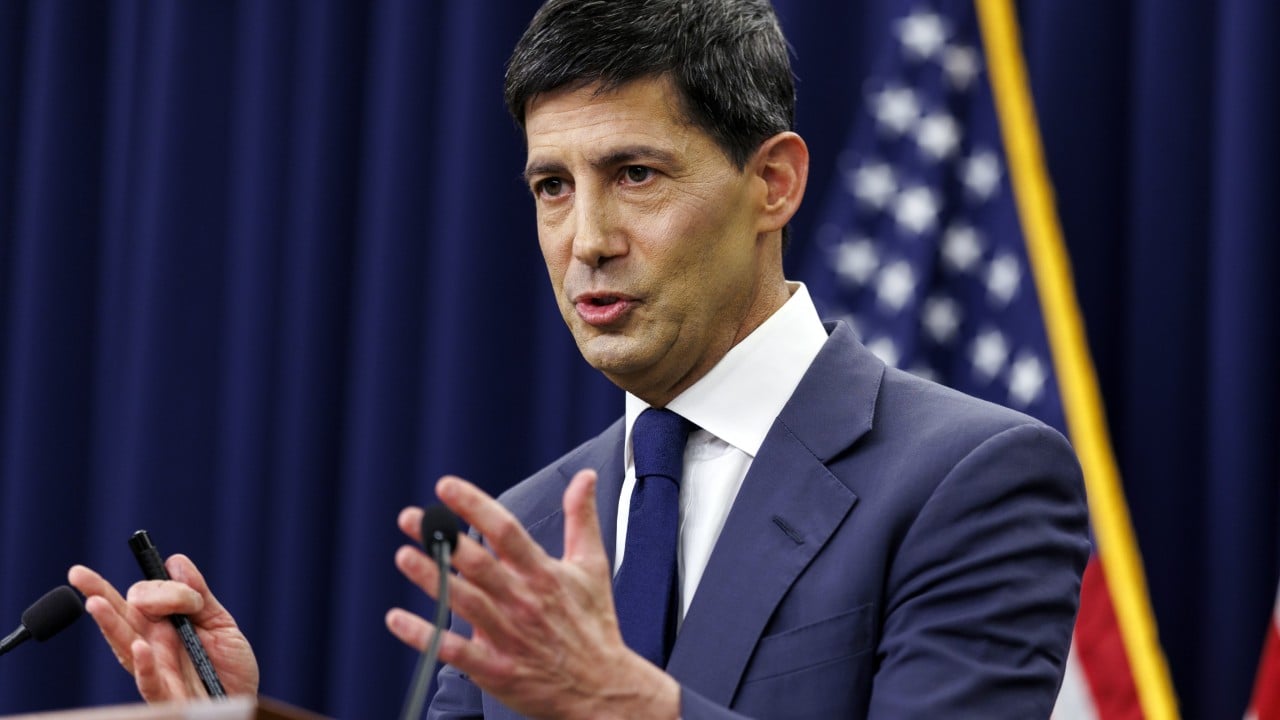
The Federal Reserve has officially entered a new era under the leadership of Kevin Warsh, signaling a stark departure from the monetary policy strategies of the last decade. In his first policy meeting as chair, Warsh coordinated a decision to hold the benchmark interest rate steady, deliberately pausing to assess the structural damage of recent inflationary cycles. While the baseline decision to stand pat matched consensus Wall Street expectations, the underlying message from the new chairman was anything but passive. Warsh actively left the door open for additional interest rate hikes later this year, defying political pressure and challenging the prevailing market assumption that the central bank is ready to ease monetary conditions.
This opening gambit establishes a regime focused on inflation hawkishness and institutional skepticism. For years, the Federal Reserve operated on a policy of forward guidance, essentially promising investors a smooth, predictable path for borrowing costs. Warsh is systematically dismantling that approach. By holding rates steady while simultaneously threatening future hikes, he is reintroducing deliberate uncertainty into global financial markets, forcing commercial banks and corporate borrowers to re-evaluate their risk models.
The Illusion of the Consensus Pause
Market analysts widely expected the central bank to maintain the status quo during this transition meeting. However, treating this pause as a sign of institutional hesitation misreads the fundamental philosophy of the new chairman. Under previous leadership, a pause typically signaled that the central bank was done tightening credit and would soon transition to cutting rates. Warsh has inverted this logic. The current pause is not a prelude to a rescue mission for equity markets; it is a tactical assessment period.
The macroeconomic data confronting the new chair remains stubbornly conflicted. Core inflation, which strips out volatile food and energy prices, has stabilized above the official two percent target. At the same time, commercial real estate sectors are buckling under the weight of existing debt refinancing costs, and regional banks are quietly managing pools of unrealized losses on their balance sheets.
A traditional central banker might lower rates to alleviate pressure on these banking institutions. Warsh is signaling that he may do the exact opposite. His framework suggests that artificially low interest rates create zombie corporations that survive only on cheap credit, misallocating capital away from productive sectors of the economy. By maintaining high borrowing costs and hinting at further increases, the Fed is daring the market to clean up its own leverage.
The Ghost of Paul Volcker
To understand where Warsh intends to take monetary policy, one must look at the historical precedent of the late 1970s and early 1980s. Volcker famously broke the back of American inflation by raising the federal funds rate to unprecedented heights, ignoring furious protests from homebuilders, farmers, and politicians alike. Warsh has long expressed intellectual alignment with this brand of central banking independence.
The core argument driving this aggressive stance is that premature rate cuts are far more dangerous than sustained high rates. If the Federal Reserve lowers borrowing costs too early, it risks triggering a secondary inflation wave. Historical data shows that a second wave is frequently harder to extinguish than the first, requiring even more Dronian economic interventions later on.
Structural Inflation Factors Beyond Fed Control
A major challenge for the Warsh administration is that the modern economy faces inflationary pressures that interest rates cannot easily fix. Central bank policy works by suppressing demand; it makes loans more expensive, which slows down spending and hiring. Yet, many of today's price pressures stem from the supply side.
- Deglobalization: Corporations are actively moving manufacturing facilities out of low-cost regions and bringing them closer to home markets, a process that inherently raises production costs.
- Energy Transition: The shift toward alternative power grids requires massive upfront capital investments, driving up structural electricity and raw material costs.
- Fiscal Profligacy: The federal government continues to run massive budget deficits, injecting liquidity into the economy even as the central bank tries to pull it out.
This creates a fundamental friction between fiscal policy and monetary policy. While the Treasury Department issues trillions of dollars in new debt to fund government initiatives, the Federal Reserve is trying to cool the economy down. Warsh is positioning the central bank as the adult in the room, prepared to raise rates as high as necessary to counteract the inflationary impact of government spending.
Winning the War on Excess Liquidity
For nearly fifteen years, global markets operated under the assumption that the "Fed Put" was ironclad. This financial colloquialism meant that if the stock market dropped significantly, the central bank would inevitably intervene by slashing interest rates or printing money through quantitative easing. This safety net warped the nature of corporate risk management.
Warsh intends to permanently retire this mindset. His early public statements emphasize that the primary mandate of the Federal Reserve is price stability, not stock market preservation. This stance introduces a harsh reality for heavily leveraged private equity firms, venture capital funds, and speculative technology companies that matured during the era of zero-interest-rate policy.
Consider a hypothetical corporate entity that loaded up on cheap short-term debt in 2020. Under the old regime, that company could safely assume it could refinance that debt at a similar rate when the bonds matured. In the Warsh era, that company must now refinance at double or triple the original cost, consuming free cash flow and forcing difficult choices regarding layoffs or capital expenditure cuts. This is the precise mechanism through which monetary tightening cools an overheated economy, and the new leadership is content to let that process play out.
The Geopolitical Ripple Effect
The monetary policy of the United States does not exist in a vacuum. Because the US dollar serves as the primary global reserve currency, a hawkish Federal Reserve fundamentally alters the economic trajectory of foreign nations.
When the Fed keeps interest rates elevated or pushes them higher, global capital naturally flows toward American debt instruments, which offer high yields backed by the full faith and credit of the US government. This capital flight strengthens the dollar relative to foreign currencies like the Euro, the Japanese Yen, and the British Pound.
A dominant dollar makes US exports more expensive abroad, but more importantly, it forces foreign central banks into a corner. If the European Central Bank or the Bank of Japan attempts to cut their own interest rates to stimulate local growth, their currencies will depreciate further against the dollar. Since global commodities like oil and liquefied natural gas are priced in dollars, a weaker local currency means these nations instantly import massive amounts of inflation. Consequently, Warsh’s threat of higher US rates effectively forces foreign central banks to keep their own interest rates higher for longer, slowing global economic growth in a coordinated drag.
Institutional Backlash and the Independence Test
The coming months will test the political resilience of the Federal Reserve. As interest rates remain elevated, the cost of servicing the national debt will continue to escalate, consuming an ever-larger portion of the federal budget. Politicians from both major political parties will inevitably ramp up public criticism of the central bank, demanding lower rates to ease borrowing costs for the government and voters alike.
Maintaining independence under these conditions requires significant institutional fortitude. Warsh's background suggests he expects this fight. His strategy relies on clear, blunt communication rather than the ambiguous academic language favored by his predecessors. By telling the markets directly that rates may rise later this year, he removes the element of surprise, giving businesses time to prepare while refusing to blink in the face of political scrutiny.
The era of cheap money and predictable monetary cushions is over. Wall Street is no longer dealing with a central bank dedicated to smoothing out every bump in the economic cycle. Under Kevin Warsh, the Federal Reserve is signaling that it is entirely willing to tolerate asset price volatility and economic friction if that is the price required to achieve absolute price stability. Businesses and investors waiting for a return to the pre-pandemic financial norm are planning for a world that no longer exists.