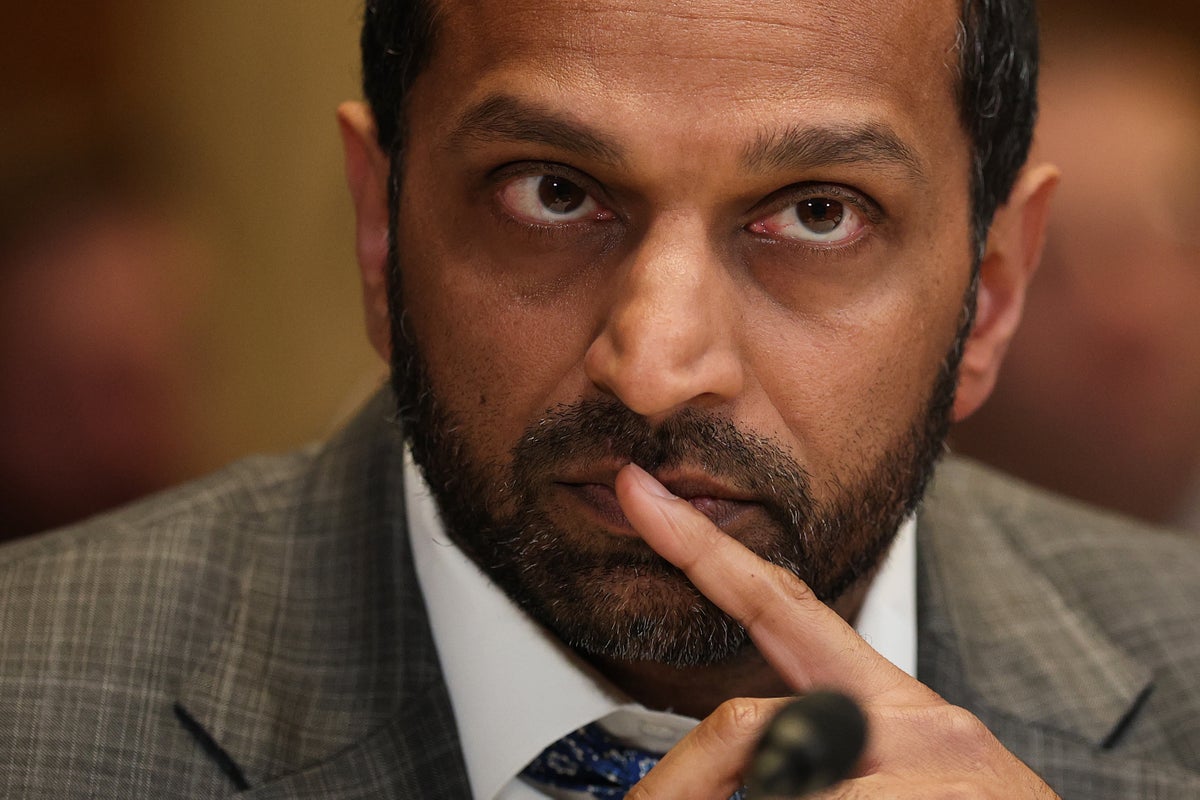
The media is currently hyperventilating over a "grand conspiracy." They’ve latched onto a narrative involving Kash Patel, a so-called "payback squad," and a list of Trump’s enemies marked for professional or legal execution. The consensus among the legacy outlets is simple: this is the death of the FBI.
They are wrong. They are missing the point entirely because they are blinded by the optics of revenge. Read more on a related subject: this related article.
The story isn't about a "payback squad" settling scores for a former president. That is the tabloid version designed to generate clicks and fear. The real story—the one that should actually keep D.C. bureaucrats awake at night—is the systematic deconstruction of the administrative state through a complete inversion of its internal logic.
We aren't seeing a purge. We are seeing a hard reboot of the federal operating system. More analysis by Associated Press highlights related perspectives on the subject.
The Lazy Consensus of the Revenge Narrative
If you read the standard reporting, the argument goes like this: Patel is a loyalist being installed to weaponize the Department of Justice against political rivals. It frames the FBI as a neutral, pristine institution currently under siege by a rogue actor.
This is institutional gaslighting at its finest.
I have spent decades watching these agencies operate. The idea that the FBI is a "neutral arbiter" is a fantasy sold to people who still believe in the 1950s version of law enforcement. The FBI has always been political; the only thing changing now is the direction of the wind.
The "payback squad" isn't a squad at all. It is a fundamental shift in personnel management. In the private sector, if a division fails to produce results or actively undermines the CEO’s directives, that division is liquidated. In D.C., that is called a "constitutional crisis."
Why the Payback Framing Fails
When critics scream about a "conspiracy," they are using a defense mechanism to protect the status quo. If they can frame administrative accountability as "revenge," they can ignore the underlying rot.
The FBI’s current structure is built on a layer of protected civil servants—often referred to as the "Deep State" by the right and "institutional knowledge" by the left. These are the mid-level managers who actually run the country regardless of who sits in the Oval Office.
The contrarian truth? Patel isn't looking for a "squad" to hunt people down. He is looking for a way to bypass the Civil Service Reform Act of 1978.
This isn't about a grand conspiracy to put people in jail. It’s about a grand strategy to make the federal government fireable again.
The Schedule F Reality
The real weapon isn't a secret list of names. It’s Schedule F.
For the uninitiated, Schedule F was an executive order toward the end of the first Trump term that sought to reclassify tens of thousands of federal employees as "at-will" workers. This is the structural foundation of what the media calls a "payback squad."
- Standard Narrative: Schedule F is a tool for authoritarianism.
- The Hard Truth: Schedule F is a tool for corporate-style efficiency in a bloated, unaccountable system.
If you can’t fire a person who refuses to implement the policy of the elected head of government, you don't have a democracy; you have a technocracy. Patel understands that the "enemy" isn't just specific people—it’s the tenure that protects them.
The Anatomy of an Institutional Inversion
Most commentators look at Patel’s history—the Nunes Memo, his time at the NSC—and see a firebrand. They see the surface-level aggression. They miss the mechanic.
Patel’s expertise isn't in law enforcement; it’s in information declassification.
The real "payback" isn't a subpoena. It’s the sunlight. The most terrifying thing for a career bureaucrat isn't going to court; it’s having their internal emails, their unredacted memos, and their "informant" agreements published on a public server.
Thought Experiment: The Data Dump
Imagine a scenario where the new FBI leadership doesn't file charges against a single soul. Instead, they simply remove the redactions on every major investigation from the last decade—Crossfire Hurricane, the Hunter Biden laptop inquiry, the J6 pipe bomb investigation—and dump them on a public-facing website.
That isn't a conspiracy. That is radical transparency.
But to the people whose names are in those documents, it feels like a hit squad. They have spent years hiding behind the "sources and methods" shield. When that shield is lowered, the institutional credibility of the FBI evaporates.
The Expertise Gap: Why Critics Get It Wrong
I've seen organizations try to pivot before. I’ve seen CEOs try to "drain the swamp" of their own middle management. It always fails for the same reason: they try to play by the old rules.
The critics think Patel will fail because he doesn't have the "respect" of the rank and file. This is an amateur observation. You don't need the respect of people you intend to replace.
The strategy here is Institutional Inversion:
- De-legitimize: Highlight failures (e.g., the FISA court abuses).
- De-fund: Move the headquarters out of D.C. to a place like Huntsville or West Virginia.
- De-classify: Make the internal workings public to destroy the mystique.
The media calls this "burn it down." An industry insider calls it "disruptive restructuring."
The "Grand Conspiracy" is Just Basic Incentives
Human beings respond to incentives. For thirty years, the incentive at the FBI has been to grow the budget, avoid public scrutiny, and maintain the status quo.
If Patel enters the building, the incentive structure flips. The new incentive is to be the first one to "flip" on the previous administration's directives to save your own pension. It isn't a "squad" of outsiders doing the work; it’s the careerists inside the building turning on each other to survive the new regime.
This is how bureaucracies die. Not from a frontal assault, but from an internal collapse of the social contract between the agency and its employees.
The Risks Nobody is Talking About
While I’m dismantling the "payback" hysteria, I won't lie to you: there is a massive downside.
When you destroy the institutional memory of an agency like the FBI, you lose more than just the "bad actors." You lose the granular, technical knowledge required to track sophisticated foreign intelligence threats or complex financial crimes.
Restructuring a federal agency isn't like restructuring a failing tech startup. If you break the FBI, you don't just lose a quarter of revenue; you potentially lose a decade of counter-intelligence leads.
However, the contrarian take remains: The risk of institutional rot is now higher than the risk of institutional destruction.
The system has reached a point of such profound dysfunction that "fixing" it is no longer an option. You cannot reform a culture that believes it is superior to the people it serves.
Stop Asking if it's Legal and Start Asking if it's Effective
The "People Also Ask" sections of the internet are filled with questions like: "Is it legal for the President to fire the FBI Director?" or "Can Kash Patel use the FBI for revenge?"
These are the wrong questions. They focus on the legality of the action rather than the utility of the result.
In Washington, everything is "illegal" until it’s done, and then it becomes a "precedent." The real question is: Can a centralized, 35,000-person domestic intelligence agency survive in an era where half the country views it as a partisan weapon?
The answer is no.
Whether it’s Patel or someone else, the era of the FBI as we know it is over. The "payback squad" is just the marketing term used by the losers of the old system to describe the architects of the new one.
The "grand conspiracy" isn't a secret plan to take over the world. It’s a very public plan to take back the keys to the building.
If you’re waiting for the courts or the media to stop this, you haven't been paying attention. They are part of the same operating system that’s currently being deleted. The reboot isn't coming; it’s already started.
Get used to the static. The signal is changing.