When federal prosecutors start dragging a reporter’s mother into a leak investigation, you know the rulebook has been thrown out the window.
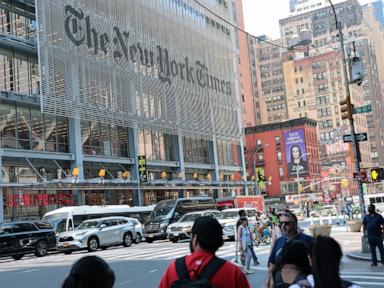
The Justice Department recently served federal grand jury subpoenas directly to New York Times journalists at their personal residences, demanding they reveal the anonymous sources behind an investigative report on security flaws in the new, $400 million Qatari-gifted Air Force One. Days later, court filings revealed an even wilder escalation: prosecutors quietly subpoenaed third-party phone service providers for the call and text records of the journalists, their spouses, and even one reporter's mother—a mental health professional with her own confidential client relationships.
This isn't standard legal procedure. It’s an aggressive show of force aimed at chilling reporting on the executive branch.
The New York Times immediately moved to quash the subpoenas in federal court in Manhattan. Legal counsel for the newspaper called the government's tactics a bad-faith abuse of power that violates internal Justice Department protocols and tramples on basic First Amendment protections.
Understanding what's actually happening here requires looking past the surface argument over classified leaks.
The Air Force One Story That Triggered the Subpoenas
The article at the center of this legal fight seems almost mundane on its face. Reporters detailed how President Donald Trump flew to a NATO summit in Turkey on a retrofitted Boeing 747-8 presented as a gift from Qatar. However, he left the summit on an older Air Force One aircraft.
citing unnamed government and Secret Service sources, the Times revealed that the switch was made because the Qatari-gifted plane lacked critical security features, including advanced anti-missile defense systems.
While the administration initially insisted there were no security concerns, Trump himself gave away the game in remarks to reporters, admitting that the aircraft needed to be sent off for about a month to get "maxed out."
Rather than addressing the reporting, the U.S. Attorney’s Office in Manhattan, led by Jay Clayton, launched a leak investigation. Prosecutors justified the grand jury subpoenas by claiming reporters aren't the primary targets—the government officials who disclosed sensitive information are.
That excuse doesn't hold up once you examine the sweeping scope of the demand.
Breaking Down the Escalation Tactics
Government leak investigations aren't new, but the methods used in this case cross clear lines. The Justice Department didn't just ask for communications related to the published articles. They demanded phone and text records dating back to January 1, 2026—months before the Air Force One story was ever written.
Here is why that timeline matters so much:
- Broad Net Fishing: Demanding half a year of call logs allows the government to map out a reporter's entire network of contacts, not just sources for one specific article.
- Targeting Family Members: Subpoenaing the phone lines of spouses and parents serves no legitimate investigative purpose. It acts as an intimidation tactic designed to make sources think twice before talking to reporters, knowing their private lives will be disrupted.
- Bypassing Department Rules: Under established guidelines updated over the last decade, prosecutors are required to exhaust reasonable alternative investigative steps and provide advance notice to news organizations before grabbing journalists' records. The Times noted that prosecutors waited a week after issuing the third-party subpoenas before providing notification.
When you look at the sequence of events—an eight-hour strategy meeting at the White House involving top DOJ and FBI officials right before the grand jury subpoenas were served—it looks less like a focused leak probe and more like a political campaign against news outlets.
The Constitutional Stakes in Federal Court
The legal fight now rests before U.S. District Judge Arun Subramanian in the Southern District of New York. The Times wants the judge to throw out both the grand jury subpoenas compelling testimony and the third-party requests for phone records.
Under First Amendment case law in the Second Circuit, reporters enjoy qualified privilege that protects their newsgathering activities from arbitrary government intrusion. To overcome that protection, the government must prove three things:
- The information sought is critical to the maintenance of the claim or defense.
- The information goes directly to the heart of the matter.
- The information is not obtainable from any other reasonable source.
The Times argues the government hasn't met any of these hurdles. The administration failed to show that it conducted a serious internal investigation to locate the alleged leaker before hauling reporters into court. Furthermore, if the President publicly confirmed that the aircraft lacks full capabilities and needs to be "maxed out," claiming the story compromised national security becomes a tough argument to win in court.
Executive Editor Joseph Kahn expressed confidence that the newspaper's legal team will prevail, pointing out that federal law protects news gatherers from retaliatory abuse of prosecutorial power.
Why This Fight Matters to Everyone
It's easy to view this dispute as an inside-baseball feud between powerful institutions in Washington and New York. That's a mistake.
Whistleblowers don't come forward if they believe their identity will end up in a government database because a prosecutor seized a reporter’s family phone records. Without confidential sources, the public loses visibility into waste, security flaws, and government misconduct.
When the press is forced to spend millions of dollars fighting off grand jury subpoenas just to cover routine White House operations, the chilling effect spreads to every newsroom in the country. Local outlets and smaller publications simply don't have the legal funds to resist this kind of pressure.
What Happens Next
If you are tracking this case or work in media, compliance, or legal policy, here are the core moves to watch:
- Watch the District Court Ruling: Judge Subramanian's decision on the motion to quash will set the immediate baseline. Pay attention to whether the court addresses the dragnet phone record demands separately from the grand jury testimony requests.
- Track Department Guidelines: Keep an eye on whether the Justice Department attempts to formally rewrite its internal press guidelines to lower the bar for subpoenaing reporters in future leak probes.
- Audit Internal Communications: For media organizations and legal teams handling sensitive sources, this case serves as a blunt reminder to phase out unencrypted phone communications and rely strictly on end-to-end encrypted, zero-log communication channels.