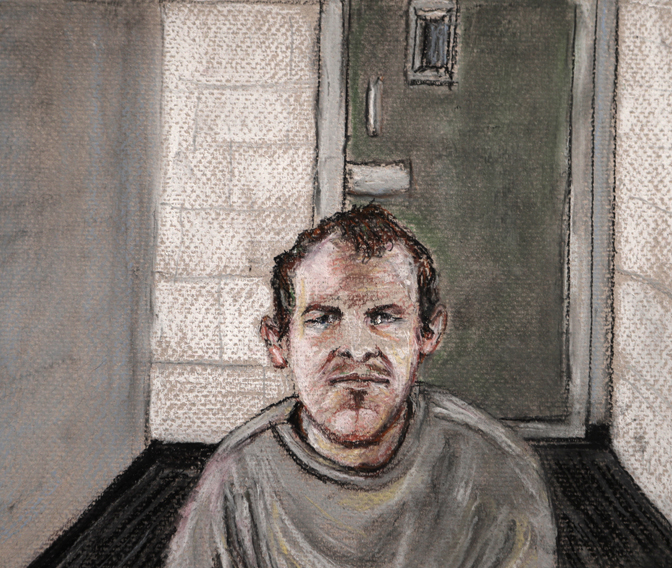
The sentencing of Brenton Tarrant to life imprisonment without the possibility of parole (LWOP) represents the maximum theoretical application of New Zealand's punitive power. While the media often frames this through the lens of emotional closure, the decision functions as a cold calibration of three distinct legal imperatives: the exhaustion of the "Whole-of-Life" provision under the Sentencing Act 2002, the total neutralization of a non-state actor threat, and the permanent removal of the individual from the social contract. This case established the definitive ceiling for sentencing in the South Pacific, moving beyond the traditional 17-to-30-year minimum non-parole periods (NPP) typically seen in the nation’s most severe homicides.
The Statutory Architecture of the Whole of Life Sentence
Section 103 of the Sentencing Act 2002 dictates that a court must impose a minimum term of imprisonment of at least 10 years for murder. However, the 2010 "Three Strikes" legislative environment and subsequent amendments provided the judiciary with the specific mechanism used in the Christchurch case: the ability to deny parole eligibility entirely. This is not a "default" for mass murder; it is a surgical application reserved for crimes that satisfy the "Manifestly Unjust" threshold in reverse—where anything less than a permanent sentence would fail to meet the gravity of the offense.
The court’s logic follows a binary filtration system:
- The Threshold Test: Does the scale of the crime exceed the rehabilitative capacity of the standard life sentence?
- The Utility of Incapacitation: Is the risk to national security or social cohesion so profound that the state cannot risk a reassessment by a Parole Board in 20 or 30 years?
In the Christchurch case, the scale—51 counts of murder and 40 counts of attempted murder—rendered the standard NPP model mathematically and ethically insufficient. Even a consecutive NPP calculation would have resulted in a "virtual life sentence" exceeding a century; the LWOP designation simply formalizes this reality, removing the administrative burden of future parole hearings that would retraumatize the state and the victims.
The Cost Function of High-Security Permanent Detention
The imposition of a life sentence without parole triggers a unique financial and operational trajectory for the Department of Corrections. Unlike standard inmates who transition from high to low security as they approach parole eligibility, an LWOP inmate remains a "static risk" asset.
Infrastructure Allocation
The state must commit to a 40-to-60-year maintenance plan for a single individual. This involves the use of the Prisoners of Extreme Risk Unit (PERU), a facility within the Auckland South Corrections Facility designed to mitigate radicalization and eliminate the risk of the inmate becoming a focal point for external movements. The operational cost per day for such an inmate is significantly higher than the average NZD $330 spent on standard prisoners due to the staffing ratios required for 24-hour isolation and monitored communication.
The Healthcare Liability
Because New Zealand does not have the death penalty, the state assumes the role of a permanent healthcare provider. As the inmate ages, the "Cost of Containment" shifts from security personnel to specialized geriatric medical care within a high-security perimeter. This creates a long-term fiscal obligation that is often overlooked in the immediate aftermath of sentencing. The state has essentially underwritten a multi-million dollar life-support and security contract that spans several decades.
Deterrence Theory vs. Ideological Commitment
The Christchurch sentencing serves as a test case for General Deterrence. Traditional criminology suggests that "Life Without Parole" acts as a deterrent by signaling the total loss of liberty. However, when dealing with ideologically motivated crimes, the efficacy of this deterrent is diluted.
For a perpetrator who views their actions as a catalyst for broader conflict, the trial and subsequent life sentence are often integrated into their internal narrative of "martyrdom" or "political prisoner" status. The court’s strategy, therefore, was not just to punish, but to provide a "Despiritualization of the Act." By treating the crimes as standard—albeit extreme—criminal acts under the Terrorism Suppression Act 2002, the judiciary attempted to strip the ideological "glamour" from the proceedings.
The Burden of the Terrorism Suppression Act
This was the first instance in New Zealand history where the Terrorism Suppression Act 2002 was applied alongside multiple murder charges. This creates a specific legal precedent: the intersection of "mass murder" and "act of terror" now automatically triggers the consideration of the life-without-parole ceiling.
The logistical challenge for the prosecution was to prove "terrorist intent" without giving the defendant a platform to disseminate his ideology. The resulting strategy was a "Silence by Saturation" approach—providing such an overwhelming volume of victim impact evidence and forensic data that the defendant’s political justifications were relegated to the periphery of the legal record.
Security of the State and the Mitigation of Martyrdom
The primary risk following a life-without-parole sentence is the transformation of the inmate from a person into a symbol. The New Zealand intelligence community faces a perpetual task: the monitoring of the "Digital Shadow."
- Communication Interdiction: Every byte of data entering or leaving the cell must be scrubbed to ensure no encrypted messages or ideological "will and testaments" reach the public.
- Physical Segregation: The risk of internal radicalization within the prison population is mitigated by extreme isolation, which in turn raises questions regarding international human rights standards concerning solitary confinement.
The legal framework must balance the "No-Parole" mandate with the Bill of Rights Act 1990, which protects against "cruel, degrading, or disproportionately severe treatment." The state’s defense for the isolation of such an inmate rests on the principle of "Competing Rights"—where the right of the public to be safe from further ideological contagion outweighs the individual’s right to social interaction within the wire.
Logical Extremes in Judicial Discretion
The Christchurch sentence remains an outlier. It occupies a space that New Zealand law previously held in reserve for the theoretical "worst of the worst." By filling this space, the judiciary has defined the boundaries of the law.
Future cases involving multiple homicides will now be measured against the "Christchurch Benchmark." This creates a "Sentencing Creep" risk, where prosecutors may feel pressured to seek life without parole for crimes that, while horrific, do not meet the scale of a mass casualty event. The judiciary must maintain a strict "uniqueness" filter to prevent the inflation of the maximum sentence.
The Strategic Path Forward for Post-Sentencing Management
The state must now pivot from the pursuit of justice to the management of an indefinite biological and ideological asset. The management plan requires:
- De-platforming Enforcement: Ensuring the inmate is never interviewed, never quoted, and never visible to the public for the remainder of their natural life.
- Psychological Profiling: Continuous monitoring to prevent the inmate from self-harming, as a suicide in custody would be interpreted by extremist factions as a failure of state control or a final act of defiance.
- Legislative Fortification: Periodic review of the Terrorism Suppression Act to ensure that the "Life Without Parole" status remains legally robust against future appeals based on international human rights evolving standards.
The Christchurch shooter’s permanent incarceration is not a static event; it is a continuous expenditure of state resources and legal vigilance. The objective is to ensure that while the individual remains biologically alive, their influence is effectively dead, achieving a total "Social Erasure" that mirrors the physical removal from the community.