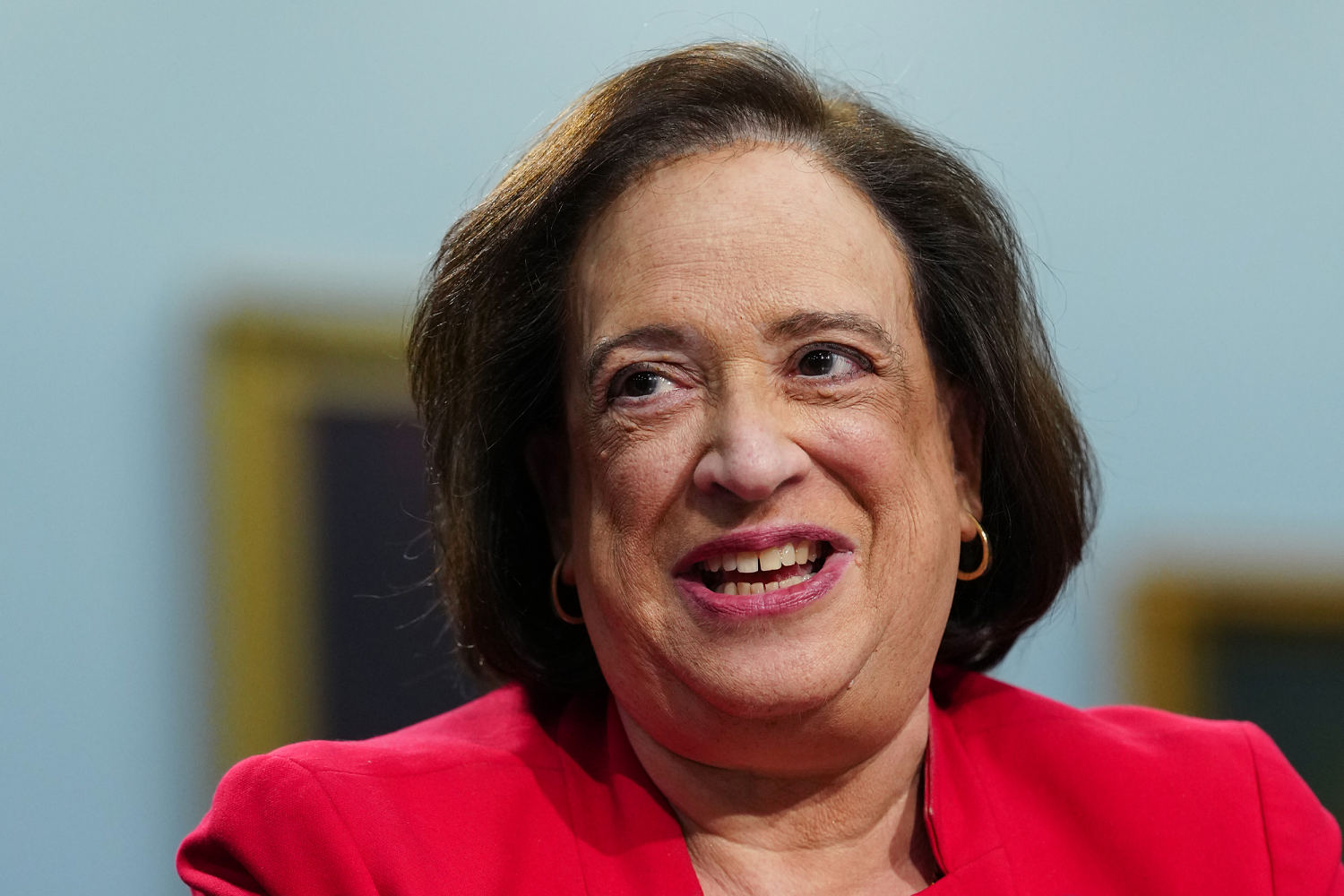
Standard media coverage of judicial clashes over voting rules, redistricting, and campaign finance treats democracy as a static scorecard where one faction wins and another loses. Justice Elena Kagan’s October 2026 remarks at Catholic University’s law school—accusing the Supreme Court’s conservative majority of making the country more polarized and less democratic through rulings on district boundaries, campaign spending, and executive authority—expose the friction inside the modern constitutional order, yet headlines often stop at partisan tallying rather than examining how legal rules alter political incentives. To understand what is actually happening to electoral competition and institutional legitimacy, analysts must separate known doctrinal shifts from educated hypotheses about voter behavior, map the cause-and-effect chains linking court rulings to party strategy, and evaluate the structural trade-offs between judicial restraint and democratic responsiveness.
In this analysis, the core blueprint rests on four linked components: deconstructing the baseline narrative around Kagan’s critique, defining the institutional mechanisms driving electoral polarization, tracing the secondary effects across district design and campaign finance, and testing practical reforms against constitutional and political constraints. You might also find this connected story insightful: Why Huge Reform Donations Look Legally Shaky.
Deconstructing the Competitor Narrative
Typical news coverage of Kagan’s remarks frames the dispute as a straightforward clash between a conservative judicial bloc and a liberal justice defending democratic norms. That framing captures the headline tension but leaves the underlying mechanics vague. Saying a court has "weakened democracy" or "fueled polarization" bundles distinct legal doctrines—such as justiciability limits on partisan mapmaking, narrowing interpretations of Section 2 of the Voting Rights Act, deregulation of party-candidate coordinated spending, and expansion of presidential removal authority—into a single moral verdict.
A rigorous analytical treatment separates what is established from what remains contested or projected: As reported in latest reports by The Washington Post, the effects are widespread.
- Known doctrinal facts: Federal courts stepped away from policing partisan gerrymanders in Rucho v. Common Cause (2019), leaving map challenges primarily to state courts and legislatures. Subsequent litigation—including Louisiana v. Callais in April 2026 narrowing race-conscious districting under the Voting Rights Act, National Republican Senatorial Committee v. Federal Election Commission in June 2026 striking down federal limits on coordinated party-candidate spending, and Trump v. Slaughter in June 2026 expanding presidential removal power over independent agency commissioners—altered the legal rules governing elections and executive accountability. Kagan herself noted in October 2026 that the majority has not acted as a rubber stamp on every executive initiative, pointing to pushback on tariffs, birthright citizenship, and mail-in ballot rules.
- Educated hypotheses about political effects: Claiming that a specific ruling caused higher mass polarization or lower voter trust requires isolating judicial doctrine from media ecosystems, economic grievances, party realignments, and demographic sorting. Political scientists and legal scholars can trace plausible incentive shifts, but attributing macro-level voter sentiment to judicial decisions alone involves causal inference rather than direct measurement.
- Operational blind spots in standard reporting: Headlines rarely ask how a rule change alters strategic behavior inside state legislatures, party committees, and the White House. Without tracking those feedback loops, readers see isolated court losses instead of a shifting operating environment for elections and governance.
The Three Pillars of Electoral Rule Shifts
To move past partisan slogans, evaluate how judicial rules affect democracy across three operational pillars: map control, capital allocation, and executive reach. Each pillar governs a different lever of political competition, and together they shape who runs, which districts are competitive, and how much power sits in the presidency.
Map Control and Redistricting Incentives
Redistricting determines the partisan baseline of a district before a single ballot is cast. When federal courts decline to adjudicate partisan gerrymandering claims, as in Rucho, mapmakers face fewer federal judicial constraints when drawing lines to favor their party. At the same time, narrowing the scope of race-conscious districting—as seen in Louisiana v. Callais—changes how states balance racial minority representation against partisan advantage when redrawing maps.
Consider a simplified state legislature drawing ten congressional districts where one party holds a unified trifecta. Under a strict federal judicial backstop against extreme partisan packing and cracking, cartographers must defend lines against federal constitutional or statutory challenges. Once federal courts exit partisan gerrymandering review and tighten standards for race-based map adjustments, the binding constraint shifts toward state constitutional provisions, state courts, and naked electoral risk.
The first cause-and-effect chain runs through primary election math. When a legislative majority concentrates opposing voters into fewer districts and spreads its own supporters efficiently across safer seats, general elections in those safe districts become non-competitive. In districts where the general election is effectively decided in the party primary, candidates face stronger incentives to appeal to high-turnout partisan activists rather than median general-election voters. Kagan described this dynamic in October 2026 as a "race to the bottom" in redistricting. That phrase captures a real strategic trap: even parties that dislike extreme maps feel compelled to draw aggressive ones defensively when rivals do so.
Capital Allocation and Campaign Finance
The second pillar is how money enters and moves through campaigns. In National Republican Senatorial Committee v. Federal Election Commission (June 2026), the Supreme Court struck down federal limits on political parties’ coordinated spending with candidates. Combined with heavy outside spending from super PACs in high-stakes races, removing coordinated spending caps changes the organizational division of labor in campaign operations.
The second cause-and-effect chain involves message discipline and donor leverage. When party committees can coordinate directly with candidates without federal dollar caps on that coordination, national and state party organizations gain tighter operational alignment with nominees. That can streamline media buying, field operations, and rapid response. Yet it also concentrates influence among major donors and party fundraisers who supply those war chests, reinforcing voter perceptions—highlighted in Kagan’s remarks—that campaign finance heavily shapes political outcomes.
Executive Reach and Institutional Checks
The third pillar extends beyond ballot rules into executive governance. In Trump v. Slaughter (June 2026), the Court’s conservative majority struck down statutory protections against firing Federal Trade Commission commissioners without cause, expanding presidential control over independent agencies. Kagan pointed to this decision alongside election rulings when criticizing how the Court’s approach affects the system.
The third cause-and-effect chain connects administrative authority to electoral stakes. When a president can remove agency heads at will rather than only for inefficiency, neglect of duty, or malfeasance, the executive branch gains sharper control over regulatory enforcement, investigations, and administrative rulemakings. Raising the stakes of winning the presidency intensifies zero-sum competition at the top of the ticket, while reducing independent institutional buffers can make policy swings sharper from one administration to the next.
The Cost Function of Judicial Restraint vs. Intervention
Critics and defenders of the Supreme Court often argue past each other because they optimize for different institutional risks. Treating judicial review as an optimization problem with real trade-offs clarifies why reasonable jurists and analysts reach opposing conclusions.
From a judicial restraint and originalist or text-focused perspective, unelected judges lack a clear constitutional formula to decide what constitutes a "fair" amount of partisan advantage in district lines. Proponents of that view argue that inventing judicial standards for partisan fairness pulls courts into inherently political line-drawing, erodes neutral legal rules, and leaves electoral remedies to voters, state courts, and legislatures. They also note that the conservative majority has not uniformly sided with executive power on every disputed issue, citing pushback on tariffs, birthright citizenship, and certain mail-ballot disputes.
From a democratic-process and representation perspective, stepping back from policing electoral rules creates a structural asymmetry. Elected officials who draw their own districts or set campaign rules have a built-in conflict of interest when entrenching themselves or their party. When federal courts narrow statutory voting protections or step out of partisan map disputes while expanding executive authority, critics argue that the democratic self-correction mechanism weakens—making voters less able to dislodge entrenched power through ordinary elections.
Neither posture eliminates institutional cost:
- Over-intervention risk: If judges impose subjective fairness metrics on district maps or micromanage political campaigns without clear statutory or constitutional text, the Court risks appearing partisan itself, damaging its institutional legitimacy.
- Under-intervention risk: If judges treat electoral manipulation or severe distortion of representation as purely political questions beyond judicial reach, entrenched majorities can insulate themselves from electoral accountability, increasing pressure outside ordinary channels.
Why Voters and Strategists Misread the Signal
Public commentary frequently treats every Supreme Court term as a permanent verdict on American democracy. That reading overstates finality in two ways. First, Congress and state legislatures still possess real statutory and structural levers—even when constitutional boundaries narrow what federal courts will enforce. Second, litigation over maps, voting administration, and emergency orders unfolds continuously across state courts, federal appellate circuits, and subsequent Supreme Court terms, as seen in late-2026 redistricting and ballot disputes.
Another common mistake is conflating representation outcomes with procedural legality. A district map or campaign spending rule can be legally permissible under a given court ruling while still producing uncompetitive seats, high campaign costs, or intense public frustration. Confusing those two categories leads advocates to demand constitutional miracles from courts and leads analysts to overlook state-level tools that actually work.
Tactical Playbook for Reformers, Legislators, and Strategists
Anyone trying to strengthen electoral competition or institutional accountability after the 2026 rulings needs a disciplined sequence rather than broad complaints. The bottleneck is rarely a lack of rhetoric; it is misallocated effort across venues that have different legal authority.
- Audit state-level constitutional and statutory levers first. Because federal courts have restricted federal review of partisan gerrymandering, state constitutions, state supreme courts, independent or balanced redistricting commissions, and state campaign-finance or disclosure laws carry heavier operational weight than federal litigation in many states.
- Draft clear, administrable statutory standards when legislating. Laws governing voting access, redistricting criteria, and agency structure are far more resilient when written with explicit standards, severability clauses, and concrete evidentiary records rather than vague policy goals that invite aggressive narrowing or invalidation.
- Separate emergency-docket battles from merits strategy. Emergency applications move fast, often with compressed briefing and incomplete records, while merits cases shape long-term doctrine. Treating an interim order as the final word wastes resources; build clean factual records for full merits review while contesting immediate harm on emergency motions.
- Target low-information, high-friction voting mechanics. Where statewide legislative overhauls stall, targeted improvements in voter registration accuracy, clear ballot instructions, polling-place staffing, and transparent administration reduce friction without requiring sweeping doctrinal shifts.
- Measure competitiveness and turnout, not just headline rulings. Track how many legislative and congressional seats are genuinely contested, how primary turnout compares to general turnout, and how independent voters engage—metrics that reveal whether electoral incentives are opening up or narrowing.
Limitations and Failure Modes
No legal or strategic playbook is a silver bullet. State constitutional challenges can fail before conservative or deferential state benches, and ballot initiatives face strict signature thresholds, spending counter-campaigns, and post-passage legislative pushback. Even well-drafted federal statutes can be struck down or narrowed if a court majority views them as exceeding congressional power under the Elections Clause, Enforcement Clauses, or Article II. Finally, changing map rules or campaign spending limits cannot by itself heal deep cultural and media polarization if voters already sort into opposing camps before campaigns begin.
The Strategic Play
Do not build a long-term democratic strategy around waiting for a future Supreme Court shift to reverse recent doctrines on redistricting, campaign finance, or executive power. Instead, concentrate organizational capital on state-by-state institutional hardening: codify non-partisan or multi-member map criteria in state law where politically feasible, enforce strict public disclosure and transparency rules around political spending, and build durable local civic and election-administration capacity that functions regardless of which party holds a temporary legislative or judicial advantage. Over the next electoral cycle, durable advantage will belong to whichever side pairs clear statutory drafting and state-level execution with disciplined coalition building—not the side that treats every court ruling as the end of the game.