Silence.
That is the first thing you notice when a government collapses—not the gunfire, not the sirens, not the roar of a million throats tearing down the statues of a fallen regime, but the terrifying, suffocating vacuum that rushes in the second the strongman boards the helicopter.
In August 2024, Dhaka was drowning in that vacuum. Prime Minister Sheikh Hasina had just fled the country, ending fifteen years of iron-fisted rule after weeks of student-led protests that left hundreds dead in the streets. The palaces were breached. The police had vanished from their posts, terrified of retribution. Millions of people stood in the humid August heat, euphoric and petrified in equal measure, staring at an empty chair at the center of a nation of 170 million souls.
Someone had to sit in it. And according to accounts later published by international outlets including Agence France-Presse (AFP) and corroborated by key participants in the transition, one of the unlikely brokers who helped bridge the chasm between furious student revolutionaries, a nervous military, and an eighty-four-year-old Nobel laureate in Paris was a veteran journalist working inside the very newsroom covering the chaos.
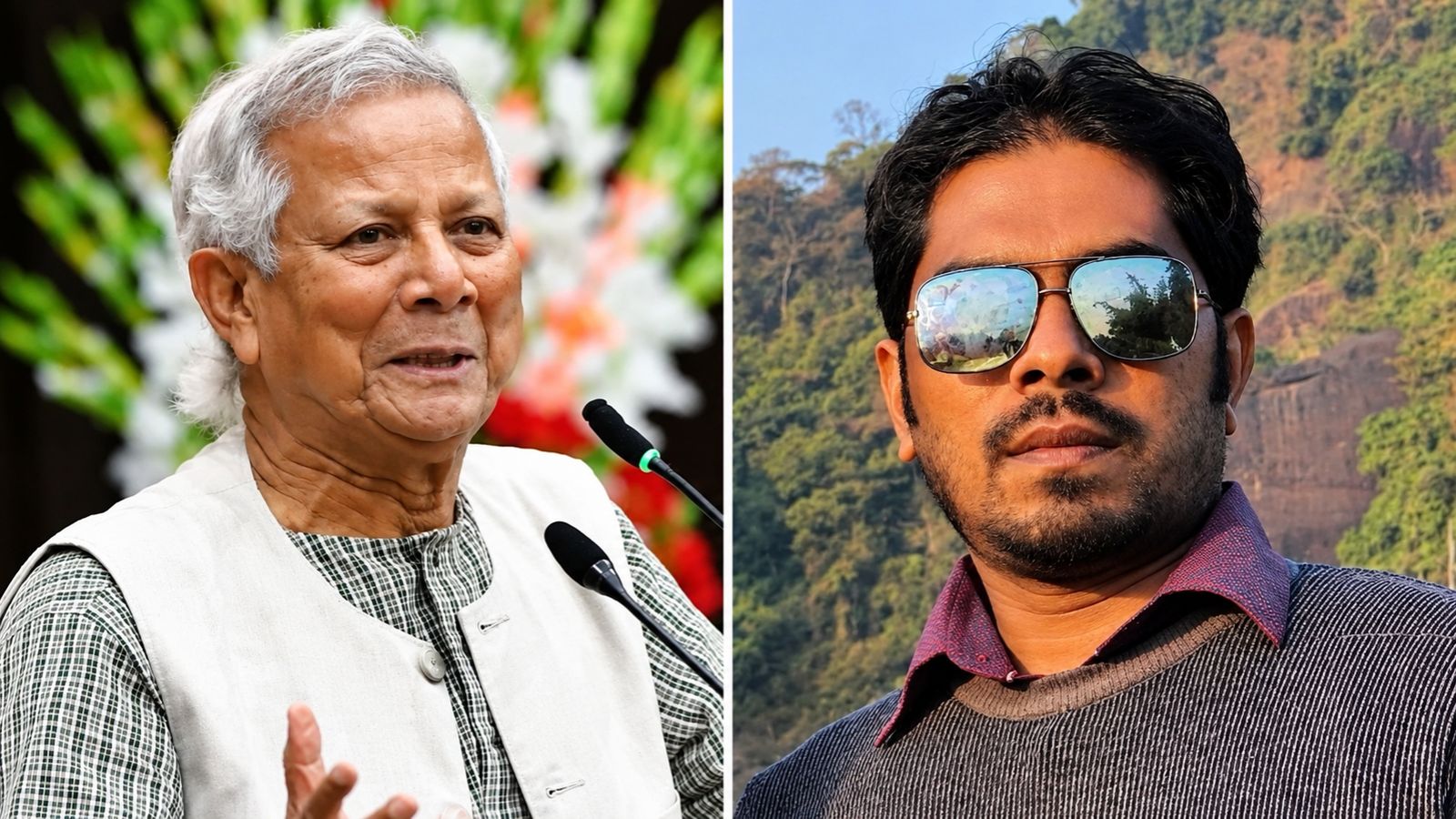
His name is Shafiqul Alam. For two decades, he had been the Dhaka bureau chief for AFP, a man whose professional religion was supposed to be cold, detached observation. Yet in the frantic hours between August 5 and August 8, 2024, as Bangladesh teetered on the edge of civil war or a return to military dictatorship, the boundary between recording history and making it dissolved entirely.
The Anatomy of a Vacuum
To understand why a reporter’s phone became a switchboard for national survival, you have to understand what happens when institutions are hollowed out from the inside.
Think of a modern democracy like a suspension bridge. The cables are the courts, the civil service, the election commission, and the press. When a leader spends fifteen years systematically cutting those cables to ensure only one pillar holds the weight, the structure looks invincible—right up until the moment that single pillar snaps. Then, there is nothing left to catch the fall.
By the afternoon of August 5, 2024, Bangladesh had no functioning parliament, no trusted judiciary, and no police force willing to put on a uniform. Army Chief General Waker-Uz-Zaman appeared on state television to announce Hasina’s resignation and promise an interim government. To the students who had bled on the asphalt of Dhaka University, those words sounded dangerously familiar. Bangladesh has a long, bruised history of military coups dressed up as temporary caretakers.
I remember watching the live feeds from Dhaka that week, feeling the familiar knot in my stomach that comes whenever a popular uprising hits the wall of the morning after. Toppling a ruler takes courage; building a state before sundown takes miraculous luck. The students had moral authority, raw grief, and total control of the streets. What they did not have was a roadmap, an administrative apparatus, or a direct line to the global capitals whose recognition would keep the country’s garment factories running and its food imports flowing.
They needed a figurehead who was untouchable at home and revered abroad. They needed Muhammad Yunus.
A Phone Call Across Continents
Yunus, the economist who pioneered microcredit through Grameen Bank and won the 2006 Nobel Peace Prize, was in Paris for medical treatment and the Summer Olympics. Under Hasina’s government, he had been subjected to more than a hundred criminal and civil cases—prosecutions that human rights groups and international observers widely condemned as politically motivated harassment. At eighty-four, recovering from a minor medical procedure, he was thousands of miles away from the tear gas and the burning police stations.
As later detailed in reporting by AFP and interviews given by Alam after he left journalism to become press secretary to the interim government, the student coordinators—led by figures like Nahid Islam and Asif Mahmud—reached out to Yunus through intermediaries to beg him to lead an interim administration.
Here is where the story shifts from a standard political transition into something closer to a thriller.
Shafiqul Alam was not a shadowy intelligence operative. He was a working journalist who had spent years cultivating sources across every faction of Bangladeshi society: student activists, opposition politicians, military officers, diplomats, and Yunus himself. Because AFP was an international wire service, Alam possessed something almost nobody else in Dhaka had during the government’s frequent internet blackouts and security crackdowns—credibility, encrypted channels, and the trust of both the street and the elite.
According to Alam’s own subsequent accounts and AFP’s retrospective reporting on his role, student leaders turned to him during those chaotic hours because they knew he had direct access to Yunus and understood how the international community would react to their choices. At the same time, Yunus needed unvarnished, ground-truth intelligence from someone who was not trying to sell him a political fantasy.
Consider the stakes of those conversations. If Yunus said no, the student movement risked fracturing into competing factions while hardliners in the military or opportunistic political parties moved to seize the wreckage. If Yunus said yes without ironclad guarantees from the army, he could fly back to Dhaka only to become a powerless prisoner in a gilded cage.
The Invisible Line
Let us pause here and look squarely at the discomfort at the heart of this story.
In journalism school, we are taught that reporters are stenographers of history, never its authors. You do not advise the sources. You do not carry messages between revolutionaries and generals. You do not help assemble a cabinet. When a journalist steps across that line, critics rightly ask whether objectivity has been traded for activism.
It is a fair question, and pretending it is simple would be dishonest. Even within AFP, Alam’s dual role during the transition became a subject of intense internal scrutiny once it came to light, ultimately leading to his departure from the agency and his formal appointment as press secretary to Yunus’s interim government.
Yet standing in a pristine newsroom in London or New York and lecturing a Dhaka reporter on textbook neutrality is easy when your own neighborhood is not burning. Imagine a hypothetical parallel: picture a veteran correspondent in a city where the fire department has disbanded, the mayor has fled, and two armed crowds are converging on the central square. If both sides trust only that reporter’s phone number to negotiate a ceasefire before midnight, does the reporter hang up to protect a purity code, or does he connect the call?
History rarely offers clean choices. In Dhaka during those seventy-two hours, institutional neutrality had already been obliterated by decades of authoritarian polarization. State media had functioned as a propaganda arm; independent outlets had been bullied into self-censorship. In that ruined information ecosystem, a veteran wire correspondent was one of the last remaining bridges still standing.
Negotiations in the Smoke
Between August 5 and August 8, while crowds still roamed the streets of Dhaka and minority communities feared retaliation in the absence of law enforcement, frantic negotiations unfolded behind closed doors and over encrypted messaging apps.
Student coordinators insisted they would not accept a military-led government or a caretaker cabinet staffed by traditional political insiders. They wanted Yunus as Chief Adviser—the equivalent of prime minister—and they wanted seats at the table for their own representatives.
Alam acted as a vital conduit during this window. He relayed the urgency and non-negotiable demands of the student leaders to Yunus in Paris, helping convince the reluctant octogenarian that he was the only person capable of preventing bloodshed and stabilizing the country. Simultaneously, Alam helped communicate Yunus’s conditions back to the organizers in Dhaka: if he was going to take the helm, he needed real authority to reform broken institutions, not merely a ceremonial title.
Look at the sheer human weight resting on those exchanges. Yunus was eighty-four years old, frail enough to require medical care in France, being asked to walk into the center of a volatile, traumatized nation with an empty treasury and an angry populace expecting miracles by Tuesday. The student leaders were twenty-somethings who had spent weeks dodging live ammunition, suddenly tasked with choosing ministers for a country larger than Russia in population.
One miscommunication, one leaked rumor of a military double-cross, and the fragile consensus could have evaporated overnight.
The Landing
On August 8, 2024, Muhammad Yunus stepped off a flight at Hazrat Shahjalal International Airport in Dhaka.
Watch the footage from that afternoon and you see the exhaustion etched into every line of his face. His voice broke as he spoke to the cameras, honoring Abu Sayed, the unarmed student whose fatal shooting by police in Rangpur had become the defining symbol of the uprising. Hours later, at the Bangabhaban presidential palace, Yunus took the oath of office as head of Bangladesh’s interim government, flanked by student leaders, civil society veterans, and military brass.
Days later, Shafiqul Alam traded his press badge for a government title, formally becoming Chief Adviser Yunus’s press secretary. For critics of the transition, the appointment confirmed suspicions that the media had been an active participant in the regime change. For defenders, it was the transparent culmination of a crisis in which a lifelong Bangladeshi patriot stepped up when his country had no safety net left.
Both perspectives hold a piece of the truth. Journalism loses something precious whenever a reporter crosses into the corridors of power, because readers are left wondering where reporting ended and advocacy began. At the same time, revolutions do not wait for neat ethical frameworks. They happen in the dark, carried forward by flawed, improvised human connections when every official channel has snapped.
What Remains After the Sirens Fade
A year and more into the aftermath of August 2024, Bangladesh’s hard work—rebuilding courts, stabilizing an inflation-battered economy, preparing for credible elections—proved far slower and messier than the euphoria of liberation. No single leader, not even a Nobel laureate, can erase fifteen years of institutional decay with a signature.
Still, the country did not descend into the full-scale civil war that diplomats quietly dreaded on the night of August 5. The transition held because a handful of people refused to let the vacuum swallow the nation whole.
Somewhere in the archives of Dhaka’s turbulent summer, there is no monument to a frantic phone call made between a humid newsroom and a Paris hospital room. History books prefer marble statues, signed treaties, and sweeping speeches delivered from balconies.
Yet when the lights go out in a capital city and the strongman’s helicopter disappears into the clouds, the fate of millions rarely turns on grand speeches. It turns on whose number still works in the dark, and who is willing to pick up the phone.