Hollywood loves a redemption narrative almost as much as it loves a calculated financial gamble. When Paramount Pictures locked down Johnny Depp to star as the eponymous miser in Ebenezer: A Christmas Carol, directed by horror auteur Ti West, studio executives were not merely greenlighting a seasonal dark fantasy. They were executing a high-stakes stress test on the modern box office's appetite for rehabilitated star power. Scheduled for a November 13, 2026 release, this project represents Depp's first major studio vehicle since his bruising, highly publicized legal battles upended his standing inside the major studio ecosystem.
The industry whisper network spent years claiming that a multi-studio boycott would keep Depp permanently exiled to European indie productions and self-funded passion projects. Cash-conscious executives in Los Angeles watched from a distance as independent efforts like Jeanne du Barry played out overseas, treating the actor's marquee value as radioactive material. Yet studio calculus shifts rapidly when bottom lines demand reliable global attention. Paramount's decision to hand the keys of a major holiday tentpole to an actor dogged by years of reputational fallout is a clear signal. Major studios care significantly less about courtroom transcripts than they care about international opening weekends. For a more detailed analysis into similar topics, we suggest: this related article.
The Director Choice Changes the Equation
Casting Johnny Depp is only half of the strategic equation. Tying him to Ti West—the mind behind the gritty horror trilogy consisting of X, Pearl, and MaXXXine—transforms this familiar Charles Dickens adaptation into something far riskier than a standard holiday crowd-pleaser. West does not operate in the sanitized, family-friendly space traditionally occupied by holiday ghosts and spectral chains. By injecting a distinct gothic sensibility and visceral edge into the narrative, the production shifts away from predictable holiday sentimentality.
This creative direction serves a double purpose for the studio. First, it differentiates the project from the dozens of recycled adaptations gathering dust in cinematic history. Second, it provides a stylistic shield for its lead actor. Placing Depp inside a stylized, dark fantasy horror-adjacent framework allows him to lean into the eccentric, heavily costumed character acting that defined his peak commercial era. Instead of asking audiences to accept him as an ordinary everyman, the film leans straight into the grotesque and the theatrical. For additional context on this issue, detailed coverage can be read on IGN.
The supporting ensemble further anchors the financial viability of the project. Surrounding Depp with an elite roster featuring Ian McKellen as Jacob Marley, Rupert Grint as Bob Cratchit, and Daisy Ridley alongside Andrea Riseborough mitigates the risk profile. If public backlash threatens to alienate core demographic sectors, the sheer prestige of the supporting players broadens the marketing appeal. This is an insurance policy cast in platinum.
Reading the Trailer Reception
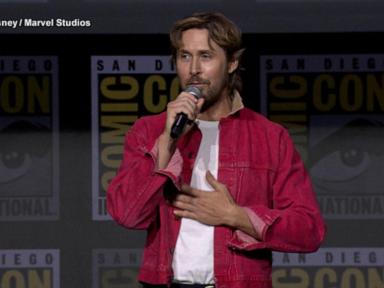
Marketing rollouts for tentpole features are meticulously calibrated barometers of public sentiment. When Paramount dropped the first teaser and rolled out Depp for a surprise, in-character appearance at San Diego Comic-Con, digital analytics teams monitored every click, share, and comment thread across social media platforms. Within forty-eight hours, the trailer cleared millions of views, accompanied by an overwhelming wave of positive fan engagement.
Trade publications quickly noted that the comment sections leaned heavily toward unconditional approval. For years, industry analysts debated whether the fierce loyalty of the actor's online fanbase could translate into tangible ticket sales. Trailer metrics suggest that the core constituency remains fiercely active and eager for his return to a major studio screen.
Yet online enthusiasm does not automatically guarantee mainstream crossover success. General audiences who sit outside the digital fandom ecosystem present a different set of variables. Box office analysts point out that family audiences and older demographics—traditional mainstays for holiday releases—tend to evaluate films based on broad word-of-mouth rather than internet mobilization. The studio must convince ticket-buyers who drifted away during the legal controversies that this specific gothic interpretation warrants a trip to the multiplex.
The Economic Reality of Studio Risk
Modern Hollywood operates on a tightrope of intellectual property management and risk aversion. Original concepts struggle for greenlights, forcing studios to rely on recognizable titles like A Christmas Carol to anchor massive budgets. Pairing a century-old literary property with a lightning-rod performer is an aggressive way to manufacture urgency in a marketplace saturated with franchise fatigue.
If Ebenezer performs well commercially this November, it will rewrite the playbook for how Hollywood handles talent rehabilitation. It will prove that a sufficiently distinct creative vision combined with global brand recognition can override off-screen controversies. Other studios watching from the sidelines will quickly abandon their hesitation, opening doors for additional high-profile returns.
Conversely, a soft box office performance will validate the fears of conservative financiers who believe that certain actors carry baggage too heavy for general audiences to bear. The financial exposure is shared, but the cultural referendum rests squarely on the shoulders of the leading man. As the winter release date approaches, Hollywood is watching closely to see if the ghosts of the past can be exorcised by a single weekend of ticket sales.