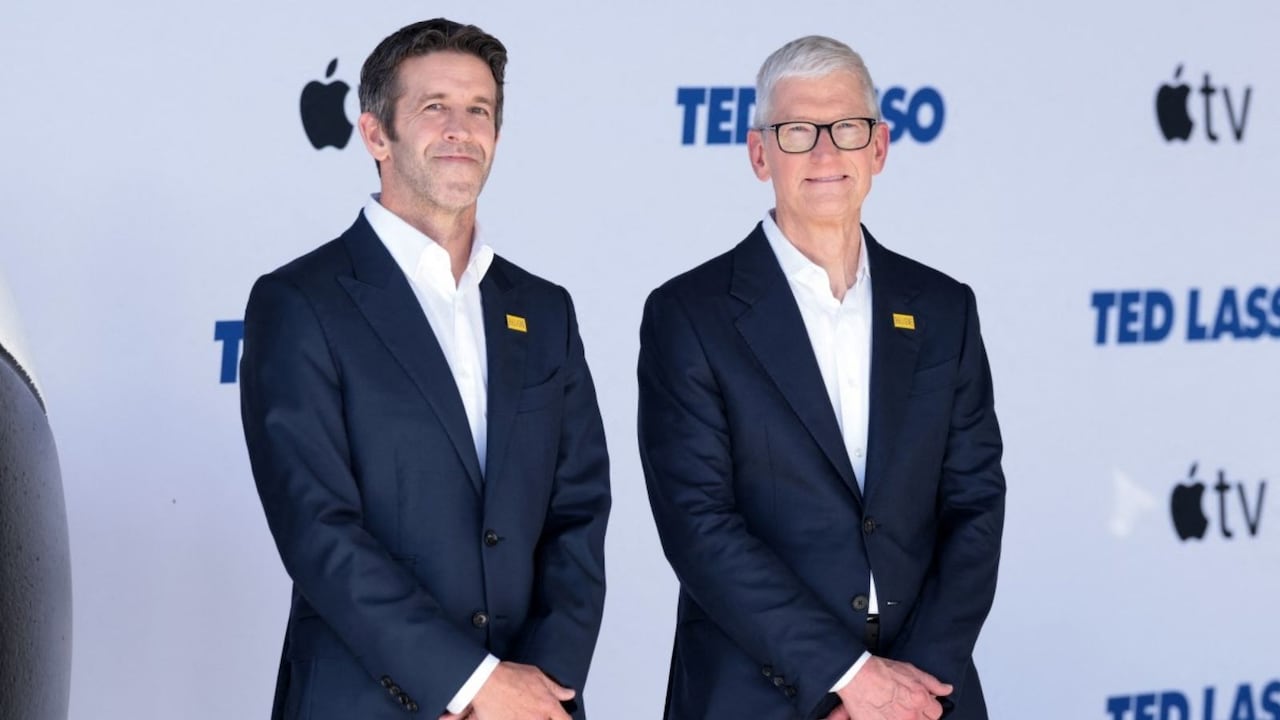
Tim Cook is stepping down as Chief Executive Officer of Apple, handing the reins of the four-trillion-dollar machine to longtime hardware engineering chief John Ternus. After a fifteen-year tenure that multiplied annual revenue fourfold and turned the services ecosystem into a financial juggernaut, Cook moves upstairs to executive chairman. Ternus takes control at a moment of profound vulnerability. Silicon Valley is scrambling through an artificial intelligence transition that threatens to render traditional smartphone operating systems obsolete. Apple did not pick a supply chain accountant this time. They picked a product builder.
The transition breaks a long-standing corporate pattern. When Steve Jobs handed power to Cook in 2011, the priority was operational mastery. Apple needed a leader who could manage unprecedented manufacturing scale, squeeze inventory bottlenecks, and protect profit margins across dozens of global markets. Cook delivered beyond Wall Street's wildest projections. Under his watch, the company built a services business rivaling Fortune 500 giants while anchoring hardware assembly deeply into international supply chains. Yet, that very operational triumph created blind spots. As machine learning models and ambient neural processing began dictating consumer hardware preferences, Apple found itself reacting rather than defining the category.
The Engineering Pivot
Ternus represents a calculated ideological swing back toward product-first governance. Having overseen hardware engineering since 2021, his fingerprints are all over recent device architectures, from iPad Pro redesigns to the transition toward proprietary silicon.
An operations leader asks how cheaply a component can be built and shipped. An engineer asks how fundamentally the device experience can be transformed.
Apple's artificial intelligence strategy has faced persistent skepticism from industry analysts who view the company's localized approach as overly cautious compared to cloud-heavy competitors. Siri enhancements and on-device machine learning models require a tight integration between silicon design and neural software architecture. By elevating Ternus, the board is signaling that future device differentiation will not come from incremental software tweaks or expanded services subscriptions alone. It must emerge directly from the metal.
Consider the hardware constraints facing modern mobile computing. Thermal dissipation limits, battery chemistry stagnation, and local neural processing unit demands are colliding. Software algorithms alone cannot solve the physical reality of running massive language models inside a pocket-sized chassis without draining power in minutes. Ternus understands the physical trade-offs of silicon packaging and thermal engineering better than anyone else in the Cupertino executive suite. His promotion suggests that Apple intends to solve its intelligence deficit at the hardware level, embedding dedicated processing layers directly into future form factors.
Navigating the Geopolitical Tightrope
The new chief executive inherits more than a product roadmap. He inherits a geopolitical minefield. Cook spent decades cultivating relationships in Washington and Beijing, navigating trade tariffs, manufacturing diversification into India, and strict regulatory compliance across Europe. While Cook will retain a supervisory hand in government relations as executive chairman, the day-to-day pressure now falls squarely on an executive whose career has been spent inside clean rooms and design labs rather than diplomatic corridors.
Supply chain geography remains intensely volatile. Moving massive production volume away from single-region concentration requires intense capital expenditure and operational grit. Ternus must maintain manufacturing momentum while simultaneously supervising a complete overhaul of consumer electronics categories. Rumors surrounding upcoming foldable form factors and advanced spatial computing iterations mean the hardware pipeline is heavier than at any point since the launch of the original iPhone.
The Danger of Nostalgia
Wall Street loves a familiar narrative. Pundits are already framing the shift as a return to the golden age of Steve Jobs, assuming that an engineering background automatically translates into visionary product disruption. That assumption ignores market reality. Apple is no longer an underdog insurgent fighting for survival in a personal computer market. It is a mature utility whose installed base exceeds two and a half billion active devices.
When a company reaches this scale, radical experimentation carries existential financial risk. A miscalculated hardware bet or a clumsy artificial intelligence rollout can trigger billions in lost market capitalization within hours. Ternus cannot afford the luxury of wild, unstructured experimentation. He must balance the methodical discipline instilled by his predecessor with the urgent agility demanded by modern software competitors.
The transition is absolute, but the margin for error is razor-thin. Apple's next decade will not be defined by how many services subscriptions it can bundle into a monthly fee, but by whether its hardware can remain indispensable in an era where screens matter less than ambient intelligence. Ternus has the technical pedigree to build the machine. Whether he can steer it through its most turbulent paradigm shift remains the defining question of modern corporate leadership.