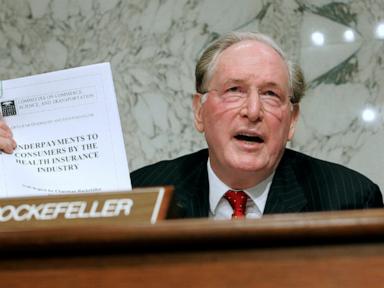
Jay Rockefeller is gone at 89, and honestly, it feels like the end of an era that nobody in modern American politics really knows how to replicate. John Davison "Jay" Rockefeller IV died on November 6, 2026, at his home in Washington, D.C., closing out a life that stretched from Standard Oil privilege in New York to nearly fifty years of public service in one of America's toughest, poorest states.
People love a neat story, and Jay Rockefeller gave them one of the wildest contradictions in recent political history. Here was a man born in June 1937—just weeks after his great-grandfather John D. Rockefeller died—who could have lived anywhere, done anything, and stayed safely inside his family's Republican, Manhattan-and-executive-suite orbit. Instead, he arrived in rural Emmons, West Virginia, in 1964 as a Volunteers in Service to America (VISTA) worker, switched parties to become a Democrat, and spent decades fighting for working families, miners, kids' health coverage, and tougher oversight on intelligence and commerce.
If you're searching for what happened to him, the short answer is simple: he passed away at 89 after serving two terms as West Virginia's governor (1977–1985) and five terms in the U.S. Senate (1985–2015). Yet reducing his life to a headline about a wealthy heir who went to West Virginia misses why his career still stirs debate, respect, and even a bit of frustration today.
How a Rockefeller Became a West Virginia Institution
Outsiders often assume a famous surname buys instant loyalty. That's rarely true in Appalachian politics, and it definitely wasn't true in 1960s West Virginia.
When Rockefeller showed up in rural hollows as a VISTA volunteer, locals didn't automatically hand him their trust. He had to prove he wasn't treating their hardship like a summer project. When he lost the 1972 gubernatorial race to Republican Arch A. Moore Jr. by roughly 72,000 votes, plenty of pundits figured he'd pack up and go back to a comfortable life elsewhere. He didn't. He served as president of West Virginia Wesleyan College from 1973 to 1975, stayed put, ran again, and won the governor's mansion in 1976.
Even his uncle Nelson—who served as New York's governor and U.S. vice president—offered him a path back into the family's political lane after Robert F. Kennedy's assassination in 1968, reportedly dangling a vacant Senate seat if Rockefeller would switch back to the GOP. Rockefeller turned it down. That choice wasn't just theatrical rebellion. It anchored him to a state whose economy was about to get hammered.
Governing Through Brutal Economic Shifts
Being governor between 1977 and 1985 wasn't a ribbon-cutting gig. Manufacturing plants closed, coal demand swung hard, and during the early 1980s recession, West Virginia's unemployment rate hovered between 15% and 20%.
I've watched plenty of leaders struggle when old industries dry up while new ones haven't arrived yet. Rockefeller pushed hard to diversify West Virginia's economy—including taking heat early on for advocating a state trade office in Nagoya, Japan, a move that helped pave the way for Toyota's manufacturing presence in Putnam County years later and eventually earned him Japan's Grand Cordon of the Order of the Rising Sun. Still, governing through mass layoffs and budget strain leaves scars. Supporters saw a determined leader trying to drag the state forward; critics and coal executives sometimes argued he was out of touch or overly aggressive on certain fronts.
Health Care, Coal Miners, and Senate Clout
Once Rockefeller entered the U.S. Senate in 1985, he found his real legislative sweet spot. Over thirty years—and five Senate wins—he chaired major committees, including Commerce, Science, and Transportation, Intelligence, and Veterans' Affairs, while playing a central role on the Finance Committee.
His biggest imprint was on health care. Rockefeller treated health coverage as a basic right rather than a perk tied to luck or zip code. He was a driving force behind the Children's Health Insurance Program (CHIP), created in 1997 to cover millions of kids whose families earned too much for Medicaid but couldn't afford private plans. You can learn more about how the program operates today through Medicaid.gov's CHIP overview.
He also fought to protect retired coal miners' health and pension benefits—legislation often called the Rockefeller Coal Act—and pushed back against attempts to gut Medicare and Medicaid. Yet his relationship with coal wasn't blind loyalty. In 2012, he angered coal executives by opposing Republican efforts to block Environmental Protection Agency rules on power-plant emissions. That tension captured the bind West Virginia Democrats faced for years: trying to protect workers and public health without pretending fossil fuels could stay frozen in time.
On national security and oversight, Rockefeller also broke ranks when he felt the executive branch wasn't leveling with Congress. After initially backing authorization for force in Iraq based on intelligence claims, he pressed investigations into prewar intelligence and the Niger uranium claims, eventually becoming a sharp critic of how the Bush administration handled war intelligence and operations.
Why His Legacy Feels Complicated Now
Look at West Virginia's political map in 2026 and compare it to the coalition Rockefeller rode for decades. The state shifted dramatically rightward over the last two decades, and the last member of the Rockefeller political dynasty is now gone.
That shift doesn't erase what he built, though it makes his career look almost like a relic from a different political weather system. He could work across the aisle on plenty of files—Sen. Shelley Moore Capito, the Republican who succeeded him in the Senate, praised him after his death as a gentleman who showed her respect and encouragement. At the same time, he never softened his core convictions on health care, workers' benefits, or corporate and government accountability just to win easy applause.
Alongside his wife, Sharon Percy Rockefeller—who leads public broadcaster WETA—he also backed biomedical research, helping establish what became the Rockefeller Neurosciences Institute to study Alzheimer's disease, Parkinson's, and traumatic brain injuries, honoring his mother's battle with Alzheimer's. It's a quieter side of his public footprint, yet it shows the same impulse: using wealth and influence to push stubborn problems forward instead of coasting on name recognition.
Practical Ways to Explore His Record Yourself
If you want more than quick obituary summaries after Jay Rockefeller's passing at 89, skip the partisan shouting matches and look straight at the policy record:
- Read primary congressional records and committee reports from the Congress.gov archive to see how bills like CHIP and coal-miner benefit protections were shaped and amended.
- Check state historical and public media coverage from West Virginia Public Broadcasting to hear how West Virginians themselves viewed his governorship and Senate tenure over fifty years.
- Compare health coverage outcomes in your own state using data from KFF's health policy tracker to see how programs like CHIP still affect working families decades after they were written.


